Norway, a nation that for decades stood at the forefront of digital integration in public infrastructure and education, is now undertaking a historic course correction. The government in Oslo recently announced a series of stringent guidelines that amount to a near-total ban on the use of Artificial Intelligence (AI) tools in primary schools. This decision, arriving at a moment when much of the world is rushing to embed ChatGPT and similar models into classrooms, signals the beginning of an "analog renaissance" in the Scandinavian North.
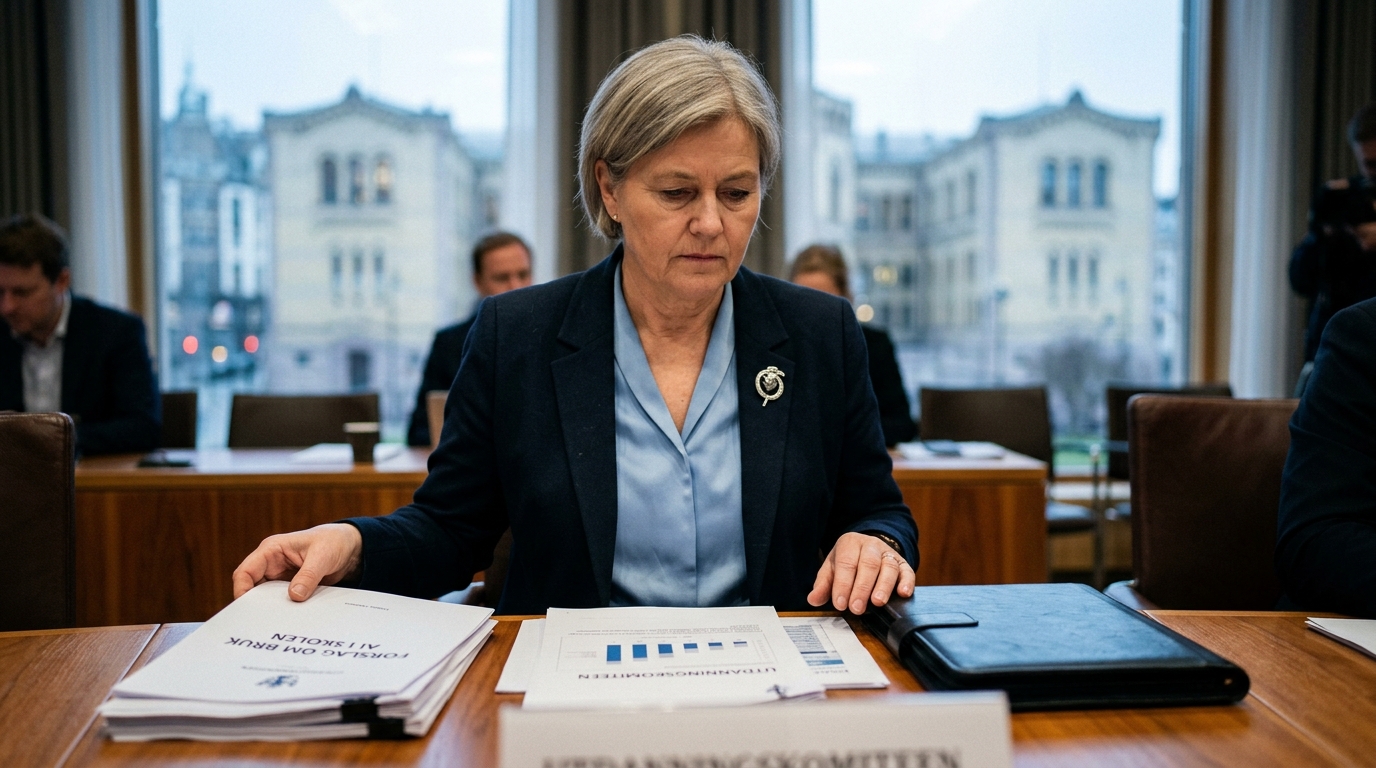
Norway’s Minister of Education, Kari Nessa Nordtun, has been explicit: technology in education must serve learning, not replace it. This move is not a blind reaction against progress, but a scientifically grounded effort to protect the cognitive development of children aged 6 to 12. According to the rationale behind the policy, early exposure to tools that "think" for the student risks undermining fundamental skills such as critical thinking, concentration, and problem-solving abilities.
The Cognitive Threat and the Return to Paper
The primary concern among Norwegian educators and psychologists focuses on so-called "cognitive offloading." When a primary school student uses AI to compose an essay or solve a mathematical problem, they bypass the process of mental effort necessary for the formation of neural connections. The Norwegian Directorate for Education emphasizes that handwriting and reading from physical books are inextricably linked to deeper understanding and long-term memory retention.
"Children must first learn how to think before they learn how to delegate their thinking to a machine," ministry representatives stated. The new policy encourages schools to reinvest in school libraries and printed materials, limiting screen time to the absolute minimum necessary. This shift is also supported by recent studies showing a decline in reading proficiency (PISA scores) in countries with excessive classroom digitalization.
- Protecting Focus: Removing algorithmic tools reduces distractions and dependency on instant gratification.
- Fine Motor Skills: Returning to pencil and paper is considered crucial for the motor development of young children.
- Equity in Learning: Avoiding AI ensures that student assessment is based on their own abilities rather than their access to advanced digital tools at home.
The Political Dimension: Sovereignty and Data
Beyond the pedagogical aspect, Norway's decision carries a strong political weight. The dependence of European educational systems on US-based Big Tech companies—such as Microsoft, Google, and OpenAI—has raised concerns regarding the continent's digital sovereignty. By banning AI in primary schools, Oslo is effectively erecting a protective wall around the data of minors, which often feeds the training models of these corporations without clear consent or transparency.
"We cannot allow our schools to become testing grounds for algorithms that we do not fully understand," government circles emphasize.
This move aligns with a broader trend in Scandinavia. Sweden had already announced similar measures last year, withdrawing tablets from kindergartens. Norway, however, goes a step further by specifically targeting Generative AI as a technology that, despite its potential, is unsuitable for the early stages of human formation.
Towards a Model of "Responsible Digitalization"
The ban does not mean Norway is returning to the 19th century. Technology will remain present in secondary education, where students have developed the necessary critical capacity to use it as a tool rather than a crutch. The goal is to create a model of "responsible digitalization," where the introduction to technology is gradual and guided by the maturity of the individual.
In conclusion, Norway’s stance serves as a loud message to the international community: innovation is not an end in itself. In an era where Artificial Intelligence threatens to homogenize thought, preserving traditional learning methods may prove to be the most revolutionary act. The success or failure of this experiment will largely determine what the classrooms of the future will look like across the Western world.