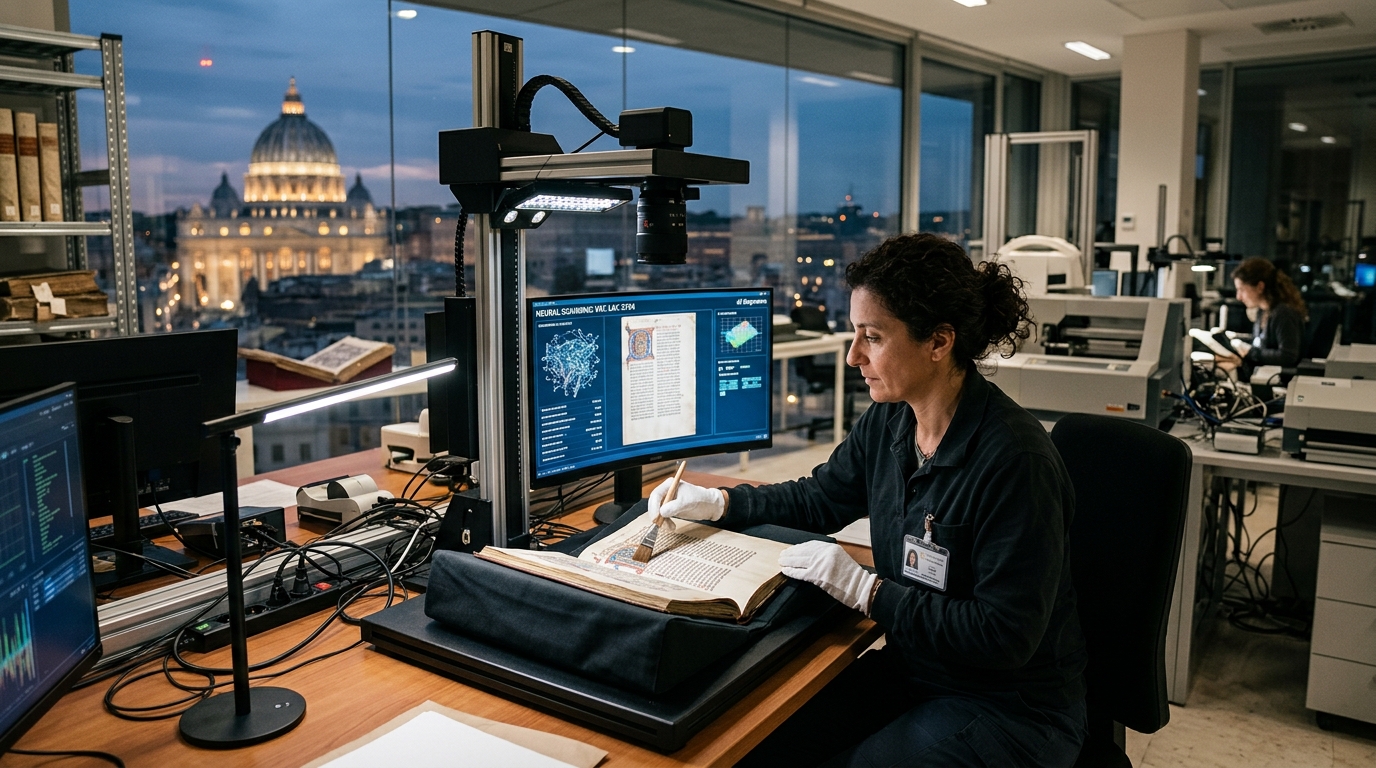
In the heart of Rome, behind the formidable walls of Vatican City, a silent revolution is unfolding. The Vatican Apostolic Library (Biblioteca Apostolica Vaticana), one of the world’s oldest and most significant institutions for the preservation of human knowledge, is no longer relying solely on traditional conservation methods. Today, the Church is turning to Artificial Intelligence (AI) to execute an ambitious vision: the preservation of the "memory of the world" for generations to come.
The project, often described as a "digital ark," aims to protect over 80,000 manuscripts, millions of books, and priceless historical archives. The challenge is not merely simple digitization but the application of advanced algorithms to analyze, restore, and comprehend texts ravaged by time, humidity, and the scars of history.
Technology at the Service of Theology and History
The implementation of AI within the Vatican Library is more than a technical upgrade; it represents a philosophical shift. Traditional digitization often fails to capture the subtle nuances of ancient inks or the nearly invisible marginalia left by scholars centuries ago. AI, through multispectral imaging and sophisticated pattern recognition, can "read" texts that are virtually invisible to the human eye.
Furthermore, AI assists in the categorization and interconnection of data. Imagine an algorithm capable of identifying shared linguistic roots across manuscripts from different continents and eras, creating a global map of human thought. This "Century of Memory" project is not just about the past; it is about ensuring that the past remains accessible in a future dominated by data structures.
- Deployment of OCR (Optical Character Recognition) to decipher complex medieval scripts.
- Protection of digital archives against cyber threats using AI-driven security protocols.
- Restoration of damaged imagery through Generative AI models.
- Creation of an open-access database for global researchers and historians.
Ethical Dilemmas and the 'Algor-ethics'
The Vatican is not a passive bystander in the AI arena. With the "Rome Call for AI Ethics," the Holy See has already established a framework for a human-centric approach to technology. In the context of the library, the critical question arises: Who controls the interpretation? When an AI translates or restores a sacred text, is there a risk of "hallucination" or the subtle alteration of theological meaning?
"Technology must serve humanity and its history, not replace them. The digitization of our memory is an act of love toward the future," sources close to the project suggest.
Collaborations with tech giants like Microsoft and NTT Data highlight the importance of public-private partnerships in cultural heritage preservation. However, the Holy See remains the guardian of the "keys," ensuring that this digital legacy does not become a mere commodity but remains a common good for all of humanity.
The Future of Memory: A Persistent Challenge
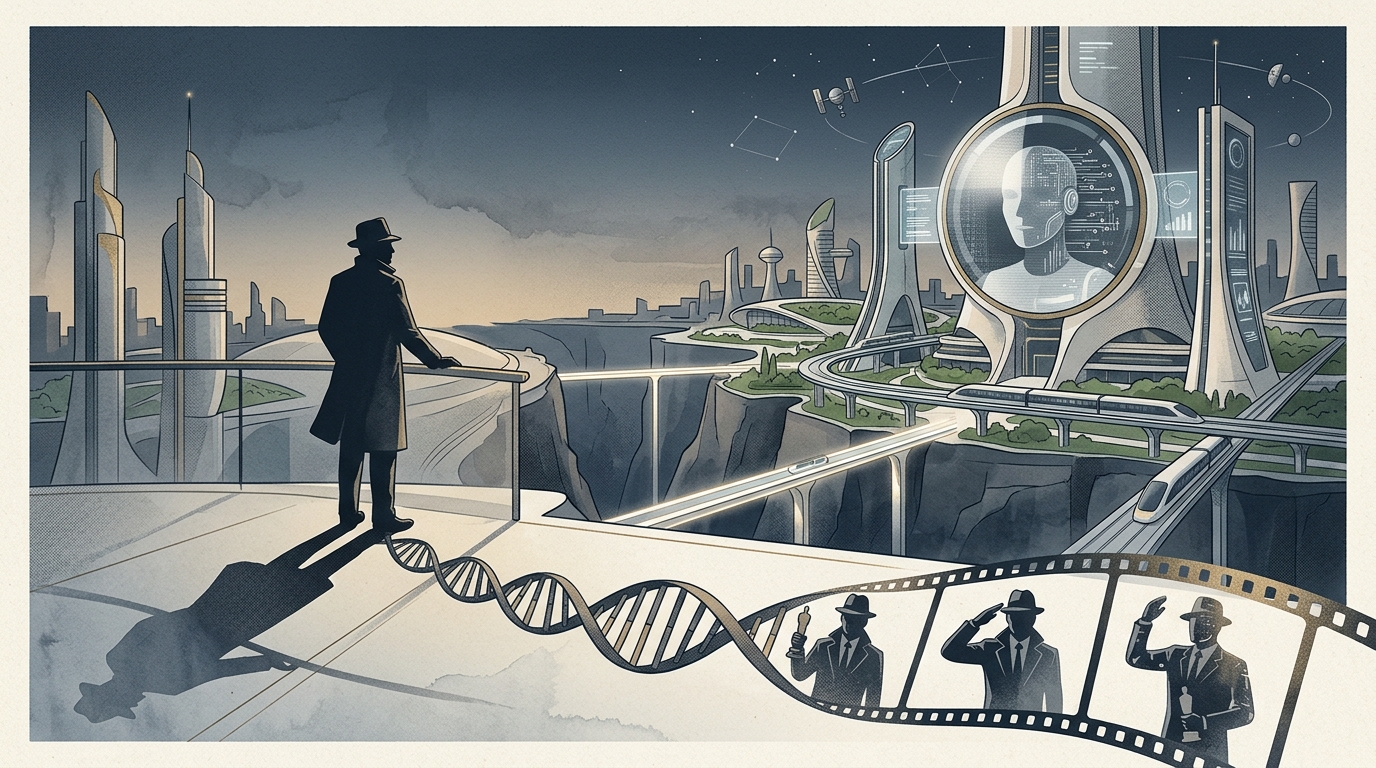
As we move deeper into the 21st century, the preservation of memory becomes increasingly complex. Digital media are, ironically, more fragile than vellum. A hard drive may fail in a decade, whereas a 4th-century codex still survives. Consequently, the Vatican is investing in storage technologies that promise longevity, exploring options like synthetic DNA or ceramic-based storage to house its AI-processed archives.
In conclusion, the Vatican’s AI initiative is not merely an archival effort. It is a testament to the continuity of the human spirit. In a world often suffering from historical amnesia, using the most modern technology to save the oldest words is a deeply political and spiritual act. Memory is not a static archive but a living organism that requires the care of algorithms to survive the digital storm of the modern era.