In a move set to redefine the global technological landscape, the Trump administration has proceeded with the full repeal of the landmark Executive Order on Artificial Intelligence established by his predecessor, Joe Biden. This decision did not emerge in a vacuum; it is the culmination of an intense and systematic lobbying campaign by the two most powerful figures in Silicon Valley: Elon Musk and Mark Zuckerberg. Despite their long-standing personal friction, the two billionaires found common ground in the conviction that government intervention acts as a shackle on American AI dominance.
The End of the 'Safety-First' Era
The Biden Executive Order, signed in October 2023, was widely regarded as the most comprehensive AI governance framework in the world. It mandated that companies share safety test results with the government and set rigorous standards for privacy and civil rights protection. For its supporters, it was a necessary 'safety net' against the existential risks of the technology. For Musk and Zuckerberg, however, it was a bureaucratic hurdle that handed a strategic advantage to international competitors, most notably China.
According to sources close to the White House, meetings held over the past few months were decisive. Elon Musk, who now wields significant influence through his role in government efficiency, argued that regulating AI before it reaches full maturity is akin to trying to regulate aviation before the Wright brothers' first flight. On the other hand, Mark Zuckerberg, who has wagered billions on the Llama open-source model, contended that the order's restrictions disproportionately harmed open innovation—the West's most potent weapon.
"If we are not the ones to unlock the full power of AI first, those who do not share our values certainly will,"Zuckerberg reportedly stated in a private briefing.
The Geopolitical Chessboard and the China Argument
The central argument that appears to have swayed Donald Trump was the 'China threat.' Musk and Zuckerberg presented data suggesting that while the US is bogged down in ethical debates and regulatory frameworks, Beijing is accelerating AI development without constraints, aiming for military and economic supremacy by 2030. This narrative resonated deeply with the administration's 'America First' doctrine.
The repeal means that companies will no longer be required to notify the government when training models that exceed certain computational power thresholds. This clears the path for the development of even more powerful systems, such as Musk’s upcoming Grok-3 and Meta’s Llama 5, without federal oversight. While the move was cheered by the venture capital community, it sparked a firestorm of criticism from digital rights organizations and AI safety advocates.
The Backlash from Civil Society
Critics of the decision warn that withdrawing safety guarantees leaves society exposed to a range of hazards, from AI-generated biological weapons to the total erosion of truth via deepfakes.
- The lack of transparency in training data could exacerbate discrimination and systemic bias.
- Removing safety standards makes US infrastructure more vulnerable to sophisticated cyberattacks.
- The concentration of power in the hands of a few billionaires poses a direct threat to democratic processes.
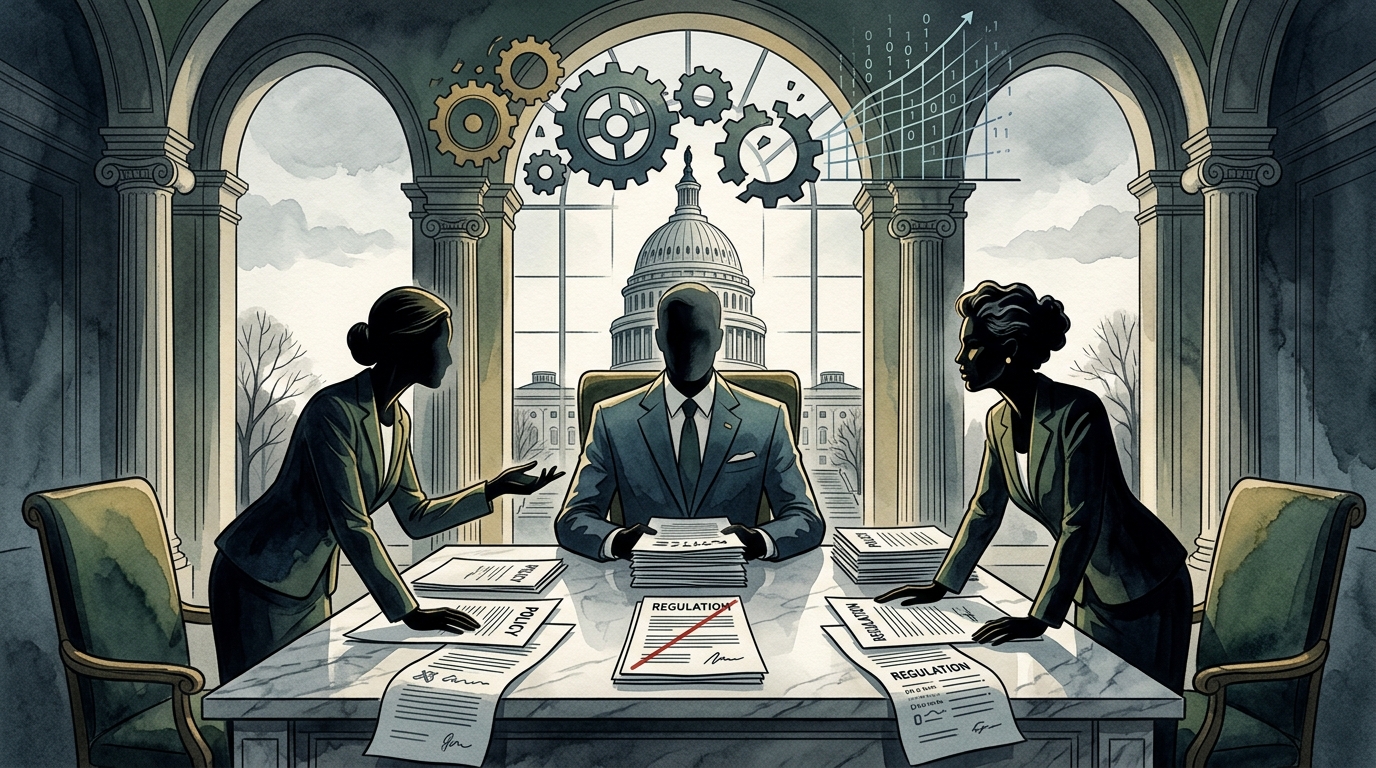
Nevertheless, Washington’s new direction is unequivocal: innovation takes precedence over precaution. The Trump administration believes that the market will self-regulate and that competition will foster the creation of safer systems more organically than state mandates ever could. It is a high-stakes gamble that will dictate the course of humanity for decades to come.
Conclusion: A New World Order in Tech
The alignment of Musk and Zuckerberg with the political leadership marks the end of the 'techno-pedagogical' approach and a return to free-market 'techno-capitalism.' As the Biden order becomes a thing of the past, the US enters a phase of aggressive, uninhibited growth. The lingering question is whether this velocity will lead to unprecedented prosperity or an uncontrollable crisis that no government will have the tools to mitigate.