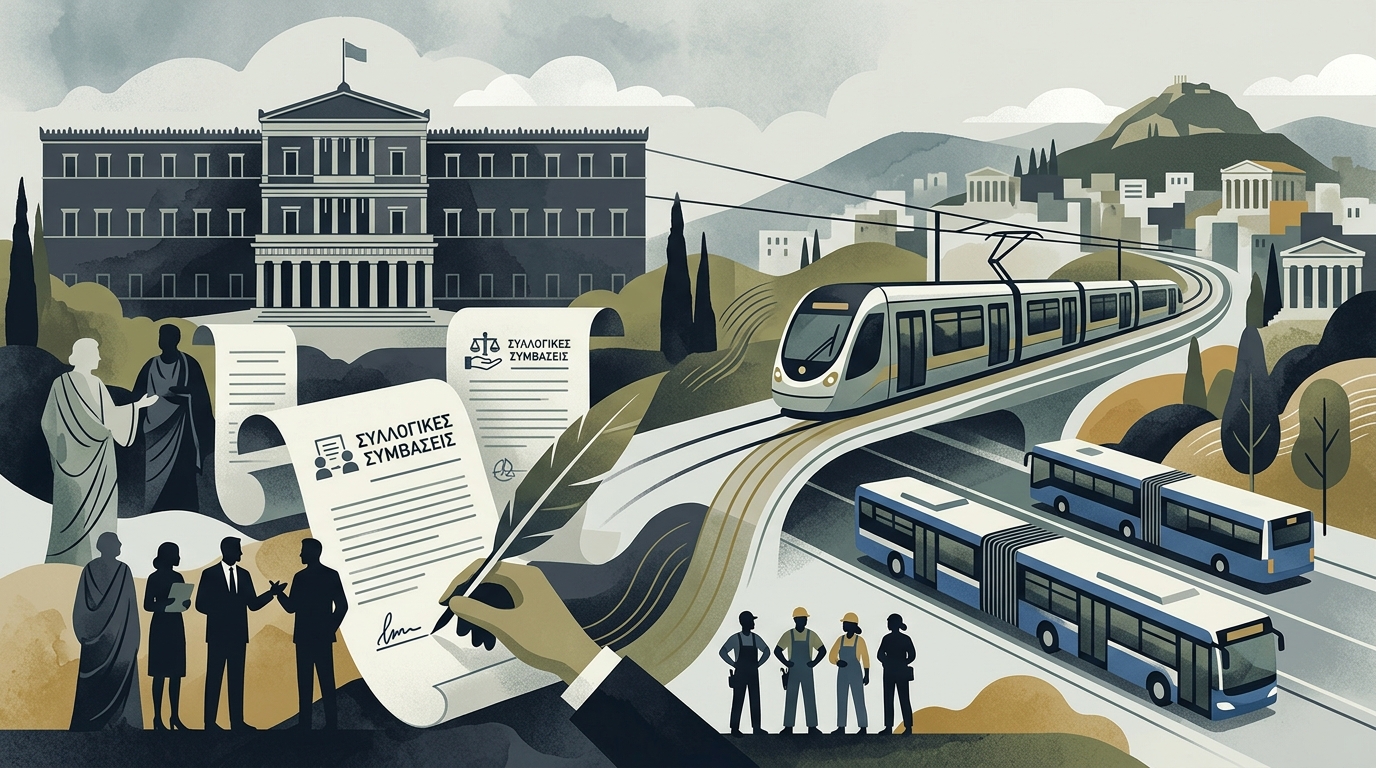
In a move of high symbolism and political substance, Prime Minister Kyriakos Mitsotakis chose the Sepolia Depot to announce the signing of new Collective Labor Agreements for the employees of Athens' public transport entities (OSY, STASY, and OASA). The event, titled "Public Transport Changes Athens," was not limited to labor relations but served as a comprehensive presentation of the government's plan to transform the capital into a modern, sustainable metropolis.
This initiative comes at a time when inflation and pressures on disposable income are at the center of political debate. Through these new agreements, the government aims to send a message of reward to the workers who maintained the transport system during the pandemic and the energy crisis, while simultaneously seeking to ensure labor peace in a sector critical to the daily lives of millions of citizens.
Strengthening the Workforce and New Agreements
The new collective agreements are not merely a formal renewal of terms; they incorporate increases and benefits that had been frozen for over a decade due to bailout-era restrictions. The Prime Minister emphasized that the fiscal stability achieved in recent years now allows for the return of part of the surplus to frontline workers. The regulations cover all employees in buses, trolleys, the metro, and the tram, focusing on the recognition of seniority and the improvement of position and hazardous work allowances.
Furthermore, the plan includes an extensive recruitment program. Understaffing in transport agencies has been one of the biggest challenges of the last decade, leading to infrequent schedules and increased strain on existing staff. The commitment to permanent hires of drivers and technicians is considered a necessary condition for the effective utilization of the new vehicles being gradually integrated into the fleet.
A Changing Fleet: Electromobility and the Green Transition
A significant portion of the Prime Minister's speech was dedicated to the renewal of the bus fleet. Athens is currently undergoing its largest vehicle procurement in 20 years. With the introduction of the first 250 electric buses and more anti-pollution technology vehicles on the way, the goal is to drastically reduce the average age of vehicles from the current 19 years.
- Electric Buses: Reduction of noise and emissions in the city center.
- Digital Transformation: Upgrading telematics and mobile ticketing systems.
- Accessibility: Commitment to 100% accessible vehicles and stations for people with disabilities.
Mr. Mitsotakis stressed that "green" mobility is not a luxury for the few but a social necessity. Reducing the environmental footprint of transport is directly linked to the quality of life in Athens' densely populated neighborhoods, where climate change is manifesting through increasingly intense heatwaves.
The Social Dimension of Transport
Beyond numbers and vehicles, the Prime Minister's intervention had a strong social focus. Public transport is the primary means of mobility for lower-income groups, students, and retirees. Improving the reliability of schedules translates into time savings for workers and reduced commuting costs for households.
"Public transport is the mirror of a country's culture and the fundamental tool for social equality," the Prime Minister noted.
However, challenges remain. The extension of the Metro to Glyfada and Western Athens, the completion of Line 4, and the upgrade of the electric railway (Line 1) are projects that require time, consistency, and strict adherence to schedules. The government must prove that the Sepolia announcements were not just a communication "photo-op" but the beginning of a permanent change in the country's transport map.