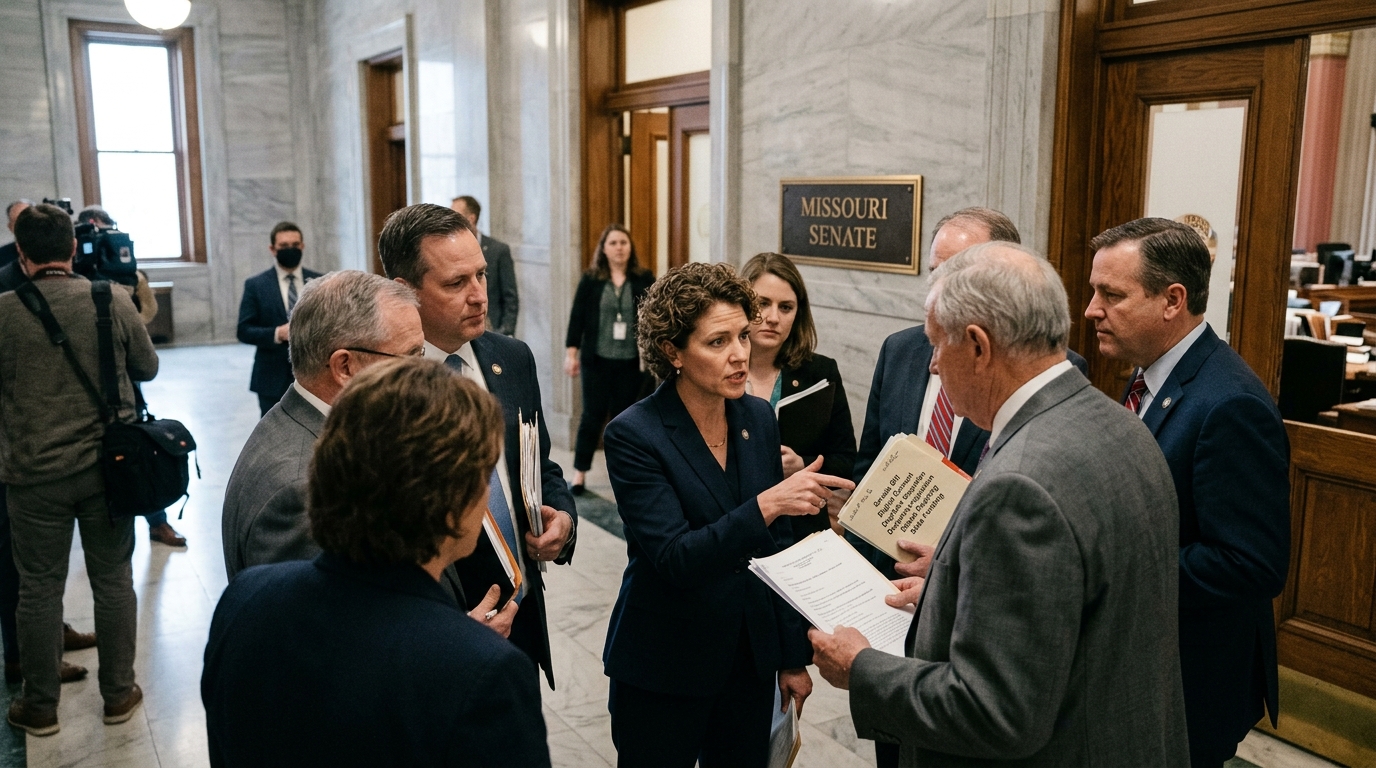
The legislative landscape in Jefferson City, Missouri, witnessed a significant convergence of modern technology and traditional social debate this week. The Missouri Senate advanced a series of bills that tackle two of the most polarizing and complex issues facing contemporary society: the ethical governance of Artificial Intelligence (AI) and the perennial conflict over abortion access and funding. This dual legislative push highlights the challenges lawmakers face as they attempt to reconcile rapid technological shifts with deeply held ideological convictions.
The Digital Frontier: Combatting AI Deepfakes
The first major component of the Senate's activity focuses on the burgeoning threat of AI-generated content, specifically "deepfakes." As generative AI tools become more accessible and sophisticated, their potential for misuse has skyrocketed. The Missouri Senate's response involves legislation aimed at criminalizing the creation and dissemination of non-consensual sexual imagery produced via AI. This phenomenon, which disproportionately targets women and minors, has long occupied a legal gray area where traditional harassment and privacy laws often fall short.
By specifically defining AI-generated imagery as a potential vehicle for criminal activity, the bill seeks to provide victims with a clear path to legal recourse. It allows for both criminal penalties and civil lawsuits, ensuring that those who use technology to violate the dignity of others can be held accountable. Lawmakers emphasized that while the images might be "fake," the trauma and reputational damage they inflict are very real.
Beyond personal privacy, the legislation also addresses the integrity of the democratic process. With major elections on the horizon, the fear of "synthetic media" being used to deceive voters is at an all-time high. The proposed rules would require clear disclosures on any political advertisement that utilizes AI-generated content. This move toward transparency is seen as a vital step in maintaining public trust in information at a time when the line between reality and fabrication is increasingly blurred.
The Continued Struggle Over Reproductive Rights
Parallel to the tech-focused debate, the Senate moved forward with measures related to abortion, a topic that has remained a central flashpoint in Missouri politics since the U.S. Supreme Court's overturning of Roe v. Wade. The current legislative efforts focus on the financial and regulatory structures surrounding pregnancy and abortion alternatives.
One key bill involves the expansion of tax credits for "crisis pregnancy centers." These facilities, which often have religious affiliations, provide services to pregnant women while actively discouraging abortion. Proponents argue that these credits are a compassionate way to support women who choose to carry their pregnancies to term, especially those in underserved communities. They view the measure as an essential part of a "pro-life" infrastructure that offers tangible resources to families.
However, the legislation faced stiff opposition from Democratic senators, who argue that these centers are often unregulated and provide medically inaccurate information. Critics contend that state funds and tax incentives should instead be directed toward comprehensive reproductive healthcare, including contraception and evidence-based medical services. The debate underscored the deep-seated divisions within the state, as attempts to include protections for birth control access were largely rebuffed by the Republican majority.
Analysis: Governance in an Age of Uncertainty
Missouri's legislative actions are part of a broader national trend where states are becoming the primary laboratories for AI regulation. In the absence of a comprehensive federal framework, state legislatures are stepping in to define the boundaries of digital ethics. Missouri’s approach—focusing on the most harmful applications of AI like deepfakes—reflects a pragmatic attempt to mitigate immediate risks while the technology continues to evolve.
The intersection of AI and abortion in the same legislative session is also telling. It reveals a state government that is simultaneously looking toward a futuristic digital world and grappling with foundational social questions. In both instances, the underlying theme is control: control over one’s digital likeness and control over reproductive choices. For the Missouri Senate, these bills represent an assertion of state authority over both the virtual and the physical realms.
As these bills head to the Missouri House for further consideration, their potential impact remains a subject of intense scrutiny. The success of the anti-deepfake measures will depend heavily on the ability of law enforcement to navigate the technical complexities of the internet. Meanwhile, the abortion-related funding shifts will likely further entrench Missouri’s position as one of the most restrictive states in the nation regarding reproductive rights. For the citizens of Missouri, these legislative moves are not just policy changes; they are reflections of the state's evolving identity in a rapidly changing world.