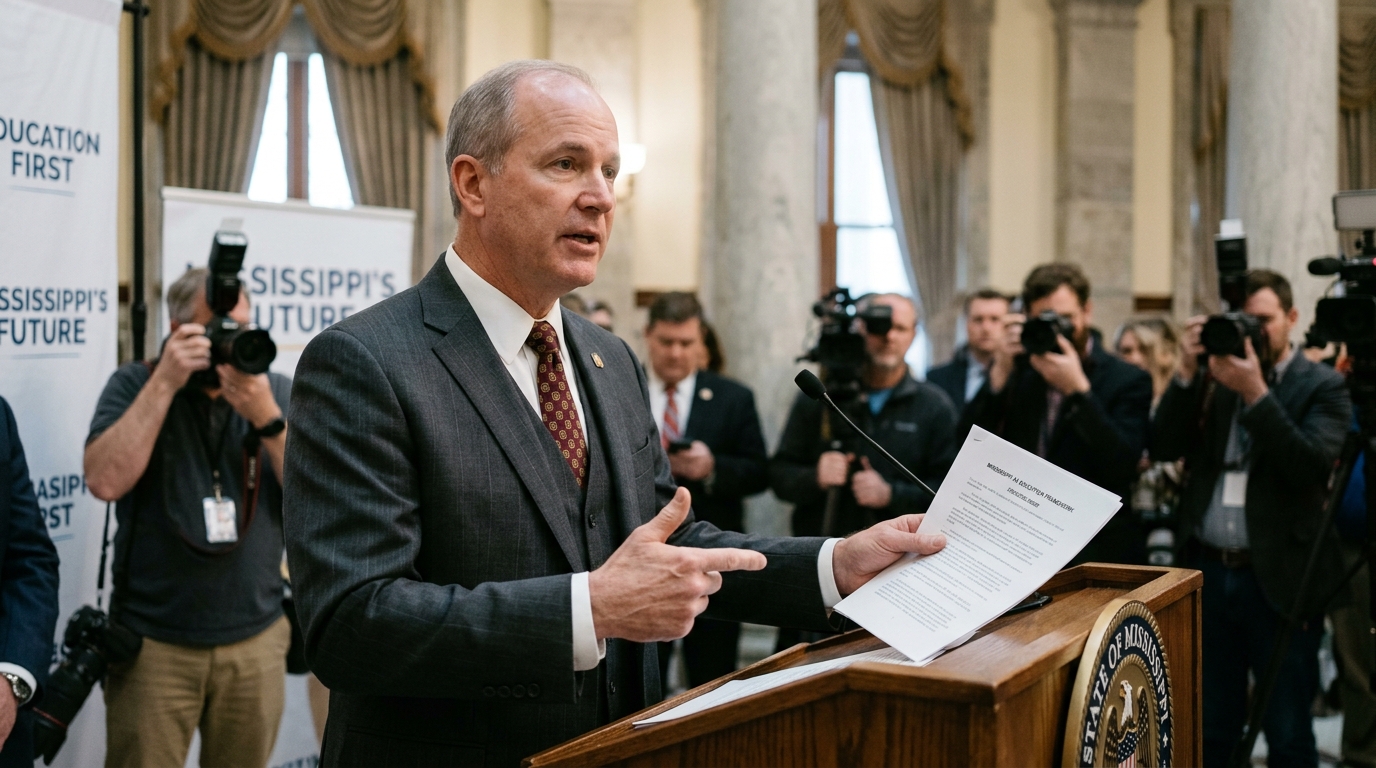
In a move that signals a historic pivot for the American South’s educational landscape, Mississippi Governor Tate Reeves has announced the launch of a comprehensive statewide framework for Artificial Intelligence (AI) in education. This initiative, arriving at a time when the global economy is being rapidly reshaped by generative AI technologies, positions Mississippi—a state that has traditionally faced significant educational and economic hurdles—at the vanguard of digital literacy in the United States.
The new framework is more than just a set of suggestions; it is a strategic roadmap for integrating AI from kindergarten through 12th grade (K-12) and into higher education. The primary objective is to equip students for a labor market where AI proficiency is no longer an elective skill but a fundamental requirement. The announcement has been met with cautious optimism by educators, as it seeks to strike a delicate balance between fostering innovation and ensuring the ethical application of emerging technologies.
The Framework’s Architecture and Strategic Goals
The “Mississippi AI Digital Literacy and Skills Framework” focuses on three core pillars: comprehensive teacher training, curriculum modernization, and robust data security. Governor Reeves emphasized that the state cannot afford to be a passive observer of technological shifts. “Artificial Intelligence is the new frontier,” he stated during the unveiling ceremony. “By providing our students with the tools to understand and leverage this technology, we are giving them a competitive advantage that will last a lifetime.”
A critical component of the initiative is the establishment of professional development programs for educators. Many teachers feel overwhelmed by the sudden influx of tools like ChatGPT and specialized AI tutors in their classrooms. The framework provides clear guidelines on how AI can be utilized as a teaching assistant—reducing administrative burdens such as grading and lesson planning—thereby allowing educators to focus more on personalized student interaction and mentorship.
- Cultivating critical thinking to evaluate AI-generated content and identify misinformation.
- Integrating data science and algorithmic logic into STEM curricula.
- Establishing strict protocols to prevent academic dishonesty while encouraging creative AI collaboration.
- Partnering with regional tech industries to create pathways for student internships and vocational training.
Bridging the Digital Divide in the Deep South
Mississippi’s decision to lead in this arena is particularly poignant. For decades, the state has struggled at the bottom of national rankings for educational funding and student outcomes. However, recent years have seen a remarkable turnaround, often referred to as the “Mississippi Miracle” in literacy rates. This new AI initiative aims to build upon that momentum, ensuring the state doesn’t fall behind in the next industrial revolution.
“We don’t want our students to be mere consumers of technology; we want them to be the creators, the architects, and the leaders of it,” said Dr. Carey Wright, a former state superintendent who consulted on the project.
The framework places a specific emphasis on the state’s rural communities, where access to high-speed internet and advanced technology has historically been sparse. Through a combination of state grants and federal infrastructure funding, Mississippi plans to upgrade connectivity in schools, ensuring that a student in the rural Delta has the same technological opportunities as one in a major metropolitan hub.
Ethical Guardrails and the Challenge of Implementation
Despite the enthusiasm, the implementation of such a far-reaching framework is fraught with challenges. Protecting the privacy of minors is a primary concern for parents and advocacy groups. The framework mandates strict criteria for AI tools allowed on school networks, requiring tech vendors to adhere to high standards of transparency regarding data collection and usage.
Furthermore, there is the persistent issue of “algorithmic bias.” Educators are tasked with teaching students that AI models are not infallible and can reflect the biases of their creators or the data they were trained on. This requires a level of philosophical and social analysis that is often missing from purely technical programs. Mississippi, however, appears committed to weaving these ethical discussions into the curriculum, turning a potential pitfall into an opportunity for deeper critical inquiry.
In conclusion, Governor Reeves’ initiative represents a bold bet on the future. If Mississippi can successfully navigate the complexities of this rollout, it will provide a blueprint for other states and nations to follow. It proves that geographic location or historical economic status need not be barriers to participating in the digital revolution. AI in the classroom is no longer a futuristic concept in the Magnolia State; it is the cornerstone of a new educational era.