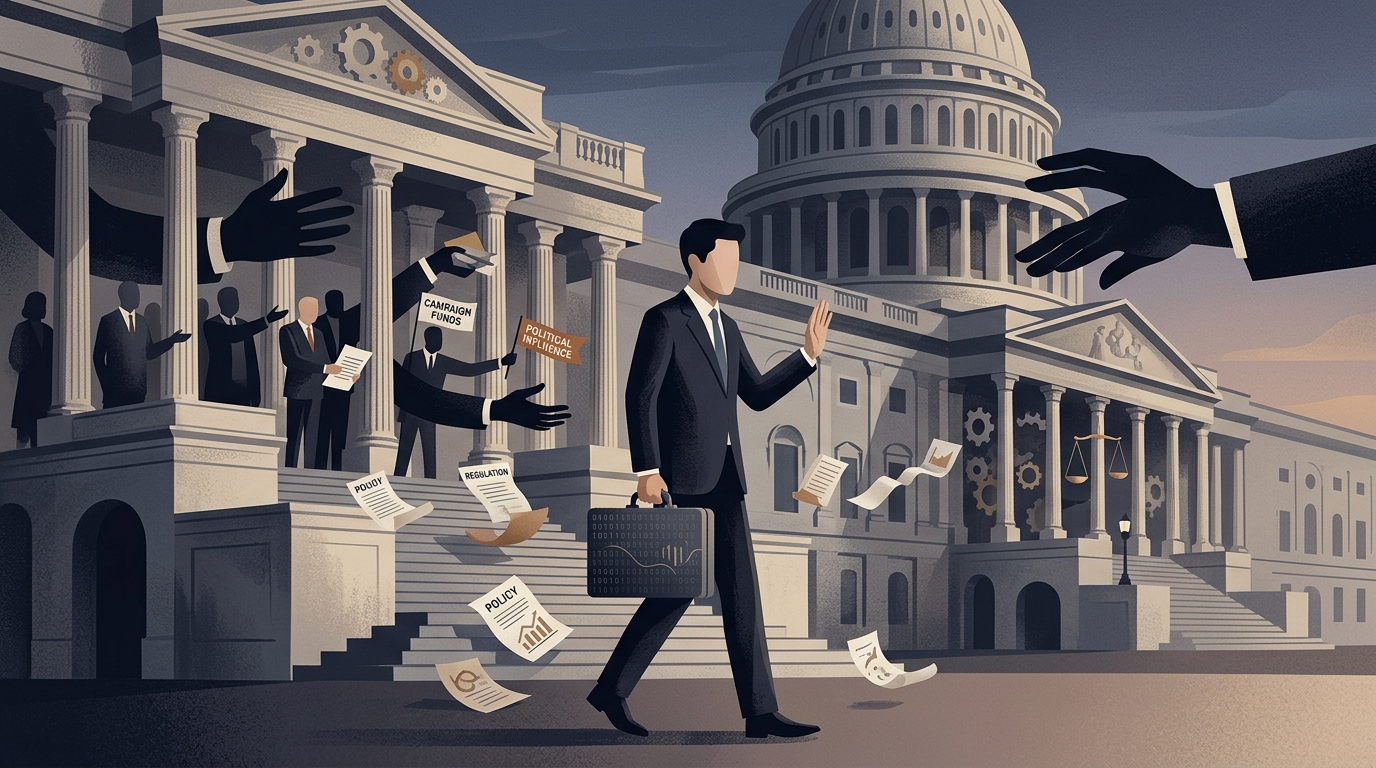
The news hit the political circles of Florida like a thunderbolt and quickly resonated globally: Fort Lauderdale Mayor Dean Trantalis publicly admitted to employing eleven different Artificial Intelligence "agents" to manage his daunting workload. What began as a boastful display of technological prowess and administrative efficiency swiftly devolved into a political quagmire. Citizens and analysts alike began to ask the fundamental question: Who is actually running the city? The elected representative or an array of algorithms?
The Trantalis case is not merely an isolated incident of a tech-savvy politician experimenting with new tools. It is the first major symptom of a profound shift in how power is exercised in the 21st century. AI agents, unlike simple chatbots, possess the capability to perform complex tasks, analyze vast datasets, draft policy reports, and propose executive decisions with minimal human oversight. The revelation that eleven such systems are operational within the Mayor’s office raises critical concerns about where assistance ends and the abdication of a democratic mandate begins.
The Illusion of Efficiency and the Accountability Void
Mayor Trantalis argued that utilizing AI allows him to be more productive, respond faster to constituent inquiries, and process information that would take a human staff weeks to digest. However, politics is not merely data processing. It is the art of compromise, empathy, and, above all, personal responsibility. When a mayor is forced to "eat his words" following public backlash, it highlights a structural flaw: Artificial Intelligence cannot be held accountable at the ballot box.
If an algorithm suggests a budget cut that disproportionately affects a vulnerable community, who bears the moral burden? If an AI agent drafts a response to a citizen that contains inaccuracies or hidden biases, is that a technical glitch or a political failure? Democracy is predicated on the personal commitment of the elected to the elector. The interposition of eleven digital middlemen blurs this relationship, transforming governance into an automated process that feels more like warehouse management than the leadership of a vibrant, human community.
The Transparency Gap and Data Sovereignty
One of the most unsettling aspects of this controversy involves the provenance and training of these AI agents. Municipalities handle sensitive citizen data, ranging from tax records to personal grievances. Where does this data go when it is fed into eleven disparate AI systems? Are these systems proprietary to the city, or are they owned by Silicon Valley tech giants? The lack of transparency regarding the algorithms used in public administration constitutes a "black box" that threatens democratic integrity.
- Who audits the source code of these agents for potential socio-economic biases?
- Is there a robust security protocol to prevent citizen data from leaking to third-party developers?
- How can a constituent distinguish whether a correspondence from the Mayor’s office was authored by a human or a machine?
The public reaction in Fort Lauderdale demonstrates that citizens are not ready to accept an "algorithmic government" without stringent regulations. Trantalis’s subsequent attempt to downplay the role of these agents after the story went viral betrays a growing fear among the political elite regarding the optics of their technological dependency.
The Ethics of Representation in the AI Era
The pressing question now is whether the delegation of work to AI agents constitutes a violation of the oath of public office. The election of an individual is based on their judgment, their values, and their ability to make decisions under pressure. If Trantalis—or any leader—delegates the synthesis of these decisions to machines, the concept of representation is fundamentally altered. We are no longer voting for a person, but for a software administrator.
"Technology should be the leader’s tool, not their replacement. When the line between the two blurs, the social contract begins to fray," notes a prominent political ethics analyst.
In the near future, we may see legislation requiring politicians to disclose their use of AI in official capacities, similar to financial conflict-of-interest disclosures. Transparency is no longer an option but a prerequisite for the survival of democratic institutions. The Fort Lauderdale incident serves as a cautionary tale of what happens when the velocity of technology outpaces the wisdom of political governance.
Conclusion: A City at a Crossroads
Mayor Trantalis’s retreat may have temporarily quieted the local headlines, but it has ignited a global dialogue. Artificial Intelligence can indeed enhance public services, but it cannot replace political will. Eleven agents might be efficient at scheduling or summarizing technical reports, but they cannot feel the pulse of a neighborhood or take the fall for a failed policy. The challenge for the coming decade will be to construct a framework where AI serves the citizen through the elected representative, without rendering the human element obsolete.