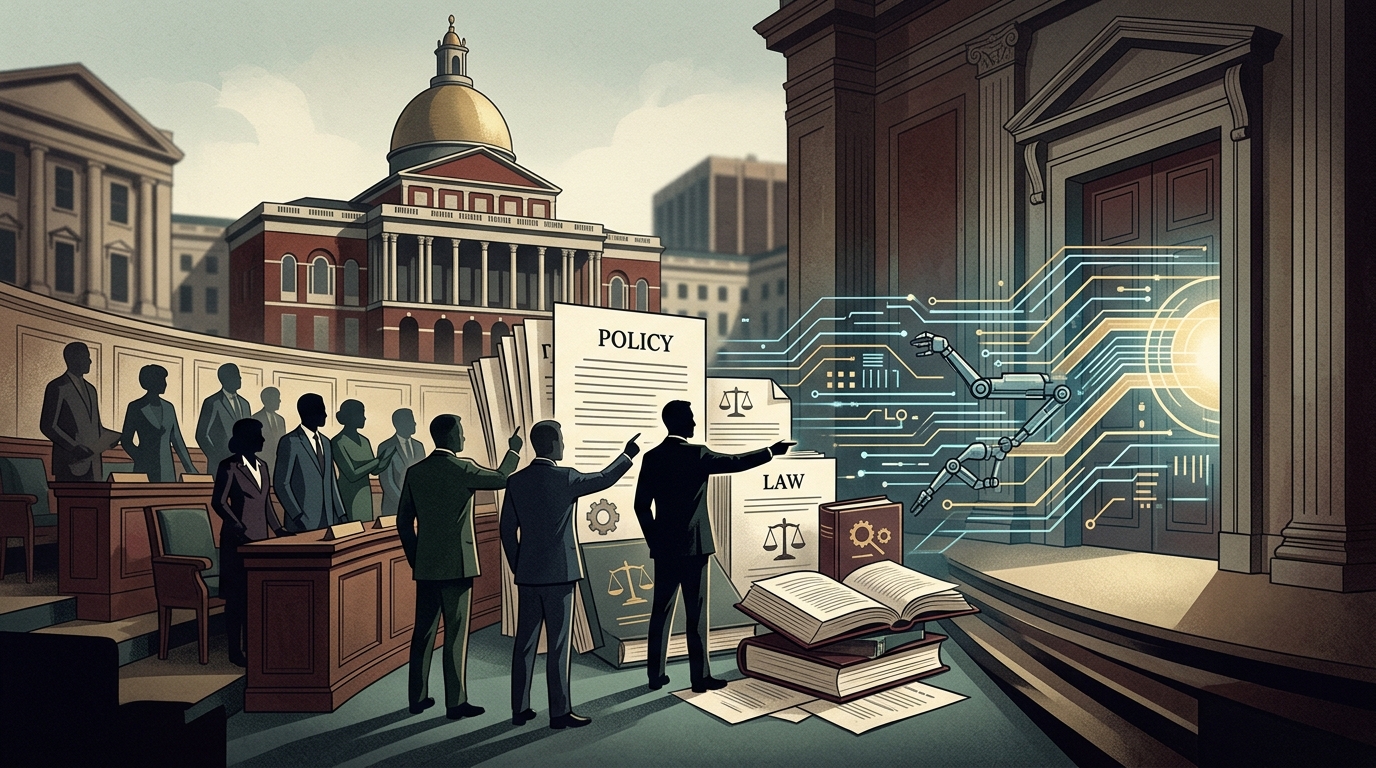
In the heart of Massachusetts, where the academic brilliance of MIT and Harvard meets the political machinery of Beacon Hill, a new power struggle is unfolding. This time, the friction isn't over traditional infrastructure or tax hikes, but over the very architecture of the future: Artificial Intelligence (AI). Recent reports, led by Politico, reveal a deepening backlash among state lawmakers regarding the executive branch's handling of AI policy and development.
The Executive-Legislative Divide
Governor Maura Healey, in her ambition to cement Massachusetts as a global AI hub, established the AI Strategic Task Force. However, this move has ignited a firestorm of criticism from legislators who feel systematically excluded from the conversation. The primary grievance is that the roadmap for the state's AI future is being drawn behind closed doors, dominated by industry lobbyists and technocrats, effectively bypassing the democratic scrutiny of the General Court.
This tension is more than just a turf war; it is a fundamental disagreement over priorities. While the Healey administration emphasizes economic growth and maintaining a competitive edge, lawmakers are raising alarms about civil rights, algorithmic bias, and the potential for mass labor displacement. "We cannot allow the pace of innovation to outrun the necessity of ethics and the rule of law," noted one prominent state senator during a recent hearing.
The 'Regulatory Sandbox' Controversy
At the center of the debate is the proposed 'regulatory sandbox.' This concept would allow AI firms to test their products in a controlled environment with relaxed regulations, ostensibly to foster innovation. To the Governor's office, it's a strategic tool to attract startups; to many lawmakers, it's a dangerous precedent that could allow companies to experiment on the public without adequate safeguards.
- Transparency Mandates: Lawmakers are pushing for legislation that would force the Task Force to operate with greater public visibility.
- Labor Protections: There is a specific focus on how generative AI might automate state government jobs and the broader private sector workforce.
- Bias Mitigation: Concerns remain high regarding the use of AI in high-stakes decisions like housing, credit, and law enforcement.
"AI is too consequential to be left solely to technologists and executive appointees. It requires the direct engagement of the public through their elected representatives."
Massachusetts as a National Bellwether
The outcome of this standoff in Boston will resonate far beyond the borders of the Commonwealth. As a state that often serves as a laboratory for progressive policy and technological regulation, Massachusetts is a bellwether for how the U.S. will handle the AI revolution at the state level. If the legislature successfully asserts its authority, it could signal a shift toward a more cautious, human-centric approach to AI nationwide.
Conversely, if the executive branch maintains its current trajectory, it may solidify a model where speed and market dominance take precedence over legislative oversight. The conflict underscores a global challenge: how to govern a technology that evolves faster than the laws designed to contain it. Massachusetts is currently the frontline of this battle, and the world is watching to see if democratic institutions can still hold the reins of technological progress.