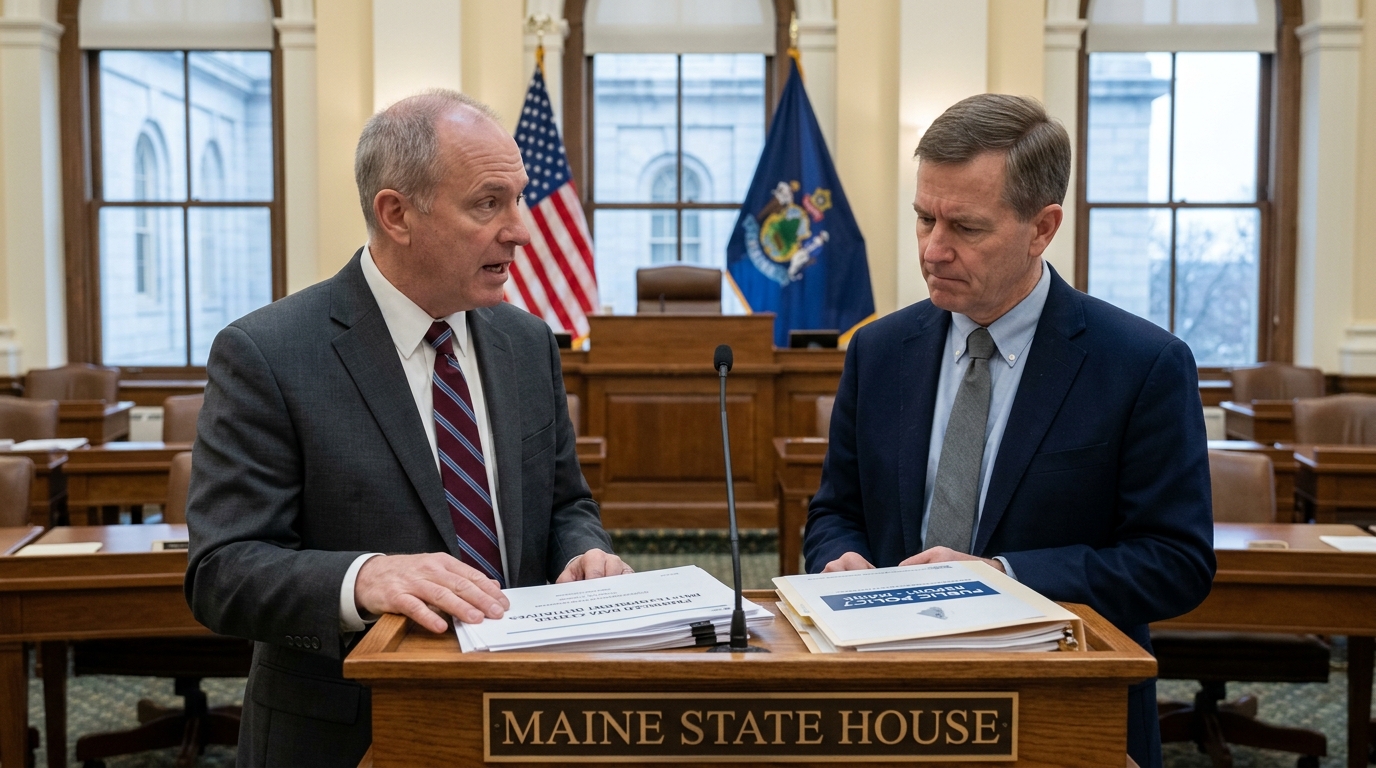
Maine, long celebrated for its rugged coastlines and vast timberlands, has suddenly found itself at the center of one of the digital age's most consequential debates. As the Artificial Intelligence (AI) revolution demands ever-increasing computational power, tech giants are scouring the globe for locations offering cool climates and access to renewable energy. Maine checks both boxes, turning the issue of AI data centers into a central pillar of the upcoming gubernatorial race.
The Energy Challenge and the Grid
The primary argument dominating the public discourse is the capacity of Maine’s electrical grid to withstand the massive demands of AI data centers. These facilities are not the traditional storage centers of the last decade; the processors required to train Large Language Models (LLMs) consume up to ten times more energy per square foot. Democratic candidates tend to emphasize the need for stringent regulations to ensure that the arrival of these 'digital factories' does not lead to a spike in electricity prices for residential consumers. They propose linking permits to mandatory investments by corporations in new renewable energy infrastructure, such as offshore wind farms.
Conversely, Republican candidates view data centers as a golden opportunity to revitalize the state’s rural regions. They argue that bureaucracy and excessive environmental oversight will drive investment toward neighboring states or Canada. For them, the solution is not to limit demand but to rapidly expand energy supply through market deregulation and the strengthening of transmission lines, maintaining that economic prosperity should take precedence over rigid climate goals.
Jobs: Myth vs. Reality
One of the thorniest issues is the actual contribution of data centers to local employment. While the construction phase creates hundreds of jobs in the building trades, the day-to-day operation of these facilities requires minimal staff—often fewer than 50 specialized technicians for buildings worth hundreds of millions of dollars. Skeptical candidates point out that granting generous tax breaks to trillion-dollar companies for so few permanent jobs constitutes poor management of public funds.
However, the opposing side argues that the presence of such infrastructure creates an innovation ecosystem. A data center can attract tech startups, bolster computer science programs at local universities, and place Maine on the global high-tech map. The debate here is not just about numbers, but about the vision for the state's future: will Maine remain a 'vacationland' or transform into a 21st-century digital hub?
Environmental Footprint and Water Usage
Beyond energy, the consumption of water for cooling servers is a major flashpoint. In an era where climate change makes water resources increasingly precious, the idea of millions of gallons being used daily to cool chips provokes backlash in local communities. Some candidates advocate for the mandatory use of 'closed-loop' cooling technologies or treated wastewater, while others believe Maine’s abundant water resources are a competitive advantage that should be leveraged to attract investment.
- The need for grid modernization is universally accepted, but the funding mechanisms remain a point of contention.
- Tax incentives are being scrutinized through the lens of direct community benefit and ROI.
- Preserving Maine's natural landscape is a 'red line' for a significant portion of the electorate.
In conclusion, the battle for the Blaine House in Maine will largely be decided by who can convince voters they can manage the AI influx in a way that benefits the economy without sacrificing quality of life or the environment. It is a microcosm of a global dilemma: how to integrate the technology of the future into the structures of the past without undermining our foundations.