In the heart of the American Midwest, where the Missouri and Kansas rivers converge, technology is assuming a role that was once the province of science fiction. Kansas City, Missouri (KCMO), is no longer merely waiting for disaster to strike; instead, it is leveraging Artificial Intelligence to predict, simulate, and ultimately mitigate catastrophe. This strategic pivot toward "smart" emergency management marks a definitive shift in how modern metropolises confront the escalating climate crisis.
From Reaction to Proactive Resilience
For decades, disaster management was fundamentally reactive. Authorities mobilized after an event had already occurred, often struggling to keep pace with the unfolding chaos. Today, Kansas City is inverting this model. By integrating machine learning algorithms that process real-time data from hundreds of water-level sensors, weather stations, and satellite feeds, the city can now forecast flood events with surgical precision hours or even days in advance.
As municipal leaders point out, the utility of AI lies not just in speed, but in the granularity of information. Traditional flood maps are often static and outdated, failing to account for the rapid changes in urban topography. In contrast, dynamic AI models can incorporate variables such as current soil saturation, the integrity of the drainage network, and micro-climatic shifts, providing a high-resolution risk profile for individual neighborhoods.
Technological Infrastructure and Strategic Partnerships
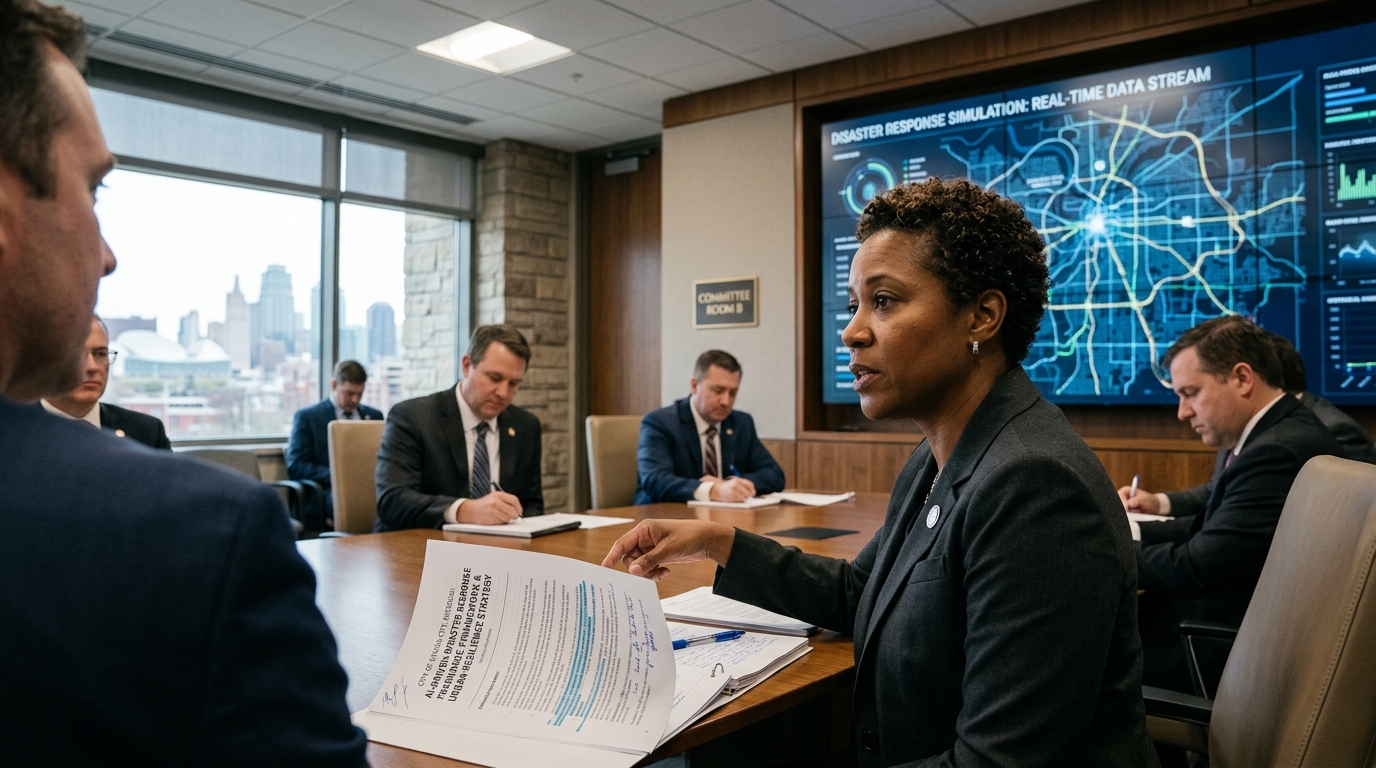
Realizing this vision is not the work of a single department; it requires a holistic approach that bridges the gap between public governance and private innovation. The city is collaborating with tech giants and specialized startups to develop "digital twins"—virtual replicas of the city where authorities can run disaster simulations. From tornadic activity to extreme blizzards, these simulations allow planners to identify where infrastructure is most likely to fail.
- Integration of IoT sensors on critical infrastructure like bridges and culverts.
- Deployment of AI-equipped drones for rapid damage assessment in inaccessible areas.
- Automated, hyper-local public warning systems that adapt to a citizen’s exact coordinates.
“Artificial Intelligence allows us to see the invisible. We aren’t just watching the water rise; we are seeing where it will be in six hours and identifying which families are most at risk,” notes an emergency management analyst.
Ethical Implications and the Equity Gap
Despite the technological promise, the adoption of AI in public policy raises significant ethical questions. Chief among them is the issue of digital equity. There is a persistent concern that algorithms might prioritize areas with superior data infrastructure, which often correlate with wealthier zip codes. Kansas City must ensure that its “smart” safety net covers all citizens with equal efficacy, regardless of their socioeconomic status.
Furthermore, data privacy remains a critical concern. The collection of vast amounts of data regarding citizen movement during a crisis must be handled with absolute transparency. Strict security protocols are essential to ensure that a tool designed for public safety does not inadvertently morph into a mechanism for pervasive surveillance.
Conclusion: A Blueprint for the 21st Century City
Kansas City’s initiative serves as a blueprint for urban centers worldwide. In an era where extreme weather is becoming the new normal, static risk management is no longer sufficient. The integration of AI into disaster response is not a luxury; it is a fundamental requirement for the survival of the urban fabric. The ultimate success of this endeavor will be measured not just by the sophistication of the algorithms, but by the technology’s ability to serve human life with empathy and equity.