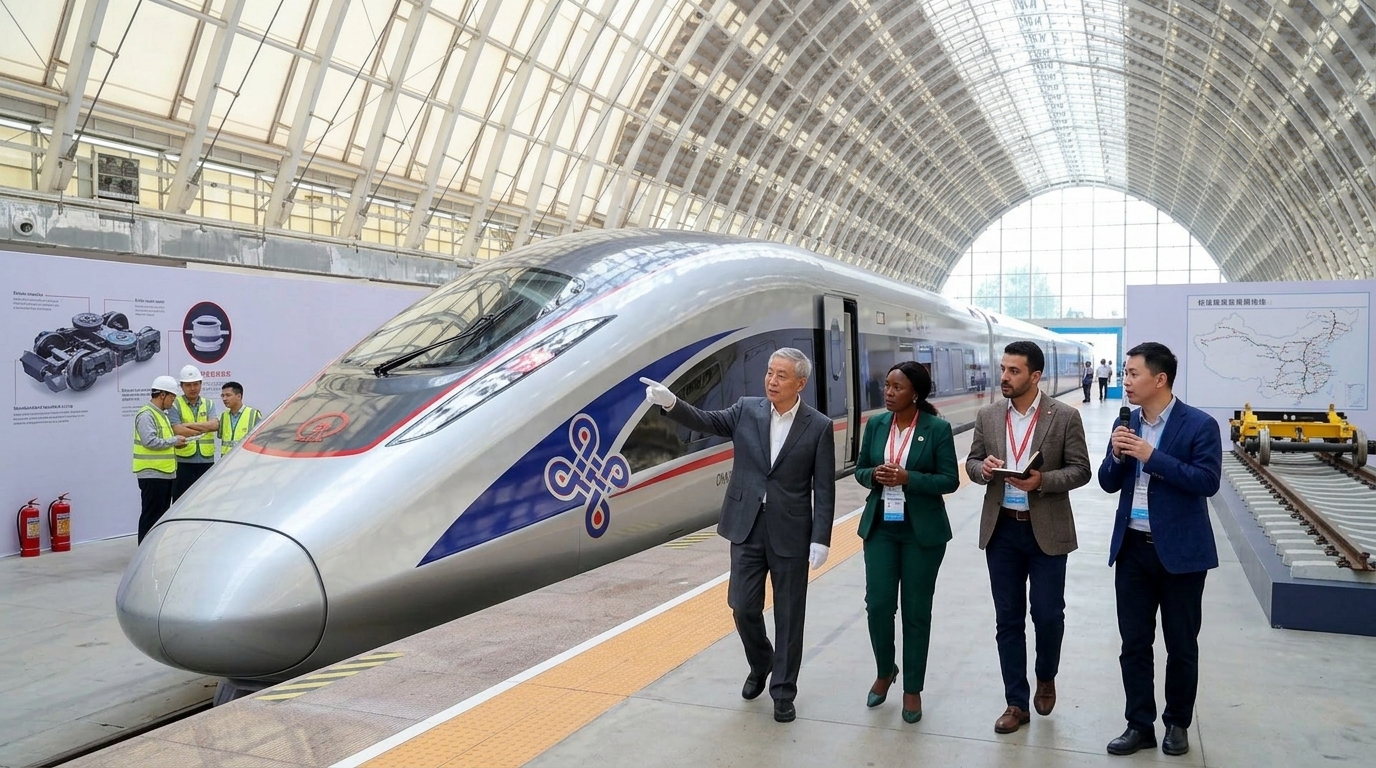
In the global chess game of power, the most critical battles are often fought not on battlefields, but in the conference rooms of standardization bodies. The recent launch of the new foreign-language section of China's national standards, accessible for free via the National Standardization Public Service Information Platform, marks a milestone that transcends mere technical convenience. It is a clear statement of intent: Beijing no longer wishes to simply manufacture the world's products; it wants to define the specifications by which they operate.
From Manufacturing to Design: The 'China Standards 2035' Strategic Vision
For decades, China was considered the 'factory of the world,' a country that adopted Western standards to export low-cost goods. However, the 'China Standards 2035' strategy, the natural successor to 'Made in China 2025,' has fundamentally changed the landscape. The Chinese leadership realized early on that whoever controls the standards controls the market. Standards are the invisible DNA of the global economy; they determine compatibility, safety, and ultimately, the cost of entry into any industry.
The publication of foreign-language versions of these standards aims to eliminate the linguistic barriers that hindered their international adoption. As analysts point out, this move makes it easier for countries involved in the Belt and Road Initiative (BRI) to integrate Chinese technology into their infrastructure, creating an ecosystem that favors Chinese firms over their Western competitors.
AI and Green Technologies at the Forefront
This acceleration does not only concern traditional industrial products. Beijing is strategically focusing on emerging sectors where the rules have not yet been fully established:
- Artificial Intelligence (AI): China is pushing for standards regarding AI ethics and governance, often with a different approach than the West concerning data protection and state oversight.
- Green Energy and Electromobility: With its dominance in batteries and photovoltaics, China seeks to make its own charging and storage standards the global benchmarks.
- Quantum Computing: By investing billions, Beijing aims to lay the groundwork for the communication protocols of the future.
"Standards are the language of trade. When you speak someone else's language, you can negotiate. When you force them to speak yours, you have already won," notes a senior official from the International Organization for Standardization (ISO).
Geopolitical Implications and the Western Response
The internationalization of Chinese standards is causing concern in Washington and Brussels. The European Union, which has traditionally dominated international standardization through organizations like CEN and CENELEC, now realizes that its 'technical sovereignty' is under threat. The new EU Standardization Strategy, recently presented, is an attempt to regain lost ground, emphasizing the protection of European values in technical specifications.
However, China possesses an advantage: speed and state backing. While in the West, standards often emerge from the bottom-up through private-sector consensus, in China, the process is top-down, allowing for rapid implementation and export. Free access to these specifications in multiple languages is the 'soft power' weapon that will allow Beijing to consolidate its influence in the Global South, where the need for cheap and easily applicable technical solutions is urgent.
Conclusion: Towards a Bipolar Technical World Order?
This development signals the end of the era of unified global standardization. We may be heading towards 'technological fragmentation,' where different regions of the planet operate under different standards, making interoperability more difficult and expensive. For businesses, understanding and adapting to Chinese standards is no longer optional but a necessary condition for survival in a market that no longer revolves exclusively around the Atlantic.