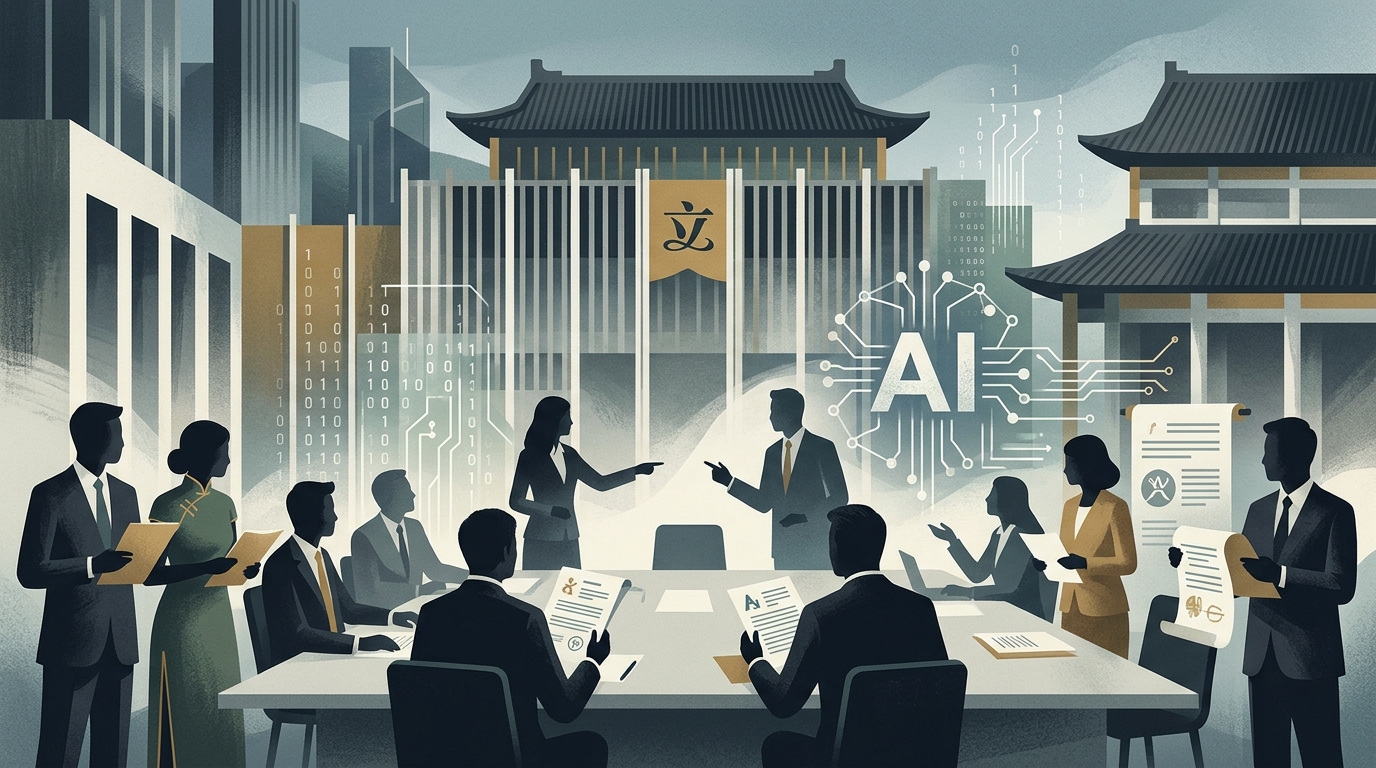
In the global chessboard of technological supremacy, the discourse has shifted from mere computational power to ethical governance. While the European Union adopts a rigorous regulatory stance with its AI Act and the United States relies heavily on market self-regulation, Hong Kong is carving out a unique path. A recent analysis by the South China Morning Post highlights the city as a potential laboratory for the future of ethical Artificial Intelligence (AI), offering lessons that could redefine how societies integrate algorithms into their daily lives.
The Philosophy of 'Soft Power' in Regulation
Hong Kong has not chosen the path of heavy-handed legislation that often stifles innovation before it can bloom. Instead, its approach is based on what analysts call 'dynamic guidance.' The Office of the Privacy Commissioner for Personal Data (PCPD) has issued detailed guidelines focusing on transparency, explainability, and human oversight. This framework is not just a list of rules, but a roadmap for businesses to build trust with consumers.
This strategy allows for flexibility. In a world where technology evolves faster than bureaucracy, the Hong Kong model suggests that ethics must be 'by design' rather than imposed as a punitive measure after the fact. This is particularly critical for the financial services sector, where the city remains a global leader. Using AI in credit scoring or wealth management requires a delicate balance between algorithmic efficiency and social fairness.
A Bridge Between East and West
Perhaps the most fascinating element of Hong Kong's approach is its geopolitical positioning. As part of China but with a distinct legal system based on Common Law, Hong Kong acts as a 'translator' of ethical values. Mainland China has adopted some of the world's most advanced rules for recommendation algorithms and generative AI, yet with a heavy focus on social stability and state security. Hong Kong, on the other hand, maintains an approach more closely aligned with international data privacy standards.
This dual identity allows the city to test technologies that can function in both controlled environments and open markets. For multinational corporations, Hong Kong serves as the ideal 'sandbox.' If an AI system can comply with Hong Kong's ethical requirements, it is highly likely to be acceptable on both sides of the global technological divide.
Ethics in Practice: From Healthcare to Smart Cities
Theory meets practice in sectors like healthcare. Hong Kong’s hospitals are already utilizing AI for disease diagnosis and patient flow management. Here, ethics is not an abstract concept but a matter of life and death. The city’s framework ensures that decisions made by machines are always verifiable by clinicians, avoiding the 'black box' phenomenon.
Furthermore, under the Smart City initiative, the use of AI in urban management is accompanied by strict data anonymization protocols. The challenge remains: how can you have a smart city that knows everything about its citizens' needs without violating their privacy? Hong Kong responds by investing in Privacy-Enhancing Technologies (PETs), positioning itself at the cutting edge of the technical application of ethics.
Challenges and the Road Ahead
Of course, the path is not without obstacles. Increasing influence from Beijing and concerns over political surveillance create skepticism in the international community. Can AI ethics exist independently of the political climate? Hong Kong’s answer seems to be technocratic realism. By focusing on commercial and operational ethics, the city seeks to protect its role as a global data hub.
In conclusion, Hong Kong is not just claiming a seat at the AI table; it is proposing a new model of governance. A model that is less ideological and more practical, less confrontational and more collaborative. If the world is looking for a way to reconcile the technological explosion with human dignity, its gaze must undoubtedly turn toward the East.