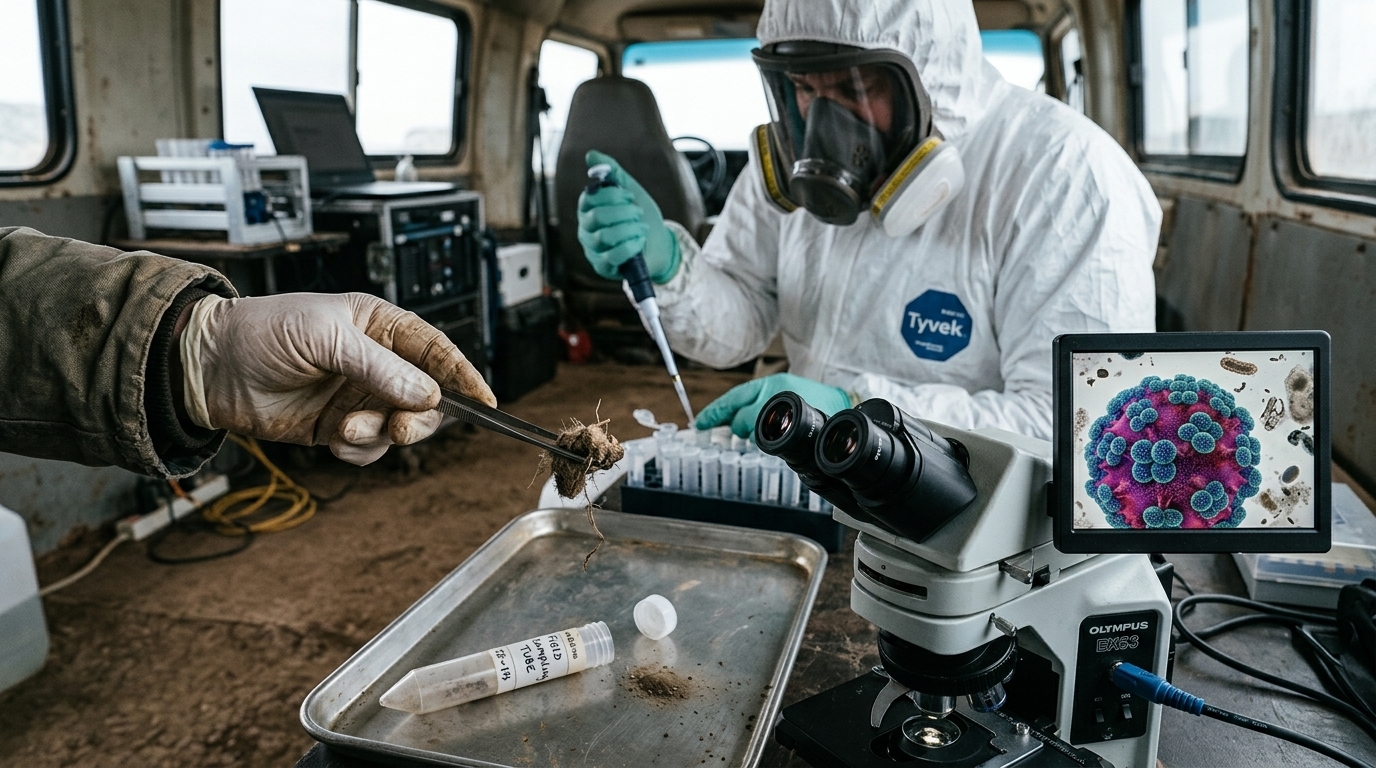
The recent news of a suspected Hantavirus outbreak on a cruise ship in the Atlantic, already linked to three deaths, has caused significant concern within the international community. Although Hantavirus is not a new pathogen, its rarity and high mortality rate make it one of the most dangerous viral threats to public health. Understanding its nature, transmission mechanisms, and symptoms is essential, not only for medical professionals but also for the general public, especially in an era where population movement and climate change are reshaping ecosystems.
What is Hantavirus and How Was It Discovered?
Hantavirus belongs to a family of viruses transmitted primarily by rodents. Its name is derived from the Hantan River in South Korea, where the virus was first isolated in 1976 by Dr. Ho Wang Lee, following an outbreak of hemorrhagic fever among soldiers during the Korean War in the 1950s. Since then, various strains of the virus have been identified worldwide, with different clinical manifestations depending on the geographic region.
In Europe and Asia, the virus typically causes Hemorrhagic Fever with Renal Syndrome (HFRS), while in the Americas, it is associated with Hantavirus Pulmonary Syndrome (HPS), which is the most lethal form. The virus's ability to remain dormant in rodents without killing them allows for its continuous dispersal into the environment through their excretions.
Transmission Mechanisms: The Role of the Environment
Hantavirus transmission to humans does not usually occur through person-to-person contact, with the exception of the Andes strain in South America. The primary mode of transmission is the inhalation of aerosols. When the urine, feces, or saliva of infected rodents dry and are disturbed (e.g., during cleaning a storage room or an enclosed space), the virus is released into the air. Humans inhale these microscopic particles and become infected.
- Inhalation: The most common method, especially in poorly ventilated enclosed spaces.
- Direct Contact: Touching contaminated surfaces and then touching the mouth or nose.
- Bites: Although rare, a bite from an infected rodent can transmit the virus.
- Food: Consuming food contaminated by rodent excretions.
The cruise ship incident highlights a new risk: the transport of the virus into controlled environments where the presence of rodents might go unnoticed. Health authorities are investigating whether the infection originated from stored food or from hidden rodent nesting sites in the ship's lower decks.
Symptoms and Clinical Presentation
The incubation period for Hantavirus typically ranges from one to eight weeks. Initial symptoms are deceptive, as they resemble those of the common flu. Patients experience high fever, chills, myalgia (especially in the back and thighs), fatigue, and headache. Gastrointestinal disturbances such as nausea, vomiting, and diarrhea often coexist.
"The speed at which the disease progresses is what terrifies clinicians. From a simple malaise, a patient can find themselves in respiratory failure within hours," infectious disease experts note.
In the case of Pulmonary Syndrome (HPS), after the first few days, the condition deteriorates rapidly. The lungs fill with fluid, causing severe shortness of breath and hypoxia. The mortality rate for this form reaches 38-40%. In the case of Renal Syndrome (HFRS), the patient may present with low blood pressure, acute renal failure, and internal bleeding.
Public Health Policies and Prevention
The management of Hantavirus is not based on a specific vaccine or antiviral drug (although ribavirin has been used in some HFRS cases), but on prevention and supportive care. Public health policy must focus on three pillars: monitoring rodent populations, informing the public, and tightening hygiene regulations in mass transport and catering areas.
For citizens, the instructions are clear: avoid contact with rodents, seal holes in homes, and use masks and gloves when cleaning areas that have been closed for a long time. It is important not to use a vacuum cleaner or a broom in areas with rodent droppings, as this disperses the virus into the air; instead, spraying with a disinfectant (bleach solution) before cleaning is recommended.
Conclusion
Hantavirus remains a reminder of the fragile balance between humans and the environment. As cities expand and climate change forces rodents to seek new habitats, the likelihood of contact increases. The cruise ship case serves as a warning for the need to strengthen International Health Regulations (IHR) and implement stricter controls in shipping and tourism. Early diagnosis remains the key to survival, and the vigilance of authorities is the only shield against a virus that acts silently but lethally.