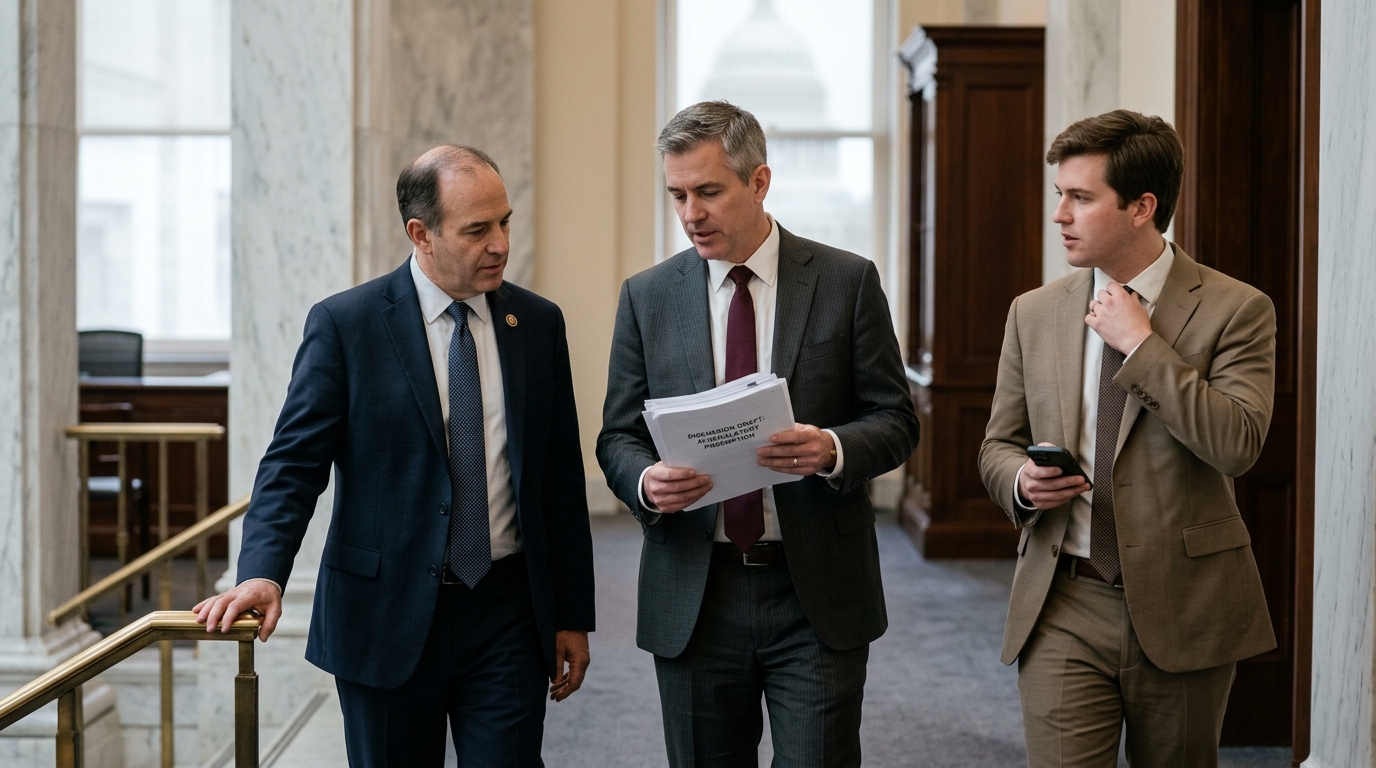
The battle for regulatory supremacy over Artificial Intelligence (AI) is entering a critical new phase. As Washington struggles to find a unified path forward, leading states such as California and New York have already moved to establish their own stringent rules. However, recent discussions within the US House of Representatives signal a clear push toward "federal preemption"—a legal maneuver that could invalidate local initiatives in favor of a single, national framework.
The Dilemma of the Regulatory Patchwork
Proponents of federal intervention, including many Silicon Valley tech giants, argue that a "patchwork" of 50 different state laws would make it impossible for AI companies to operate effectively. Imagine a company having to comply with one set of safety standards in San Francisco and a completely different set in Buffalo. This complexity, they claim, would stifle innovation and grant an advantage to international competitors like China.
On the other side, state-level lawmakers argue that Congressional inaction has forced their hand. California, with its much-debated SB 1047 bill, attempted to mandate safety testing for the largest AI models before their release. New York has focused on labor rights and algorithmic bias. If Washington triggers the preemption clause, these safeguards could vanish, leaving citizens vulnerable until a (potentially weaker) federal law is agreed upon.
The Political Chessboard and Vested Interests
The House debate isn't just about technology; it's about the distribution of power. Republicans tend to favor federal preemption to prevent "liberal" states from imposing excessive burdens on businesses. Some Democrats, however, fear that a federal law would act as a "floor" for protection rather than a "ceiling," preventing states from going further to protect residents from deepfakes and discrimination.
- Lobbying pressure from Big Tech has intensified, aiming to secure a "business-friendly" federal environment.
- Civil rights organizations warn that federal preemption could weaken protections against bias in hiring and housing.
- The precedent of data privacy legislation serves as a warning: the lack of a federal privacy law led to chaos, a scenario AI is now in danger of repeating.
According to reports from Politico, behind-the-scenes talks are focusing on how to draft the preemption clause so it doesn't entirely strip states of their authority over fraud or criminal law, while centralizing the technical specifications of AI models at the federal level.
Conclusion: A Fragile Balance
The stakes are enormous. If Washington succeeds in passing a law that supersedes state rules, it will provide companies with much-needed stability. However, if that law is insufficient, the US risks falling behind the European Union (AI Act) in terms of protecting fundamental rights. California and New York are unlikely to surrender their authority without a fight, and the ensuing legal battle could reach the Supreme Court, shaping the future of technological governance for decades to come.