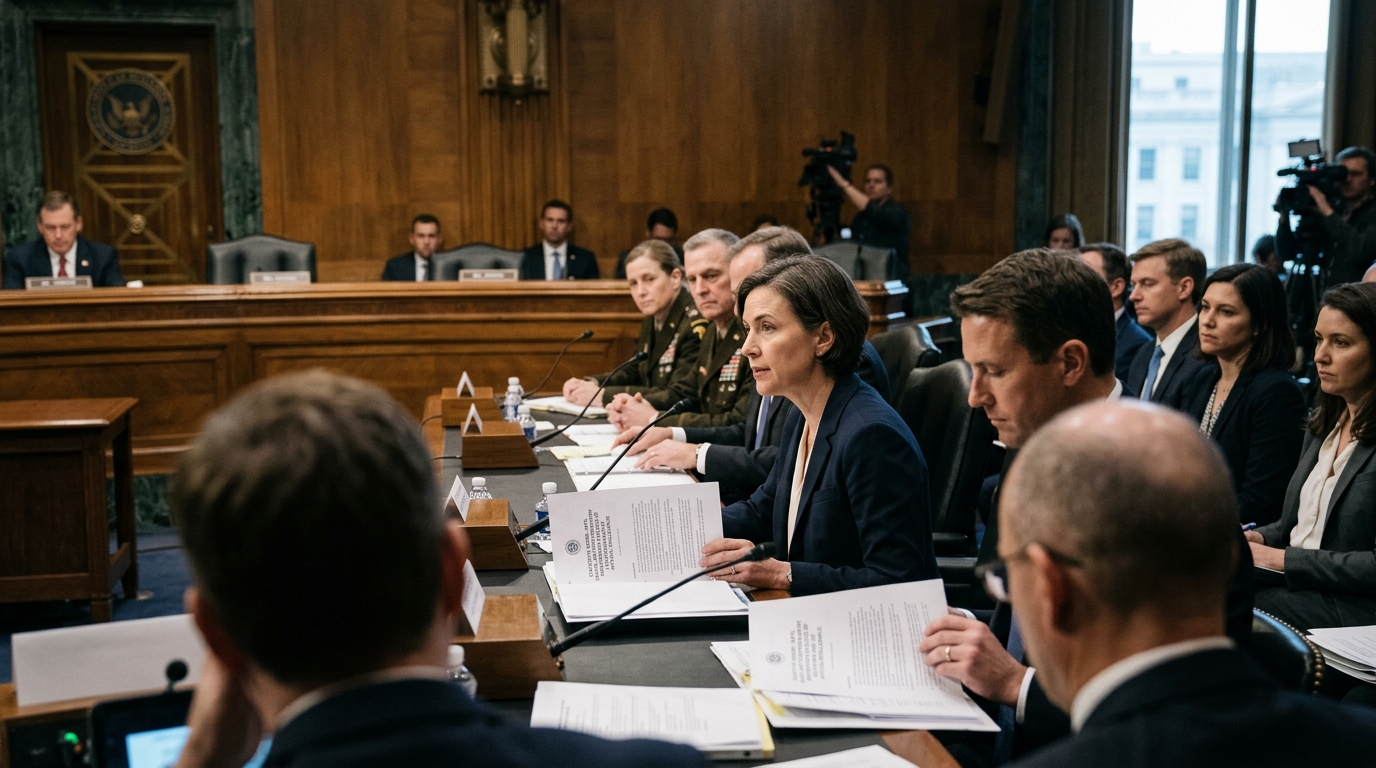
As we navigate the first half of 2026, the global Artificial Intelligence landscape stands at a pivotal crossroads. The recent U.S. Executive Order titled "Promoting Advanced Artificial Intelligence Innovation and Security" is far from a mere bureaucratic follow-up to the 2023 directives. Instead, it represents a radical shift toward protecting "sovereign intelligence." Analysis from Hogan Lovells highlights the profound legal and geopolitical implications of a policy that aims to solidify the United States as the undisputed command center for Large Language Models (LLMs) and autonomous systems.
The Strategy of "Computational Sovereignty"
The centerpiece of the new Executive Order is the establishment of rigorous compute thresholds. Unlike previous years, where compliance was largely voluntary or based on loose guidelines, this new directive mandates that companies developing models with training power exceeding 10^26 FLOPs must report detailed training methodologies and safety protocols to the Department of Commerce. This "digital border" is not just about technology; it is about national defense. The administration fears that the leakage of frontier model weights to "adversarial nations" could lead to next-generation cyberattacks or the automated synthesis of biological agents.
However, innovation is not being sidelined. The order introduces the "AI Talent Pathway," an aggressive strategy to recruit global scientific talent. By streamlining O-1 and H-1B visa processes for AI specialists, Washington is sending a clear message: the battle for AI is, above all, a battle for human capital. Legal analysts point out that this move attempts to balance strict chip export controls with an "open door" policy for the minds capable of wielding that silicon. It is a recognition that hardware without the world's best wetware is a strategic dead end.
The Open Source Dilemma and Transparency
One of the most contentious aspects of the order is its stance on open-source software. While the document acknowledges the importance of open source for democratic oversight and academic research, it imposes restrictions on the public release of model weights for systems that cross specific risk thresholds. This has sparked a fierce debate within the developer community. Critics argue that "security through obscurity" is a flawed and dangerous tactic that hinders the very transparency needed to find and fix vulnerabilities.
- Mandatory Red-Teaming: Companies must subject their models to exhaustive testing by independent third parties before any public release.
- Cloud Provider Certification: Infrastructure giants like AWS, Azure, and Google Cloud are now required to implement "Know Your Customer" (KYC) policies for foreign entities training large-scale models.
- NIST Standards: The National Institute of Standards and Technology takes on the role of the central regulator for safety benchmarks and AI evaluation metrics.
Geopolitical Implications and the Alignment with the EU
For Europe, the American Executive Order presents a significant compatibility challenge. While the EU has already implemented its landmark AI Act, the U.S. approach is more focused on national power and less on fundamental civil rights. Hogan Lovells emphasizes that multinational corporations will soon face a dual regulatory burden: complying with Brussels' ethical frameworks while simultaneously satisfying Washington's national security mandates. This divergence could lead to a fragmented AI market, where certain high-end models are geofenced or restricted based on jurisdictional compliance.
"Artificial intelligence security is no longer a technical detail; it is the cornerstone of 21st-century foreign policy," the Executive Order explicitly states.
In conclusion, the new Executive Order marks the end of the "Wild West" era in AI development. Innovation is no longer viewed as an end in itself but as a strategic asset that must be governed and directed. For the global market, this means that access to advanced AI capabilities will increasingly depend on strategic alliances and adherence to international security standards dictated by the major technological powers. The era of the "unregulated frontier" has officially closed, replaced by a complex architecture of managed innovation.