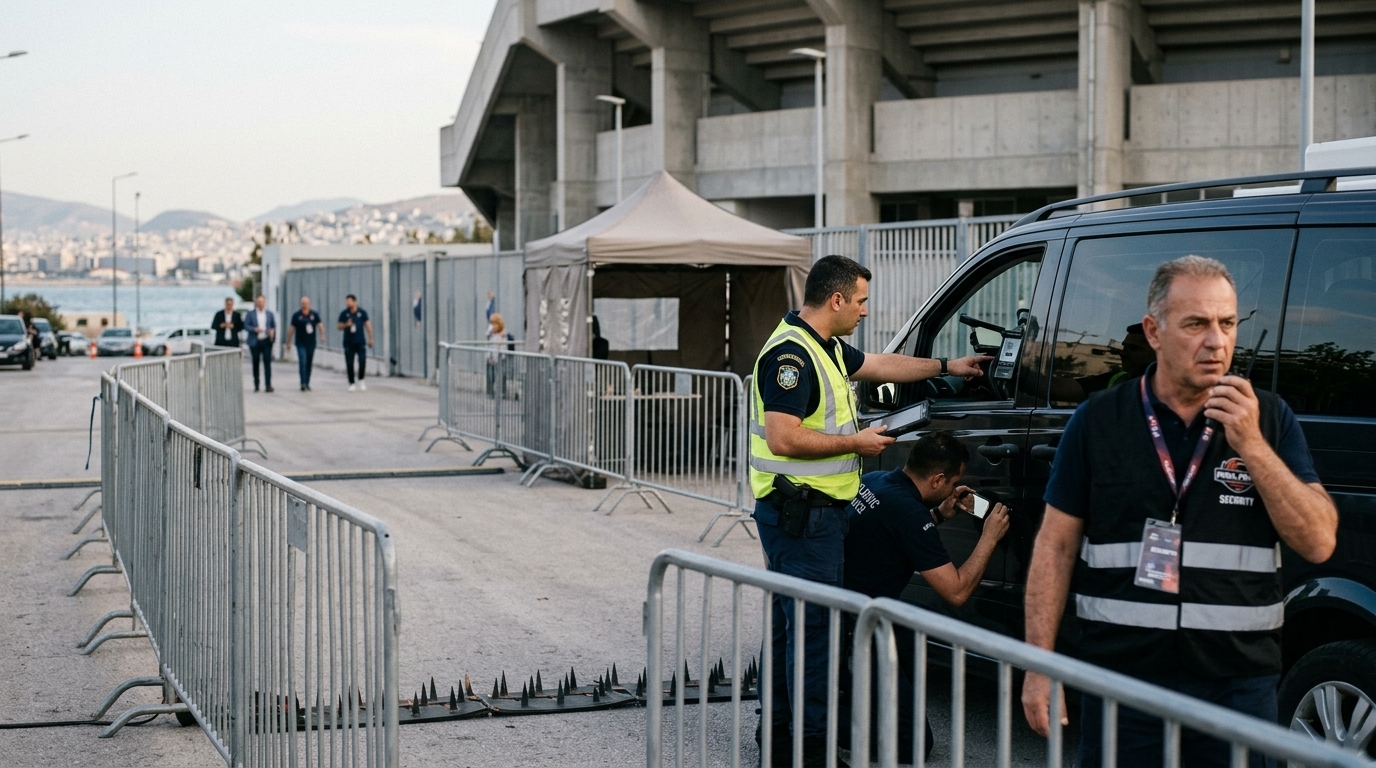
Athens returns to the epicenter of European basketball as the Olympic Athletic Center of Athens (OAKA) prepares to host the 2026 EuroLeague Final Four. However, the brilliance of the stars on the court is accompanied by an unprecedented mobilization of security forces. The "Lobster" plan (Shedio Astakos), as named by Hellenic Police officials, envisages the deployment of 4,000 officers, the use of advanced surveillance technologies, and a strict separation of fans in an effort to ensure that the celebration of sports is not tarnished by incidents.
The Operational Plan: A City Divided
The Hellenic Police's strategy for the weekend of May 22-24, 2026, is not limited to the OAKA premises. It begins at the country's entry points—Athens International Airport and the ports—and extends to the heart of the city. According to reports, fans of the four finalists will follow "sealed" routes from their hotels to the stadium, avoiding any potential contact points with rival groups.
Particular emphasis is placed on the Fan Zones to be set up in central locations of the capital. The choice of locations was based on the ability for controlled access and the avoidance of overcrowding in narrow streets. The use of drones and high-definition cameras with facial recognition software at selected points—despite concerns regarding data privacy—is considered key to the early identification of individuals banned from sporting venues.
Transportation and Traffic Regulations
For the permanent residents of Athens, the Final Four means a series of restrictions. Traffic regulations around Marousi and the main arteries leading to OAKA (Kifisias Ave, Spyrou Loui Ave) will be stringent. The police have recommended modifications to the schedules of the Electric Railway (Line 1) and the Metro, so that there are trains exclusively for the transportation of organized fans, escorted by police units.
- Traffic exclusion zone within a 1-kilometer radius around OAKA for vehicles without special accreditation.
- Continuous patrols by the DIAS motorcycle unit and MAT riot police at transfer stations.
- Special shuttle buses for VIP ticket holders and journalists from downtown Athens.
The challenge is twofold: ensuring spectator safety on one hand and maintaining city functionality on the other. Authorities are urging citizens to avoid unnecessary travel to the northern suburbs during match hours, as checks will be exhaustive and delays are certain.
The Shadow of Fan Violence
The fact that Athens is hosting such an event, while the country has been repeatedly hit by incidents of fan violence, puts the Ministry of Citizen Protection under close scrutiny by EuroLeague. The organizing body has demanded guarantees that scenes from the past will not be repeated. The presence of 4,000 officers—a number equivalent to the policing of critical political summits—highlights the fear of potential clashes, especially if the final four includes teams with high risk or historical rivalry.
"This is not just a sports match; it is an operation of national importance for the country's image," stated a senior Hellenic Police officer.
In conclusion, the 2026 Final Four is a crash test for Greek authorities. Success will not be judged solely on the court but primarily on the streets of Athens. The balance between enforcement and hospitality is delicate, and Athens is called upon to prove it can host a world-class event without sacrificing the freedom of its citizens on the altar of security.