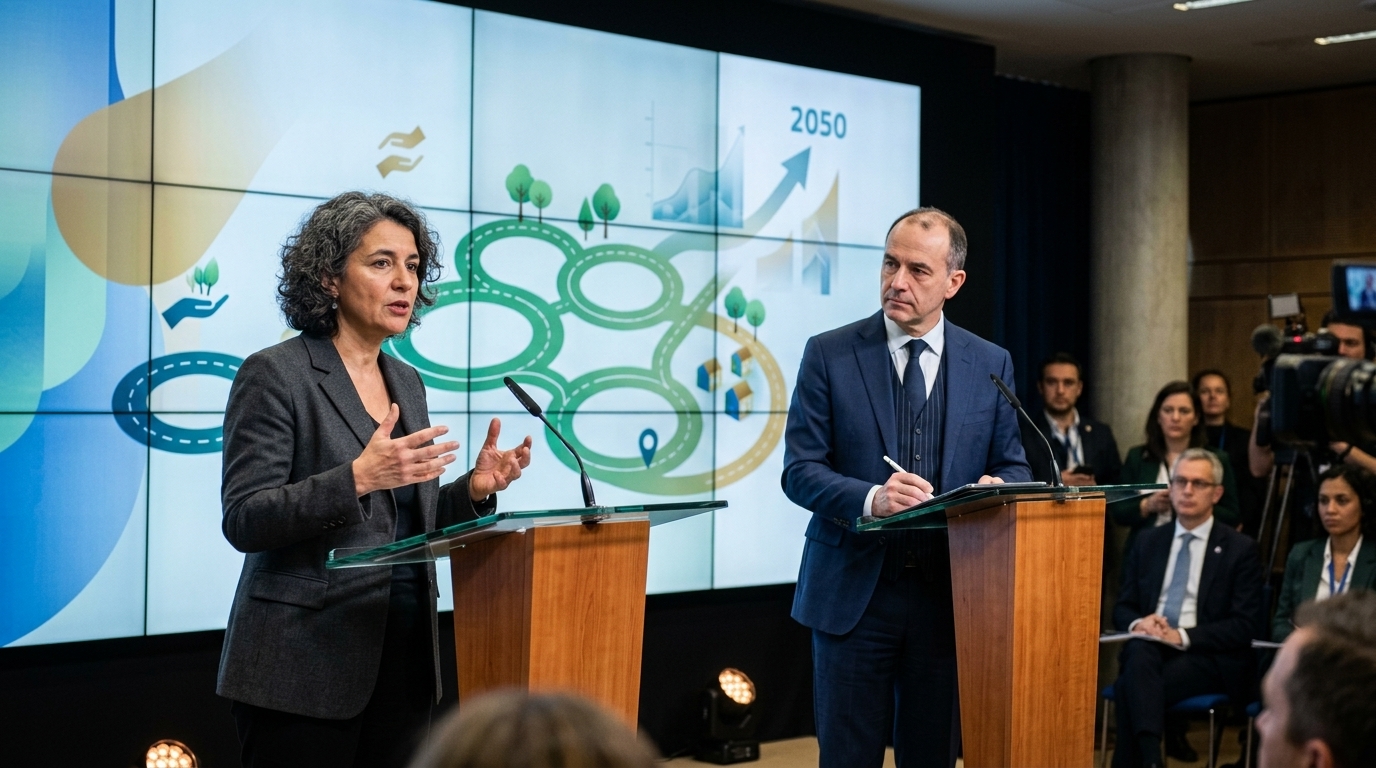
In an era where geopolitical turbulence and inflation are testing the resilience of European societies, the European Commission has taken a move of high symbolism and substance. The announcement of the new strategy for the eradication of poverty by 2050 is not merely a declaration of intent, but a roadmap that aspires to redefine the social contract in Europe. With 92.7 million people — nearly 21% of the EU population — on the brink of social exclusion, the need for structural intervention is more pressing than ever.
The Challenge of In-Work Poverty
One of the most alarming trends analyzed in the strategy is the rise of so-called 'in-work poverty.' The paradox of a worker who, despite full-time employment, is unable to cover basic needs, constitutes the central challenge for Brussels. The EU proposes strengthening collective bargaining and tightening frameworks for minimum wages, ensuring that work truly serves as a passport to a decent living. The strategy places particular emphasis on the 'platform economy' and new forms of employment that often lack social security, calling on member states to align their legislation with the requirements of the digital age.
Housing and Energy Poverty: The New 'Walls'
The issue of housing is emerging as the most critical factor of inequality. With real estate prices and rents soaring in European capitals, the Commission is promoting the creation of a European Affordable Housing Fund. The goal is to renovate existing buildings and construct new social housing with high energy efficiency standards. 'Energy poverty' — the inability to heat or cool a home — is directly linked to the Green Deal. The EU pledges that the transition to climate neutrality will not be carried out on the backs of the weakest, using the Social Climate Fund as a shield for vulnerable households.
Child Protection: Breaking the Cycle of Deprivation
Perhaps the most promising part of the strategy is the extension of the European Child Guarantee. The realization that poverty is inherited from generation to generation remains the greatest thorn in the side of European meritocracy. The strategy provides for free access to quality early childhood education, healthcare, and at least one healthy meal per day at school for every child at risk of poverty. Investment in childhood is no longer treated as a welfare expense, but as the most efficient economic investment for the continent's future.
Conclusion: The Path to 2050
The implementation of this ambitious plan will be judged in practice and, primarily, in funding. While Brussels sets the framework, the responsibility for implementation remains with the member states. The challenge is twofold: on one hand, the need for fiscal discipline, and on the other, the imperative need for social investment. If Europe manages to eradicate poverty by 2050, it will not have just achieved an economic goal; it will have rescued its very identity as a society of justice and solidarity.