Nature operates on a sophisticated, ancient clock—a precise mechanism that synchronizes the blooming of flowers with the emergence of pollinators and the changing of seasons. However, a massive new study utilizing the power of Artificial Intelligence (AI) confirms what many botanists have long feared: this clock is now running at a pace that evolution cannot match. The research, considered the most extensive of its kind to date, demonstrates that the climate crisis is forcing plants worldwide to flower earlier, at an average rate of 2.5 days per decade.
This study is more than a mere collection of statistics; it is a stark warning about the looming deregulation of our ecosystems. By employing advanced machine learning algorithms, researchers analyzed millions of digitized herbarium specimens and citizen-science observations spanning decades. AI’s ability to process vast volumes of visual data allowed scientists to identify patterns that would have been impossible to discern using traditional manual methods.
AI as the New Lens of Botany
For decades, the study of phenology—the science of periodic biological phenomena—relied on painstaking manual documentation. Researchers had to examine museum specimens one by one to determine whether a plant had buds, flowers, or fruits at the time of collection. The advent of AI has fundamentally changed this landscape. Using Convolutional Neural Networks (CNNs), scientists trained models to recognize flowering stages in millions of images with an accuracy exceeding 90%.
This technological revolution has enabled the creation of a global flowering map. The results show that the shift is not uniform. In higher latitudes and mountainous regions, where global warming is more pronounced, flowering occurs even earlier. For the Mediterranean basin, including countries like Greece, the findings are particularly alarming. The region is a recognized climate change 'hotspot,' with temperatures rising significantly faster than the global average, leading to more erratic botanical cycles.
The Threat of Ecological Mismatch
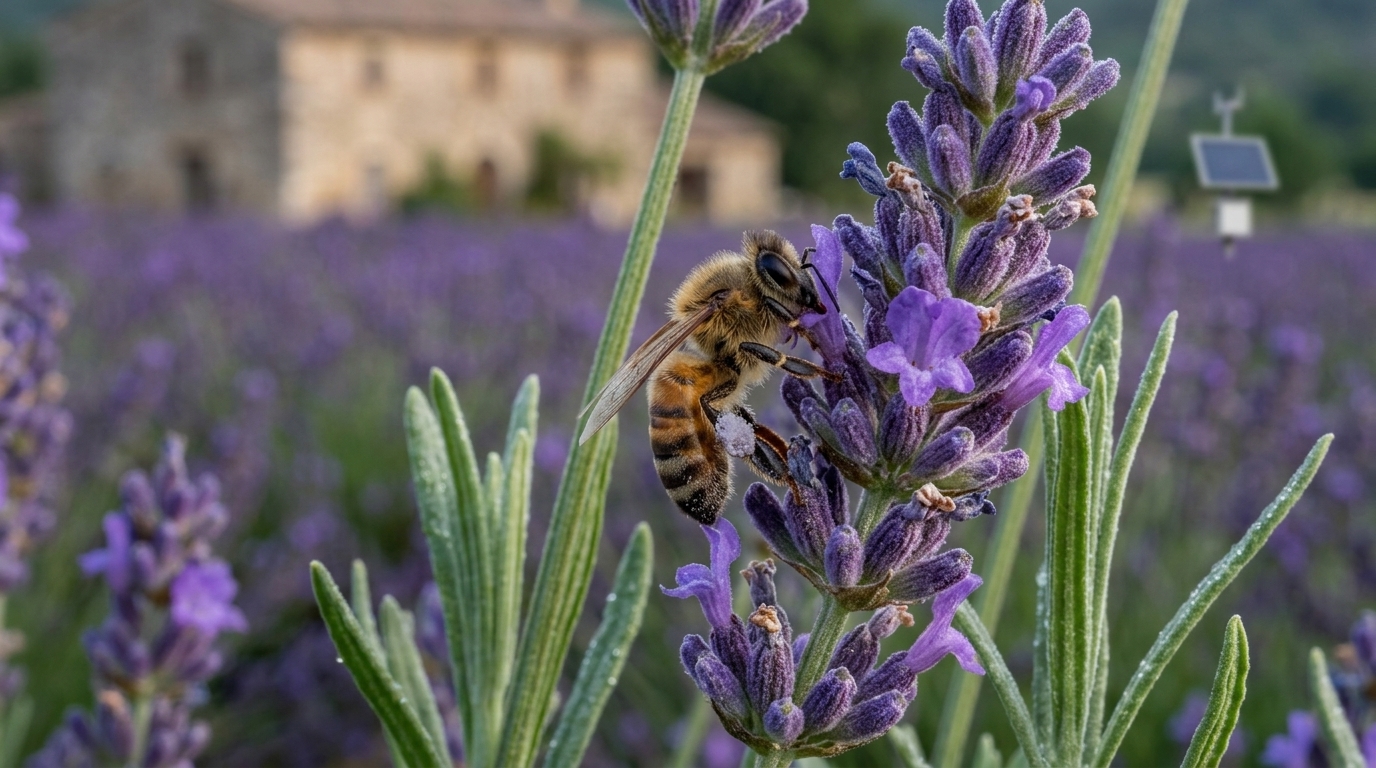
Early flowering is not just a botanical curiosity; it triggers what scientists call 'phenological mismatch' or 'asynchrony.' Many insect species, such as bees and butterflies, have evolved to emerge from hibernation precisely when their preferred plants are in bloom. When plants flower prematurely due to unseasonably warm winters, pollinators may not yet be active. This creates a double catastrophe: plants are not adequately pollinated, reducing their reproductive success, and insects are deprived of essential nutrients (nectar and pollen) when they finally emerge.
This asynchrony has cascading effects throughout the food chain. Birds that rely on caterpillars (which feed on young leaves and flowers) to feed their chicks find less food, leading to population declines. In Greece, where beekeeping is a vital part of the rural economy, the shift in the flowering times of aromatic plants and trees is already impacting honey production, forcing beekeepers to move their hives more frequently and to higher altitudes to find viable forage.
Impact on Agriculture and Food Security
Beyond wild ecosystems, the study highlights the risks to global agriculture. Many crops, such as fruit trees (peaches, cherries, almonds), require a specific number of 'chill hours' during winter to break dormancy correctly in the spring. Premature flowering makes them extremely vulnerable to late frosts. A brief cold snap in March or April can wipe out an entire year’s harvest if the trees have already bloomed during a warm February.
The use of AI in analyzing this data offers a predictive tool. Farmers and policymakers can now use these models to adapt agricultural practices, select more resilient varieties, or adjust planting schedules. However, technology alone is not a panacea. The study concludes that without a drastic reduction in greenhouse gas emissions, the speed of biological shifts will outpace the adaptive capacity of species, leading to a significant loss of biodiversity and potential ecosystem collapse.
Conclusion: A Digital Oracle for the Planet
The research underscores Artificial Intelligence as the 'digital oracle' of our time, capable of reading nature's signs that humans have ignored for decades. A shift of 2.5 days per decade might sound incremental, but in geological and evolutionary terms, it is lightning-fast. It serves as a reminder that every fraction of a degree in global temperature increase redraws the map of life on Earth. The challenge now is whether we will use this AI-derived knowledge to change our course or simply use it to document, with high-definition precision, the steady unraveling of our natural world.