Nature operates on an internal clock, a delicate balance fine-tuned through millions of years of evolution. However, a comprehensive new study confirms what scientists have feared for decades: climate change is not just warming the planet; it is fundamentally rearranging the timing of biological phenomena, with plant flowering serving as the 'canary in the coal mine.'
Phenology in Crisis
Phenology, the study of periodic biological events, is now at the heart of climate research. According to the findings, plants worldwide are flowering, on average, days or even weeks earlier than they did a century ago. This shift is not a mere aesthetic change in the landscape; it is a crack in the foundations of the food chain. Flowering is the critical moment when a plant offers food to pollinators and prepares for its reproduction. When this schedule shifts, it creates a phenomenon known as 'trophic mismatch.'
Imagine a scenario where blossoms appear before bees and butterflies have completed their hibernation cycles. The result is doubly catastrophic: plants go unpollinated, leading to reduced seed and fruit production, while pollinators are left without a vital energy source at the moment they need it most. In Greece and the wider Mediterranean, a region identified as a climate change 'hotspot,' the effects are already visible in olive groves and vineyards, where erratic winter temperatures 'trick' trees into early bloom, often only to be destroyed by late-season frosts.
The Role of Artificial Intelligence in Research
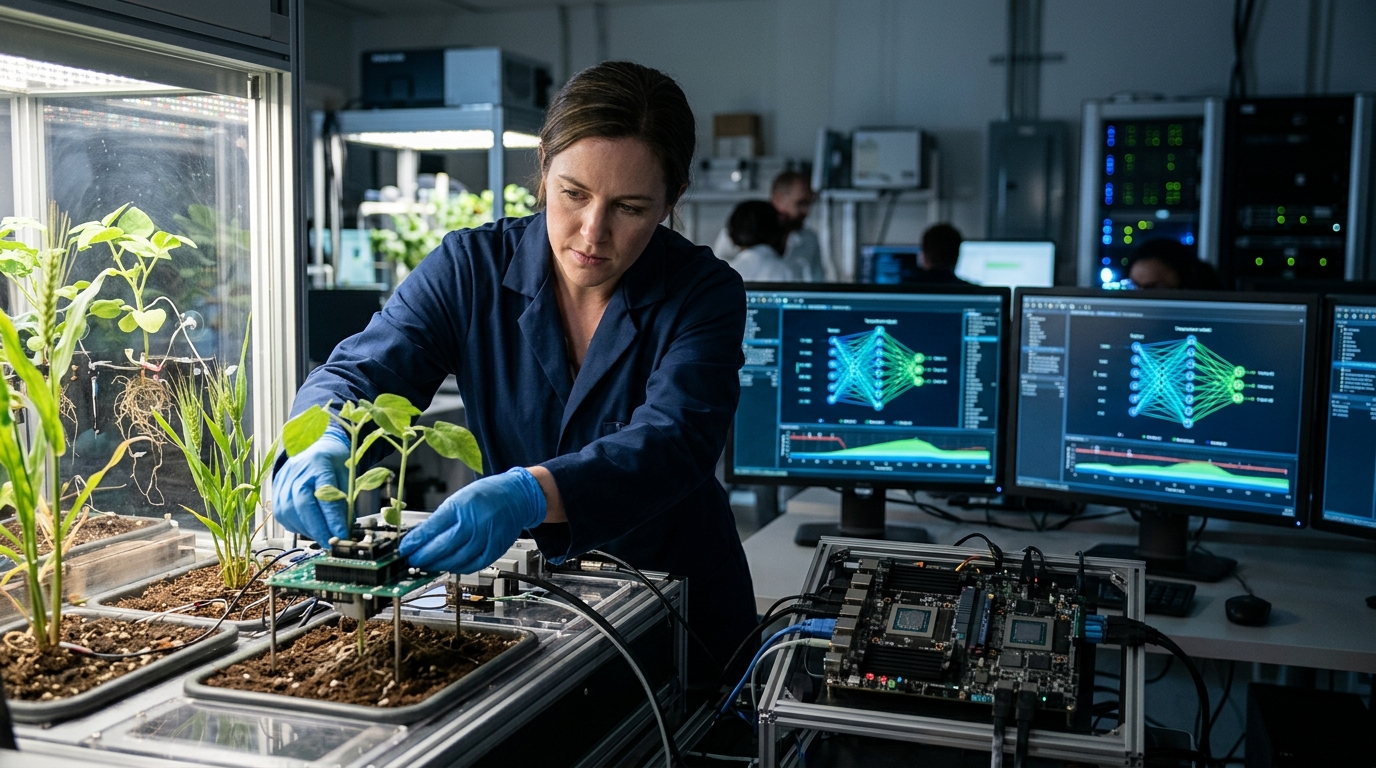
This particular study would not have been possible without the aid of modern technology. Researchers utilized advanced Artificial Intelligence algorithms to analyze millions of data points from digitized herbarium specimens dating back to the 19th century, alongside satellite imagery from recent decades. AI allowed for the identification of patterns on a global scale, linking local temperature anomalies to specific changes in plant physiology.
"We are not just seeing a change in dates; we are witnessing the disintegration of a symbiotic relationship that has lasted for millennia," the study notes.
Furthermore, the use of 'Citizen Science' via apps like iNaturalist provided scientists with an unprecedented volume of real-time data. Machine learning analysis of this data revealed that species flowering early in the spring are the most affected, as they react more directly to rising soil temperatures, unlike species that rely on day length (photoperiod) to bloom.
Economic and Social Implications
Beyond ecological destruction, premature flowering carries serious risks for global food security. Agriculture relies on predictability. When crops bloom out of season, the entire supply chain is disrupted. Agricultural insurance companies are already facing increased claims due to 'false springs,' where early warmth is followed by a freeze, wiping out production entirely.
- Crop yield reductions of up to 30% in certain regions.
- Increased food costs due to supply instability.
- Loss of biodiversity affecting ecotourism and local economies.
- The need for genetic modification of plants to make them more resilient to temperature fluctuations.
In conclusion, the study emphasizes that adaptation is no longer an option but a necessity. Preserving ecosystems requires a holistic approach that includes creating 'climate refugia' for plants and strengthening pollinator populations. The planet's biological clock is ticking fast, and this may be our last chance to synchronize with it once again.