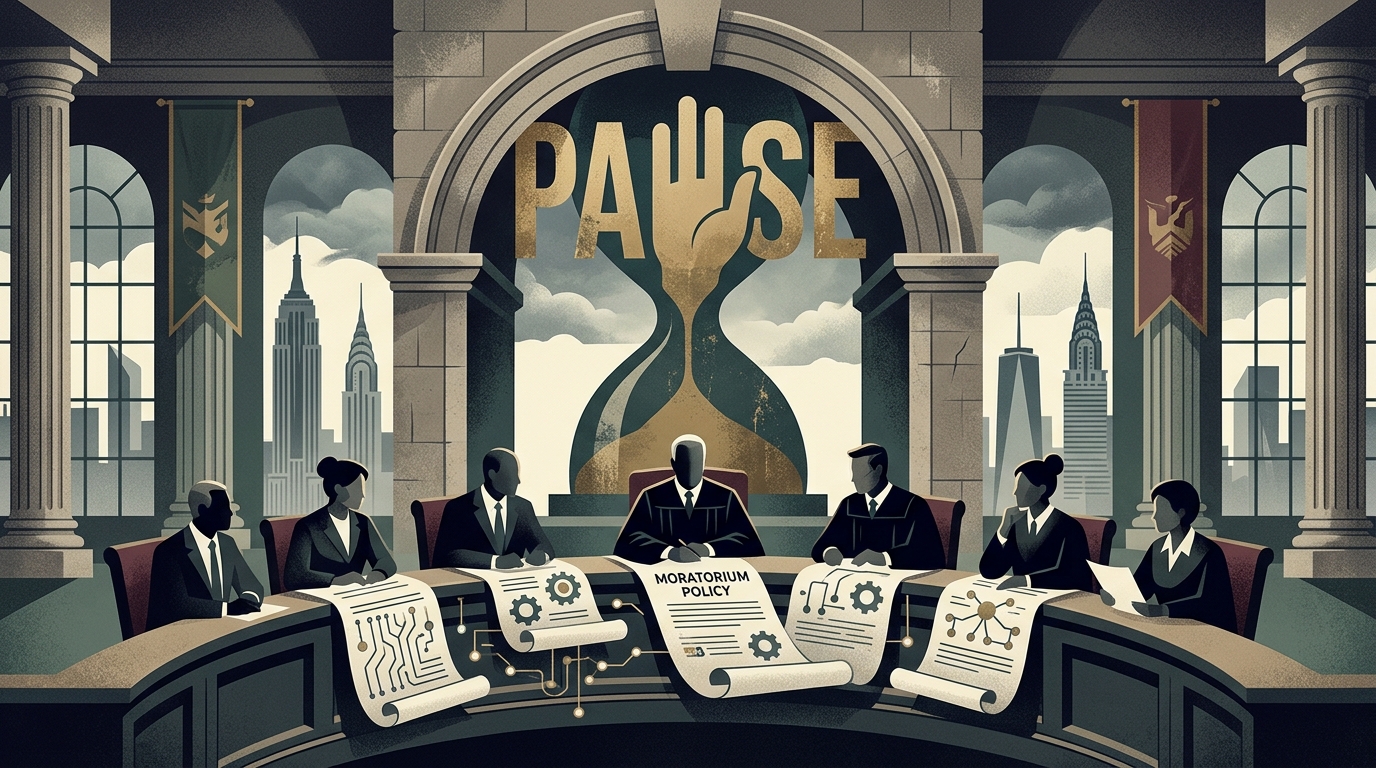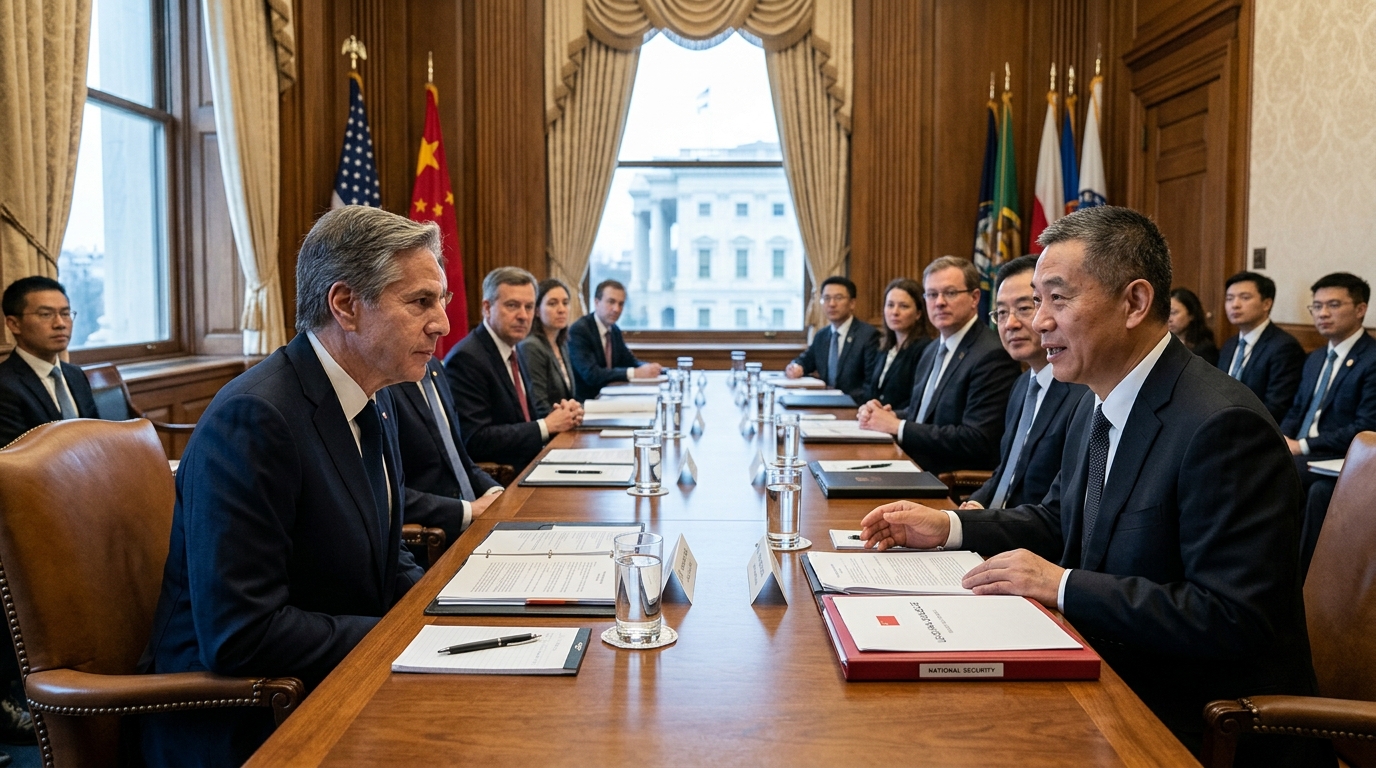
In the complex geopolitical landscape of 2026, Artificial Intelligence (AI) is no longer merely a tool for economic growth, but the central axis of national power. The recent resurgence of dialogue between the United States and China regarding AI safety has sparked diverse reactions within Washington’s corridors of power. However, a group of former senior security officials strongly argues that these talks, despite deep ideological and economic divides, directly serve U.S. national interests and global stability.
This perspective is rooted in the realization that complete decoupling in the AI sector is not only unfeasible but inherently dangerous. Unlike the Cold War, where nuclear equations were relatively straightforward, AI is a dual-use technology evolving at a pace that outstrips traditional diplomacy. The absence of communication channels increases the risk of miscalculation, particularly concerning the deployment of autonomous weapons systems and the integration of AI into nuclear command and control structures.
Managing Existential Risk and Strategic Deterrence
Former officials emphasize that dialogue allows the U.S. to establish necessary "red lines" to prevent unintended escalation. A critical point of consensus is the principle that humans, not algorithms, must maintain control over nuclear launch decisions. While China has historically been reticent regarding such commitments, its participation in technical discussions suggests a shared recognition of the risks posed by unaligned or rogue AI systems.
Furthermore, Washington utilizes these engagements to gauge Beijing's level of advancement. Diplomacy here functions as an informal intelligence-gathering mechanism. By understanding how Chinese scientists and policymakers perceive "AI safety," the U.S. can better calibrate its export controls and R&D investments. This is not cooperation in the traditional sense, but a form of "competitive coexistence" where knowing an adversary's intentions reduces the likelihood of strategic surprise.
The Semiconductor Dilemma and Regulatory Hegemony
Another pivotal issue is the intersection of safety dialogue and the ongoing trade war over semiconductors. The U.S. government has imposed stringent restrictions on China’s access to advanced chips from Nvidia and others, arguing they would be used to bolster the People’s Liberation Army. Critics of the dialogue argue that any discussion with Beijing undermines this hardline stance.
However, the counter-argument, championed by veteran diplomats, is that dialogue provides the necessary context to frame these restrictions as security measures rather than pure economic protectionism. This is vital for maintaining the cohesion of U.S. allies in Europe and Asia, who are often caught between security concerns and economic ties with China. If the U.S. positions itself as the leader in AI safety and regulation, it gains the moral and political high ground, shaping the global standards for AI ethics and governance.
The Challenge of Verification and the Path Forward
The greatest hurdle in these negotiations remains verification. In traditional arms control, missiles can be counted via satellite imagery. In AI, one cannot easily "see" the code or the compute power being utilized in classified labs. This makes expert-level technical discussions even more vital. Former officials advocate for the creation of shared research protocols for AI alignment to ensure that superintelligent systems do not act against human interests, regardless of their origin.
In conclusion, the US-China AI dialogue is not a concession but a strategic necessity. In a world where technology can trigger crises in fractions of a second, maintaining open lines of communication is the only insurance policy humanity has against uncertainty. Washington must continue to walk this tightrope: competing fiercely for technological dominance while simultaneously engaging in talks to ensure the survival of the species.