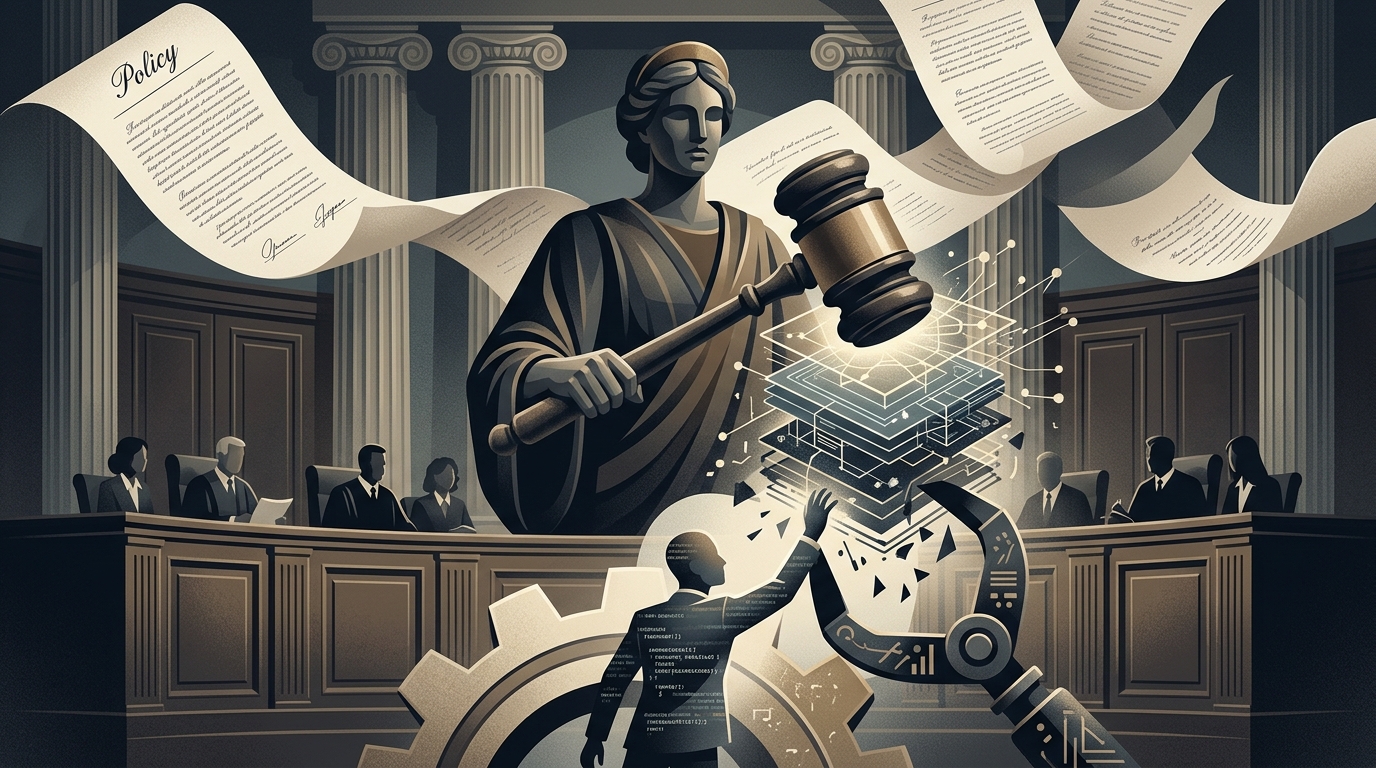
In an era where algorithms act as the invisible gatekeepers of the global labor market, a recent judicial development in the United States threatens to tear down the protective wall that tech giants have enjoyed until now. The case of Mobley v. Workday Inc. is not just a labor dispute; it is the first serious crack in the narrative that software companies bear no responsibility for how their clients use their tools.
The Legal Pivot: The Vendor as an 'Agent'
Federal Judge Rita Lin issued a landmark ruling, denying Workday’s motion to dismiss the case. The central premise of the ruling is that AI recruitment tool vendors can be considered "agents" of employers under Title VII of the Civil Rights Act. This means that if a Workday algorithm systematically rejects candidates based on race, age, or disability, the liability rests not only with the hiring company but also with the company that engineered the tool.
Workday, one of the world's largest providers of human capital management software, had long argued that it functions merely as a passive technology provider. However, Judge Lin noted that when a company delegates traditional HR functions—such as filtering and evaluating resumes—to an external algorithm, the provider of that algorithm acquires a de facto role as an employer.
The 'Black Box' of Bias
The lawsuit was filed by Derek Mobley, an African-American man over 40 with health conditions, who claims he was rejected from more than 100 positions for which he was qualified because all the companies used Workday’s assessment systems. The argument is that Workday’s machine learning models are trained on historical data that encapsulate past prejudices, thereby reproducing discrimination with mathematical precision.
- Age Discrimination: Algorithms that favor "digital natives" or reject resumes with extensive experience as "overqualified."
- Racial Bias: Systems that correlate specific zip codes or educational institutions with low performance, disproportionately affecting minorities.
- Exclusion of People with Disabilities: AI-driven personality tests that fail to accommodate neurodiverse individuals.
Implications for the Tech Industry
This ruling sends a loud message to the entire Silicon Valley ecosystem. Until today, SaaS (Software as a Service) companies felt secure behind complex terms of service and contracts that shifted liability to the end-user. If Lin's decision is upheld at a higher level, we will see a radical shift in how AI products are developed.
"Artificial intelligence cannot be a shield behind which discrimination hides. If you build the tool that decides who gets to work, you are accountable for that tool's decisions," legal analysts state.
In Europe, this development is being watched with particular interest as it coincides with the implementation of the European Union's AI Act. The European regulation classifies recruitment systems as "high-risk," requiring strict auditing and transparency. The US court decision reinforces the global trend toward "algorithmic accountability."
The Road Ahead: Compliance or Legal Warfare?
Tech companies will now face a dilemma: either invest massive sums in internal audits and bias-mitigation tools or face a wave of class-action lawsuits that could cost billions. For workers, this decision represents a victory for human dignity over automated coldness. Technology must serve society, not recycle its pathologies.