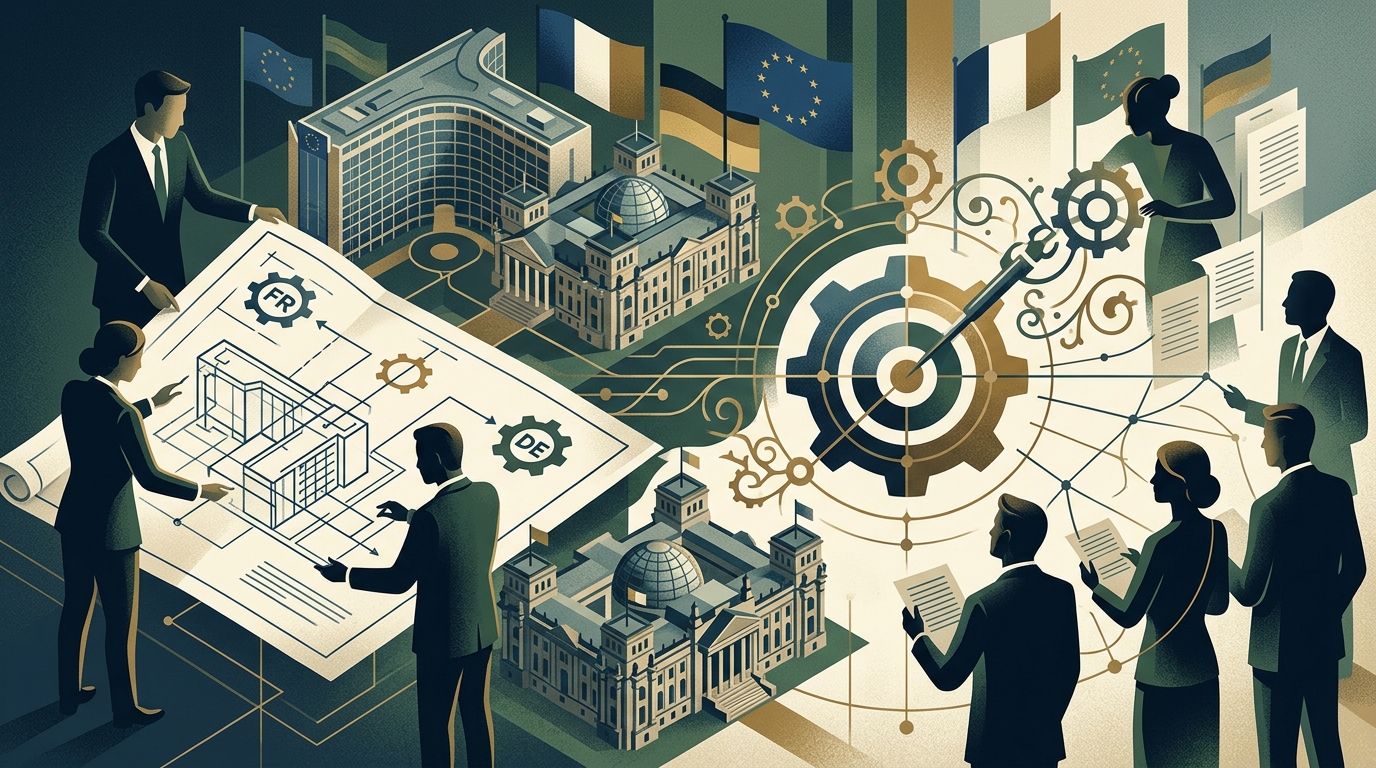
Fifteen years after its creation under the Lisbon Treaty, the European External Action Service (EEAS) stands at a critical crossroads. According to reports from the Financial Times, Paris and Berlin have tabled a series of radical restructuring proposals aimed at eliminating bureaucratic inertia and bolstering the European Union's geopolitical influence. In a world defined by the return of great power competition, the need for a more coherent and effective European diplomacy has never been more urgent.
The Identity Crisis of European Diplomacy
The EEAS was established with the ambition of becoming the EU's "Ministry of Foreign Affairs," providing the High Representative with the tools for a unified foreign policy. However, the reality of recent years has exposed significant cracks. The service often finds itself trapped between the interests of member states and the competencies of the European Commission. A lack of clear hierarchy and overlapping roles with national diplomatic services have led to a situation where the EU frequently reacts to developments rather than shaping them.
Critics of the current structure point out that the EEAS has become a heavy bureaucratic machine where decision-making requires endless consultations. France and Germany, the two traditional pillars of European integration, seem to agree that the current mode of operation has reached its limits. Their proposal is not merely a cosmetic change but a structural reboot that would allow the EU to speak with one voice—or at least a much stronger chorus.
The Franco-German Engine and the New Architecture
The plan promoted by Paris and Berlin focuses on three central pillars: simplifying structures, better integrating economic tools into foreign policy, and strengthening the role of EU delegations worldwide. One of the most controversial proposals concerns closer cooperation—or even the merger—of certain EEAS departments with Commission directorates managing international aid and neighborhood policy (DG NEAR).
This move aims to tackle the "silo" phenomenon, where diplomatic strategy is detached from financial resources. In the era of the Global Gateway, the EU's response to China's "Belt and Road Initiative," Europe is realizing that diplomacy without economic power is a hollow vessel. The reform seeks to give the High Representative—a position now held by Kaja Kallas—greater control over the Union's "purses," allowing for a more strategic use of developmental aid and investment.
"Europe cannot remain an economic giant and a political dwarf. Restructuring the EEAS is the first step toward claiming our strategic autonomy," says a senior diplomat in Brussels.
Challenges and Reactions from Smaller States
Despite the momentum provided by the Franco-German agreement, the path to reform is not paved with roses. Many smaller member states express concerns that strengthening the EEAS under Franco-German guidance could marginalize their own national priorities. There is a fear that EU foreign policy will become a tool for the Union's major powers, overlooking the sensitivities of regions like the Baltics or Southeastern Europe.
Furthermore, the institutional rivalry between the EEAS and the European Commission remains active. Commission President Ursula von der Leyen has repeatedly sought to centralize external competencies under her direct control, promoting a "Geopolitical Commission." The proposal for radical change in the EEAS could be interpreted as an attempt by member states (via the Council) to reclaim the reins of foreign policy, limiting the Commission's growing influence.
The Stakes of Strategic Autonomy
At the heart of this discussion lies the vision of "Strategic Autonomy." With uncertainty prevailing in transatlantic relations and the rise of authoritarianism globally, the EU is called to decide whether it will remain a passive observer or evolve into an autonomous pole of power. The diplomatic service is the nervous system of this ambition. If the reform succeeds, the EU could gain the necessary speed to intervene in crises, from Ukraine to the Middle East, in a way that reflects its true weight.
In conclusion, the initiative to bring these discussions to light highlights a Europe that, despite its internal disagreements, realizes that the status quo is no longer sustainable. Restructuring the EEAS is not a technocratic exercise but a deeply political act that will define the Old Continent's place in the 21st century. Its success will be judged by the ability of the 27 to balance national sovereignty with the need for a common, powerful European presence.