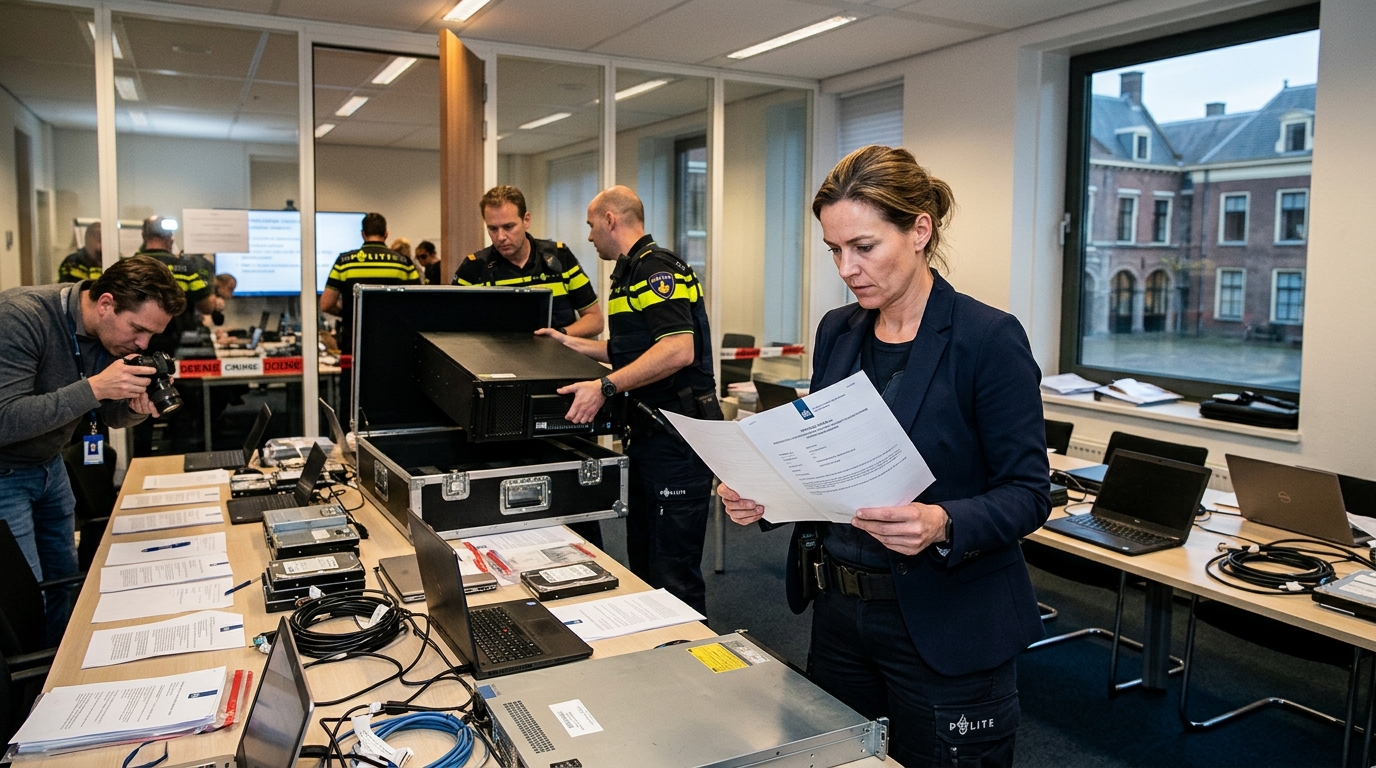
In one of the most significant digital enforcement operations in recent years, Dutch authorities have dealt a major blow to the operational capabilities of cybercrime groups linked to Russia. The Fiscal Information and Investigation Service (FIOD) of the Netherlands, working in concert with international partners, raided two major data centers, seizing 800 servers that formed the backbone of extensive ransomware and botnet networks.
The Strategic Importance of the Netherlands in the Digital Map
The choice of the Netherlands as a theater of operations is no coincidence. The country serves as one of the world's most vital telecommunications hubs, hosting the AMS-IX (Amsterdam Internet Exchange), one of the largest internet traffic exchange points globally. This exceptional infrastructure, while a blessing for the digital economy, has become a magnet for so-called "bulletproof hosting." These are hosting services that promise their clients—often criminal elements—immunity from legal seizure or takedown requests.
According to FIOD's analysis, the seized servers were used to coordinate attacks on critical infrastructure across Europe and North America. The ability of authorities to penetrate these data fortresses suggests a new era of aggressive cyber-policing, where the technical superiority of state agencies is beginning to balance the agility of hackers.
The Russian Connection and Hybrid Warfare
While the Kremlin consistently denies any involvement in cyberattacks, Dutch authorities were clear: the dismantled infrastructure served groups operating within Russian territory, often with the tolerance or direction of state security services. In 2026, the line between pure crime for profit and state-sponsored sabotage has become blurrier than ever.
"This is not just about financial crime. It is a battle for the integrity of our digital borders," stated a senior FIOD official.
The seizure of 800 servers means that thousands of terabytes of data, encryption keys, and communication logs are now in the hands of Western intelligence agencies. This treasure trove of information is expected to lead to new arrests and the unmasking of the true identities of individuals who believed their digital anonymity was impenetrable.
Technical Analysis: The End of Bulletproof Hosting?
This operation highlights the vulnerability of traditional obfuscation methods against coordinated physical raids. Hackers rely on speed and the ability to move their data from one jurisdiction to another. However, the simultaneous seizure at two different locations left no room for the activation of self-destruct protocols or data transfers.
- Botnet Deactivation: The seizure of command-and-control (C2) servers leaves millions of infected computers without "instructions," immediately reducing the risk of mass DDoS attacks.
- Ransomware Data Recovery: There is hope that decryption keys will be found on the servers, allowing victims of previous attacks to recover their files without paying a ransom.
- Political Pressure: This move sends a message to service providers in the Netherlands that "neutrality" is no longer an excuse for facilitating crime.
Challenges and the Road Ahead
Despite the success, experts warn that such victories are often temporary. Cybercrime is a Hydra; for every server seized, new infrastructure is created in countries with less stringent legal frameworks, such as Southeast Asia or parts of Africa. Furthermore, the increasing use of decentralized (P2P) networks makes it harder to find a single point of failure.
The Netherlands, however, has proven that political will can translate into substantial results. This operation falls within the broader context of the European NIS2 directive, which requires stricter oversight of critical infrastructure and digital service providers. The question remains whether Russia will retaliate in cyberspace, targeting Dutch government agencies or the country's energy infrastructure this time.
In any case, May 27, 2026, will go down in history as the day digital policing moved from theory to practice, proving that even the darkest corners of the internet can be illuminated by the light of the law.