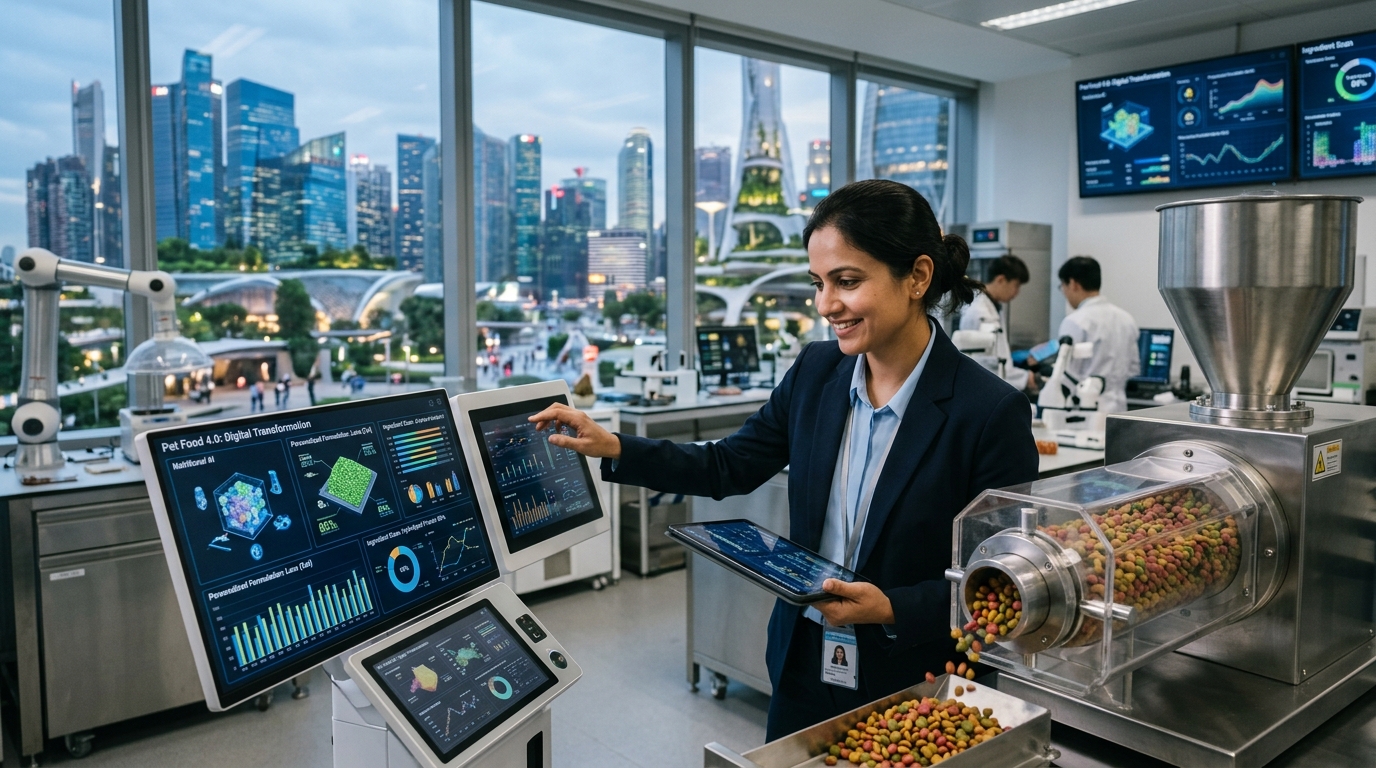
The era when pet food was limited to a simple choice between 'dry' or 'wet' is officially over. Today, the industry is undergoing a seismic shift known as 'Pet Food 4.0.' Inspired by the Industry 4.0 paradigm, this new wave integrates Artificial Intelligence (AI), Machine Learning, and Big Data analytics into every stage of the value chain: from recipe formulation and factory production to personalized nutrition in the consumer's home.
The driving force behind this evolution is the increasing 'humanization' of pets. Owners no longer see their dogs or cats merely as companion animals, but as equal members of the family. This psychological shift demands nutritional solutions that mirror human trends: transparency, sustainability, and, above all, precision.
Personalization as the New Standard
The most significant application of AI in Pet Food 4.0 is the creation of personalized nutrition plans. Using algorithms that analyze data such as breed, age, activity level, medical history, and allergies, companies can now offer unique food blends for each individual animal. AI doesn't stop at the initial recommendation; through integration with smart collars (wearables) and health-tracking apps, the system can adjust calories and nutrients in real-time based on the animal's daily exercise.
This approach addresses one of the biggest problems in modern veterinary medicine: obesity. According to recent studies, over 50% of pets in the Western world are overweight. AI offers the possibility of precise portion control, reducing the risk of chronic diseases and increasing the life expectancy of our four-legged friends.
From Lab to Production: Technological Superiority
At the production level, AI is transforming how food is designed. The use of 'electronic tongues' and 'electronic noses'—sensors backed by AI—allows companies to predict a flavor's palatability before the first batch is even produced. This drastically reduces raw material waste and the time required for Research and Development (R&D).
Furthermore, smart manufacturing enables factories to operate with unprecedented efficiency. Predictive maintenance algorithms identify potential machine failures before they occur, while AI optimizes the supply chain, ensuring that raw materials are sourced sustainably and reach their destination with the minimum possible carbon footprint.
Ethics and Data: The Next Challenge
Despite the obvious benefits, the rise of Pet Food 4.0 raises questions about data protection. Pet owners share vast amounts of personal information—from their home address to their daily routines—through nutrition apps. Ensuring that this data is not misused by third parties is a challenge the industry must address with seriousness.
In conclusion, Artificial Intelligence is not just changing what our pets eat; it is redefining our relationship with them. The transition to Pet Food 4.0 is a promise of better health, longer life, and a more sustainable industry, provided that technology remains in the service of well-being and not just profit.