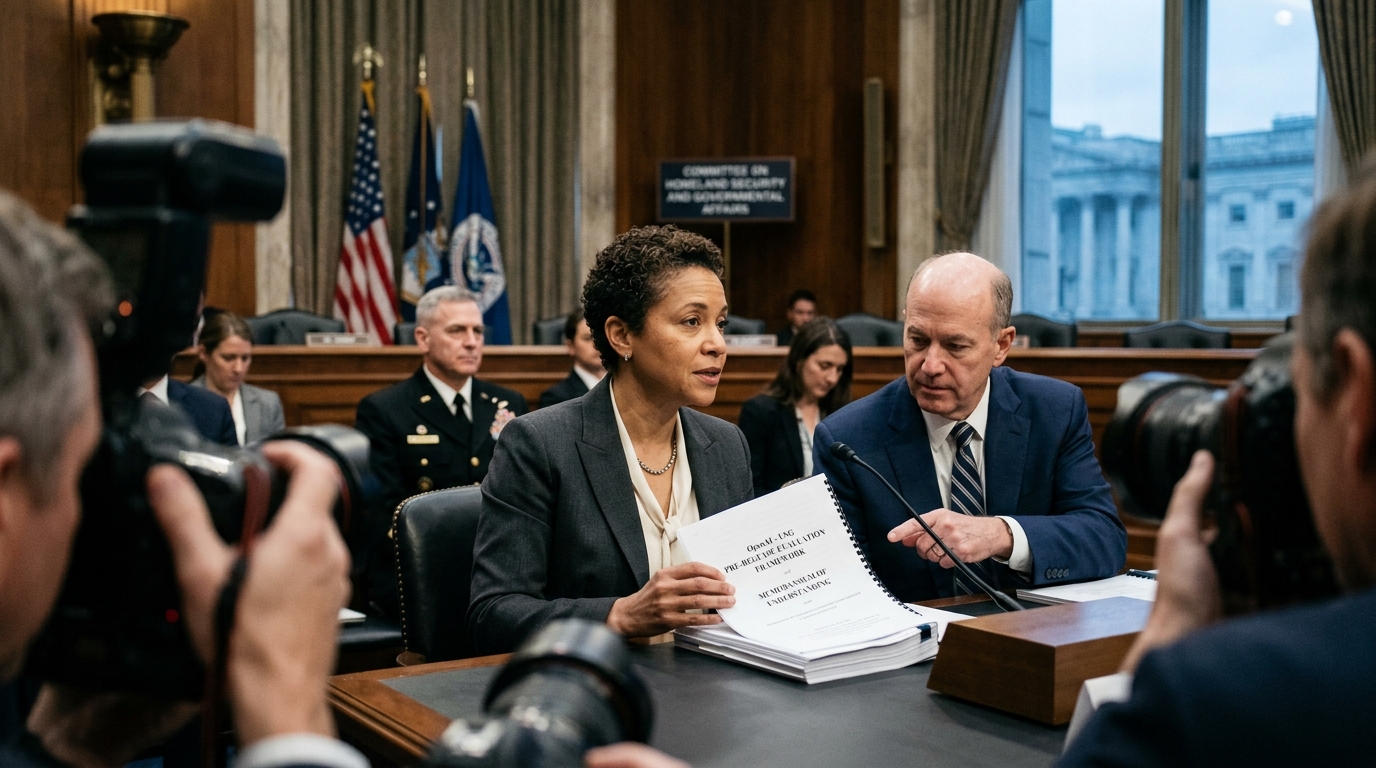
The rise of DeepSeek, a Chinese AI lab that has recently upended Silicon Valley's status quo with its R1 model, is no longer just a technological milestone—it has become a first-order diplomatic crisis. Reports indicate that the US State Department has issued a formal directive to its global diplomatic corps to launch a coordinated campaign warning allies about the practices of the Chinese firm. At the heart of this confrontation is a technique known as 'knowledge distillation,' which Washington frames not as innovation, but as a sophisticated form of intellectual property theft.
The Mechanics of Distillation: Learning or Larceny?
Knowledge distillation is a well-established concept in machine learning. It involves training a smaller, more efficient 'student' model to mimic the outputs and behavior of a larger, more complex 'teacher' model. While the technique has legitimate uses—such as optimizing AI for mobile devices—the US government alleges that DeepSeek utilized it in a 'parasitic' manner. By querying American models like OpenAI’s GPT-4o and using the resulting data to train its own systems, DeepSeek was able to achieve state-of-the-art performance at a fraction of the R&D cost incurred by US firms.
The State Department’s argument is straightforward: US companies spent billions of dollars and years of trial-and-error to reach current benchmarks. DeepSeek, they claim, effectively 'siphoned' the intelligence of these systems, bypassing the risks and costs of original discovery. Washington warns that if this practice goes unchecked, it will destroy the economic incentive for Western companies to invest in the next generation of AI, as their breakthroughs will be immediately harvested by state-backed competitors in Beijing.
Geopolitical Strategy: Beyond Chips to Algorithms
This diplomatic push represents a significant escalation in the US-China tech war. For years, the strategy focused on hardware—restricting China’s access to high-end Nvidia GPUs and lithography machines. However, the success of DeepSeek has shown that software ingenuity and 'distillation' can partially offset hardware limitations. Consequently, the US is shifting its containment strategy from the physical layer to the algorithmic layer.
US diplomats are reportedly briefing foreign governments on the risks of integrating DeepSeek’s technology into national critical infrastructure. The warnings center on security vulnerabilities and the ethical implications of supporting a model trained through alleged IP theft. Furthermore, there is a strategic concern: by offering high-performance AI for free or at low cost, China is gaining significant soft power in the Global South, potentially locking developing nations into a Chinese-led digital ecosystem.
The Defense of Efficiency and the Open Source Dilemma
DeepSeek has consistently defended its methods, framing its achievements as a triumph of algorithmic efficiency over 'brute force' computing. Many in the global AI community have praised DeepSeek for proving that massive, trillion-dollar clusters aren't the only path to intelligence. The fact that DeepSeek has released much of its work under open-source licenses further complicates the 'theft' narrative, as it positions the company as a contributor to the global commons rather than a secretive thief.
The debate touches on a fundamental philosophical question in AI: where does 'learning' end and 'copying' begin? If a human student reads a textbook and gains knowledge, they haven't stolen the book. If an AI reads the output of another AI to improve its logic, is that a violation of property rights or simply the most efficient way to learn? Current international law is ill-equipped to handle this nuance, leaving a vacuum that the State Department is now attempting to fill with diplomatic pressure.
Conclusion: Setting the Rules for the AI Era
The US campaign against DeepSeek is a clear admission that the technological gap between Washington and Beijing is closing faster than anticipated. By framing distillation as a diplomatic threat, the US is attempting to establish a new global norm for AI development—one that protects the massive capital investments of its tech giants. However, this strategy faces resistance from allies and neutral nations who see the value in cheaper, more accessible AI models. The outcome of this 'distillation war' will likely determine whether the future of AI is a closed, proprietary race or an open, albeit legally contentious, global evolution.
"Innovation without protection is merely a gift to one's competitors; we must ensure that the fruits of American R&D are not harvested by those who refuse to plant the seeds." - Anonymous State Dept Official