The era of Artificial Intelligence (AI) is often described in ethereal terms: algorithms, the "cloud," and digital intelligence. However, the year 2026 is reminding us in the harshest way that AI has a very specific, heavy, and noisy physical footprint. Data centers, the temples of this new religion of information, are popping up in every corner of the globe, but their initial reception with "open arms" is now giving way to intense skepticism and organized community resistance.
The Illusion of Economic Development
For years, local governments across the United States, from Louisiana to Virginia, competed to offer the largest tax breaks to attract giants like Amazon, Google, and Microsoft. The promise was always the same: jobs and technological advancement. However, the reality is proving to be different. A data center occupying hundreds of acres of land may employ only a few dozen permanent staff, mainly security personnel and maintenance technicians.
In Louisiana, a recent report by the Louisiana Illuminator highlights how the AI hype is clashing with the daily lives of citizens. Residents are realizing that multi-million dollar tax breaks are draining resources from public schools and infrastructure, while the presence of these facilities does not provide the expected economic boost to the local market. Resistance is no longer marginal; it is politically organized and vocal.
Energy Thirst and the Climate Crisis
The biggest problem, however, remains energy. Training a next-generation model, such as GPT-6, requires quantities of electricity that could power entire cities. According to analysts, an AI-powered search query consumes ten times more energy than a traditional Google search. This creates unbearable pressure on electrical grids, which in many cases are already antiquated and struggling to keep up with demand.
- Water Consumption: Cooling systems for data centers consume billions of gallons of fresh water, often in regions plagued by drought.
- Noise Pollution: Giant fans operating 24/7 cause a constant hum that makes life for nearby residents unbearable.
- Grid Strain: The need for continuous power is forcing many utilities to extend the life of coal plants, canceling out state and corporate green energy commitments.
Legislative Backlash
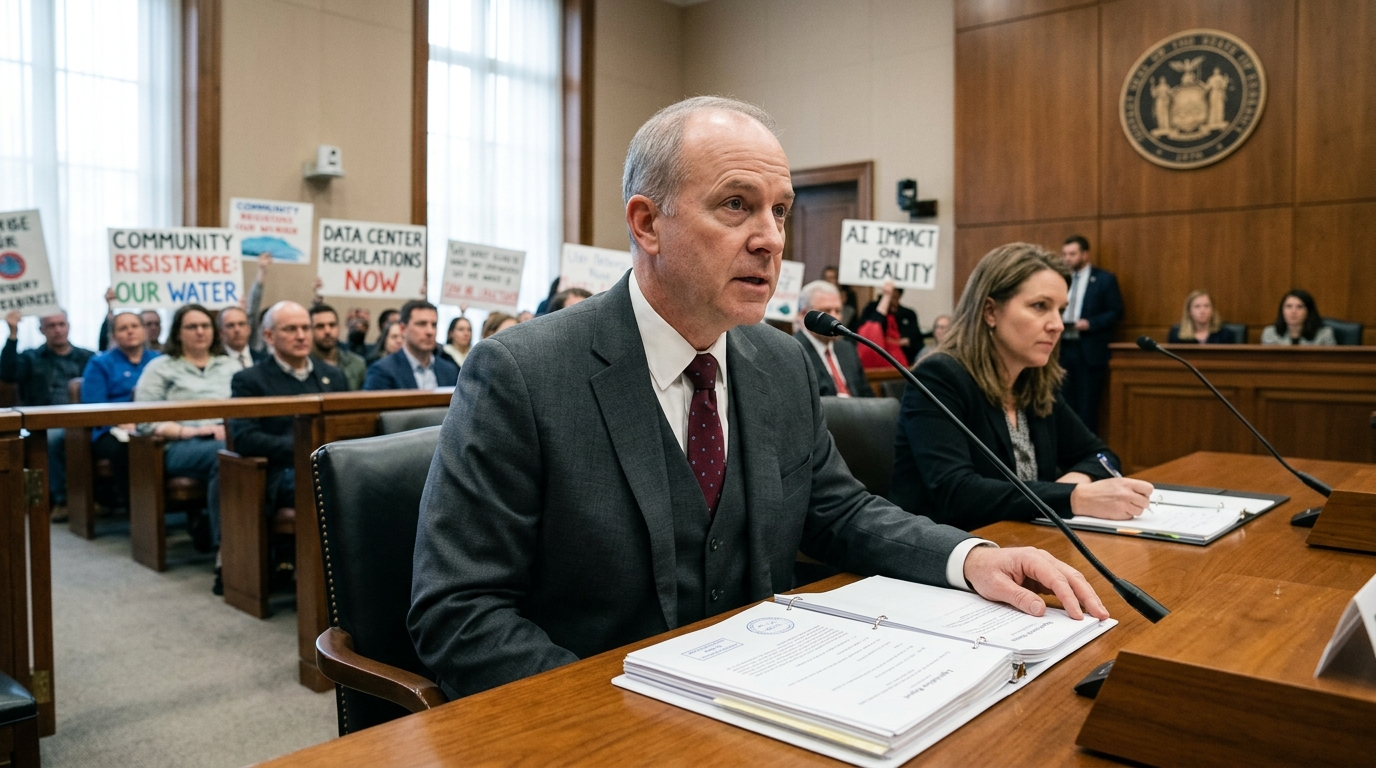
Faced with this situation, lawmakers are beginning to take action. In Georgia and Louisiana, bills are being introduced to limit tax breaks for data centers unless the companies can prove they are creating a significant number of jobs or investing in their own renewable energy sources. AI regulation is no longer just about algorithms and copyrights; it is about zoning, land use, and environmental justice.
"We cannot sacrifice the future of our communities and the stability of our grid so that a company in Silicon Valley can train another chatbot," says an activist in Louisiana.
This conflict highlights a fundamental contradiction: the technology that promises to solve humanity's problems, from climate change to medicine, is itself becoming one of the largest consumers of resources. 2026 will go down in history as the year the "cloud" made a rough landing on earth, forcing Big Tech to confront the limits of physics and social tolerance.
Conclusion: Toward a New Social Contract
The solution is not a total ban on data centers, as they are the backbone of the modern economy. However, a new social contract is required. Tech companies must become energy autonomous, investing in small modular reactors (SMRs) or massive renewable energy parks, rather than burdening ordinary consumers. At the same time, local communities must have a say in the planning process and enjoy real, tangible benefits. Without social consensus, the AI revolution risks getting bogged down in courtrooms and local protests.