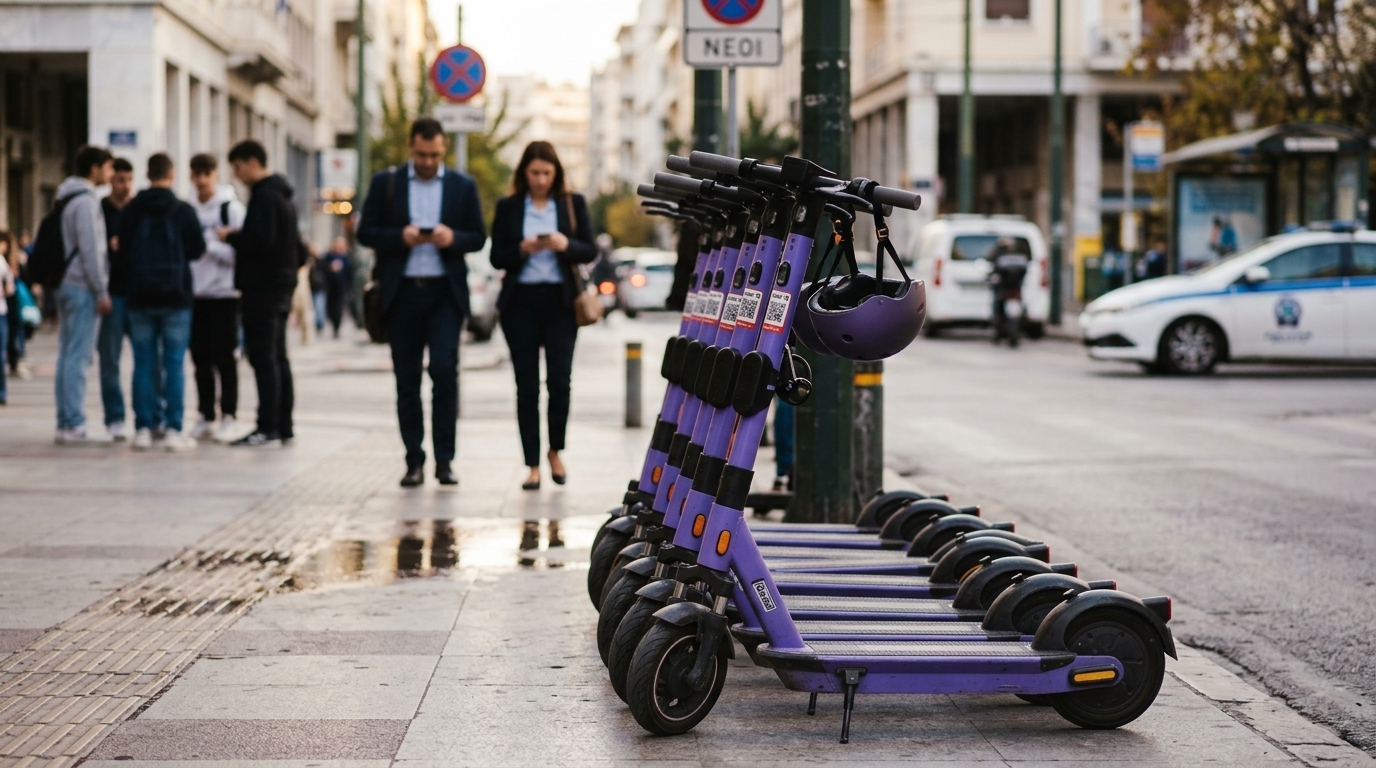
The sight of teenagers weaving through heavy traffic in major urban centers on electric scooters, often without helmets and at excessive speeds, has become a daily occurrence on Greek roads. However, the 'carefree' era of this new form of micromobility seems to be reaching an end. Minister of Citizen Protection, Michalis Chrysochoidis, recently brought the issue of a total ban on e-scooter use for minors to the forefront, sparking a wide-ranging debate on road safety, individual responsibility, and urban infrastructure.
Safety at the Forefront: A Necessary Intervention?
The Minister's intervention did not occur in a vacuum. Statistical data from recent years show a worrying increase in accidents involving Light Personal Electric Vehicles (LPEVs). The problem lies primarily in the lack of user education and the inherent danger of these vehicles when operated on roads designed exclusively for cars. Mr. Chrysochoidis emphasized that the protection of human life, especially that of children, overrides any need for convenient transportation.
According to the proposed plan, the ministry is considering not only age restrictions but also stricter operational standards. This includes mandatory helmet use for all users without exception, speed limits enforced via software by rental companies, and, most importantly, heavy fines for parents whose children violate the law. The philosophy behind the measure is simple: if society cannot self-regulate, the state must intervene with prohibitions.
The Infrastructure Deficit and the Culture of Impunity
However, the discussion about e-scooters in Greece cannot be limited to bans alone. Our country suffers from a chronic infrastructure deficit. Unlike cities like Amsterdam or Copenhagen, Athens and Thessaloniki have very few dedicated bike lanes. Scooters are forced to choose between the sidewalk—harassing pedestrians—and the roadway—risking collision with cars. A total ban for minors might solve the problem of exposing children to danger, but it doesn't touch the core of the issue: chaotic urban planning and the lack of space for alternative modes of transport.
Furthermore, there is the issue of enforcement. The Greek Highway Code (KOK) has included provisions for LPEVs since 2021. The fact that we still see two or even three people on a single scooter, or their use on high-speed motorways, testifies to the failure of monitoring mechanisms. Critics of Chrysochoidis' proposal point out that a new ban will be futile unless accompanied by daily, rigorous street checks. The prevailing sense that 'nothing is punished' is what fuels growing delinquency.
International Experience and the Future of Micromobility
Greece is not the only country facing this dilemma. Paris, a city that pioneered the adoption of e-scooters, voted in 2023 for a total ban on rental scooters following a referendum. Other European capitals are imposing strict age limits (usually 16 or 18 years) and requiring third-party liability insurance. The international trend is shifting from absolute freedom to a model of strict regulation.
The question now is whether micromobility has a future in Greece or if it will remain a 'failed experiment' due to a lack of education and planning. The ban for minors may be the first step, but a total overhaul of how we move in cities is inevitable. Technology moves faster than legislation, and the need for sustainable cities clashes with the harsh reality of traffic accidents. The ministry's decision will determine whether we move toward organized mobility or return to the exclusive dominance of the car, sacrificing the vision of 'green' transport for the sake of safety.