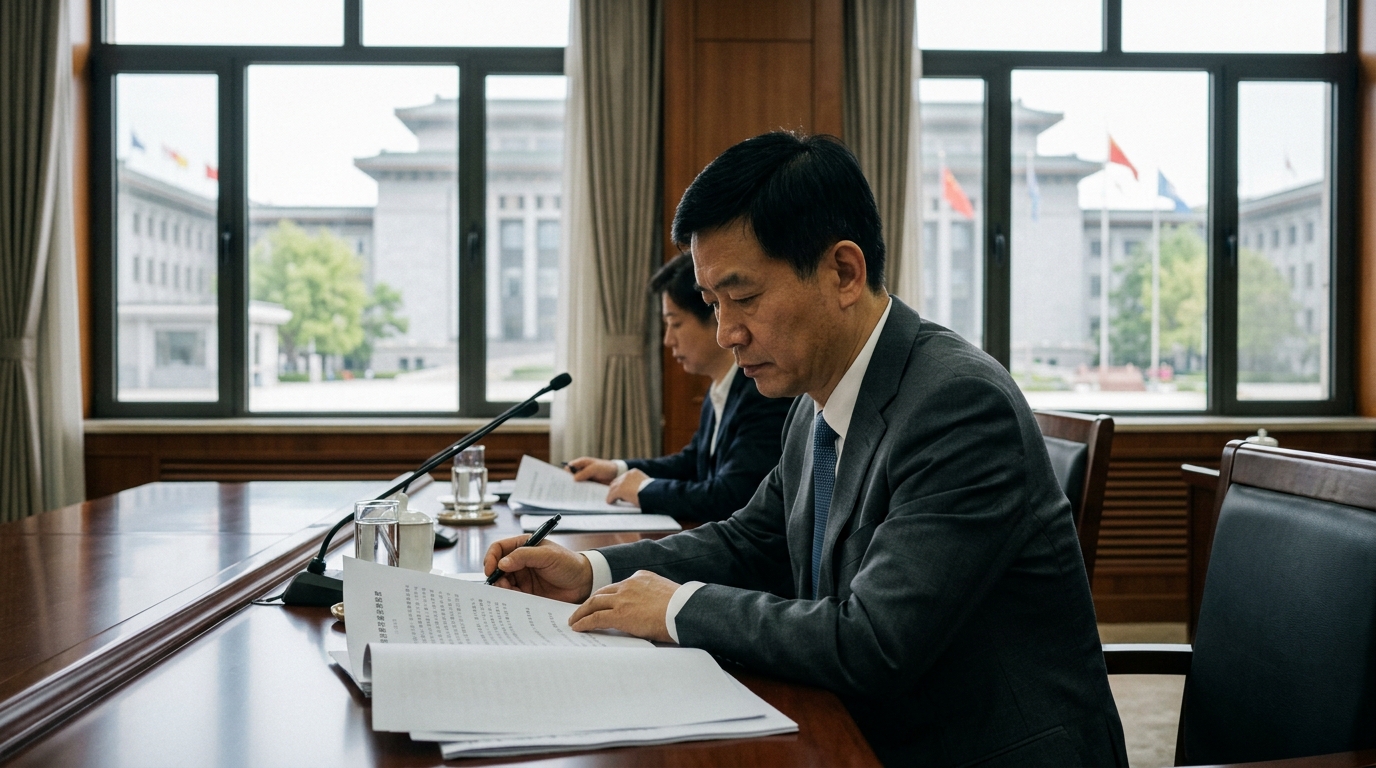
The Cyberspace Administration of China (CAC) has issued a stern reprimand to tech giant ByteDance, the parent company of TikTok and Douyin, over its failure to adequately implement labeling rules for Artificial Intelligence (AI) generated content. This move is more than a mere bureaucratic slap on the wrist; it is a clear signal that Beijing intends to enforce iron discipline within the digital sphere as the proliferation of deepfakes and synthetic media reaches epidemic proportions.
The Architecture of Control: Deep Synthesis Provisions
China has been a global frontrunner in introducing legislation to regulate AI. Since 2023, the "Administrative Provisions on Algorithm Recommendation for Internet Information Services" and the specific rules regarding Deep Synthesis have been in effect. Under these regulations, any service provider using AI technologies to create or modify text, images, audio, or video is mandated to apply clear watermarking to inform users of the material's synthetic nature.
The recent slam against ByteDance centers on the discovery that many of the group's applications allowed AI content to circulate without the necessary warnings. For Chinese regulators, this transparency is not just about consumer protection; it is primarily about "social stability." In a nation where information control is synonymous with state security, the ability of AI to generate plausible yet false narratives is viewed as an existential threat.
The ByteDance Challenge and the Technical Impasse
For ByteDance, compliance represents both a technical and a business conundrum. The Douyin platform (the Chinese version of TikTok) thrives on speed and spontaneous user creativity. Enforcing strict labeling filters on millions of daily uploads requires massive computational power and sophisticated detection algorithms that often lag behind the AI generation tools themselves.
- Inability to automatically recognize content generated by third-party AI tools.
- Resistance from content creators who feel that labeling diminishes the "organic" reach of their videos.
- Complexity in embedding robust metadata that remains intact during redistribution.
The regulator seems unmoved by these justifications. The CAC's critique suggests that platforms must take full responsibility for their ecosystems, acting as "digital police" for their own content.
Geopolitical Implications and the Governance Model
China's stance toward ByteDance also sends a message to the West. While the European Union works to finalize its AI Act and the United States relies largely on voluntary commitments from tech firms, Beijing is implementing a top-down approach that does not hesitate to penalize its national champions. This rigor has a dual purpose: to ensure that technological progress does not undermine the Communist Party's authority and to set international standards for how AI should be governed globally.
"Artificial intelligence must be a tool for development, not a weapon of deception," stated a CAC official during the announcement.
In conclusion, the ByteDance case highlights the new reality of the digital age: innovation is no longer unchecked. Tech companies are being forced to choose between absolute compliance with state mandates or facing crippling fines and restrictions that could threaten their very survival in the Chinese market.