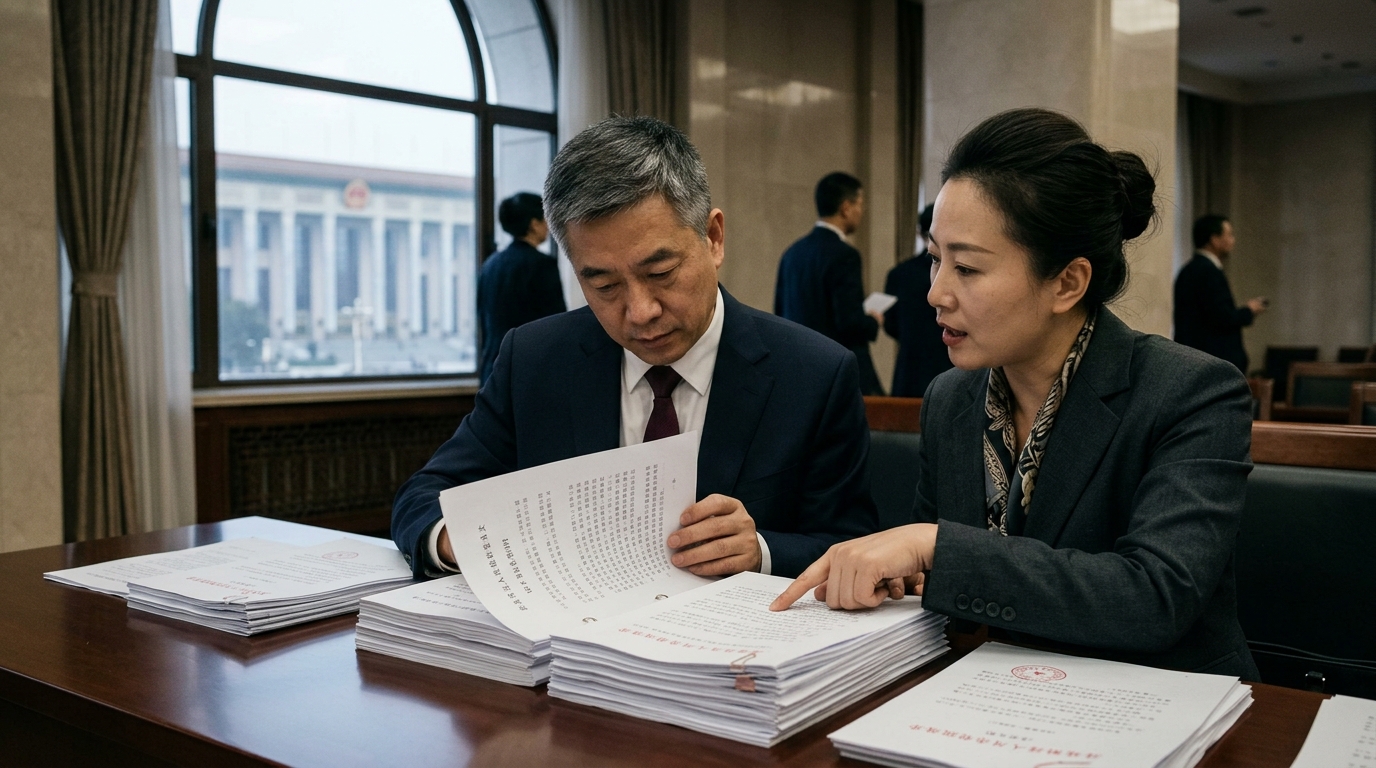
China is no longer merely pursuing technological supremacy in semiconductors and large language models; it seeks to become the architect of the rules governing 21st-century digital existence. According to recent reports and government documents, Beijing is accelerating the development of a "comprehensive legal framework" for Artificial Intelligence (AI), promising to be the world's most stringent and strategically oriented system.
This move is not unexpected. For three years, China has implemented fragmented regulations for recommendation algorithms, deepfakes, and generative AI. However, the new "Artificial Intelligence Law of the People's Republic of China" aims to unify these pieces into a single code, similar to the European Union's AI Act, but with distinctly different priorities.
From Fragmentation to Unified Oversight
To date, the Chinese approach has been surgical. When ChatGPT emerged, Beijing reacted swiftly by enacting rules requiring companies to guarantee the "truth" and "accuracy" of generated data while ensuring content aligns with "socialist core values." The new law, however, shifts the focus from content management to broader ecosystem governance.
The draft law proposes the creation of a central oversight authority with the power to evaluate AI models before they are released to the public. Companies will be required to conduct regular security audits and provide full transparency regarding training data. This level of state intervention is unprecedented, as China attempts to solve the "dictator's paradox": how to foster the innovation that requires data freedom while maintaining absolute control over information.
The Balance Between Innovation and State Security
For the Chinese leadership, AI is a double-edged sword. On one hand, it is the engine of the "new quality productive forces" envisioned by Xi Jinping to help the country overcome its economic slowdown. On the other hand, it represents a threat to social stability and the Party's monopoly on truth. The new law seeks to square this circle.
- Data Management: The state will have the final say in accessing "high-value data," creating national data-sharing platforms to help domestic companies compete with OpenAI and Google.
- Liability and Accountability: Developers will bear legal responsibility for copyright infringements or the production of harmful content, which is expected to lead to a culture of "over-compliance" and self-censorship.
- Ethical Red Lines: The use of AI to undermine national unity or overthrow the socialist system is explicitly prohibited.
These provisions create an environment where innovation is permitted only within the bounds set by political expediency. Nevertheless, Beijing is offering incentives, such as tax breaks and subsidies for domestic hardware development, to offset the costs of strict compliance.
Geopolitical Implications: The "Beijing Effect"
China's haste to legislate also has an international dimension. As the West grapples with the divide between the EU's regulatory approach and the US's more liberal stance, China presents its model as an alternative for the Global South. Many countries in Asia and Africa, already utilizing Chinese surveillance technology, may adopt the Chinese legal framework for AI as well.
"China doesn't just want to play the game; it wants to write the rules of the game," says a technology policy analyst in Beijing. "If Chinese standards for AI safety and ethics become the international norm, the West will find itself at a disadvantage."
In conclusion, the acceleration of the legal framework in China marks the end of the "wild west" period for artificial intelligence. The era when tech giants like Baidu and Tencent operated in a regulatory vacuum is gone forever. The remaining question is whether this suffocating framework will stifle creativity or provide the necessary stability for a controlled yet powerful technological explosion.