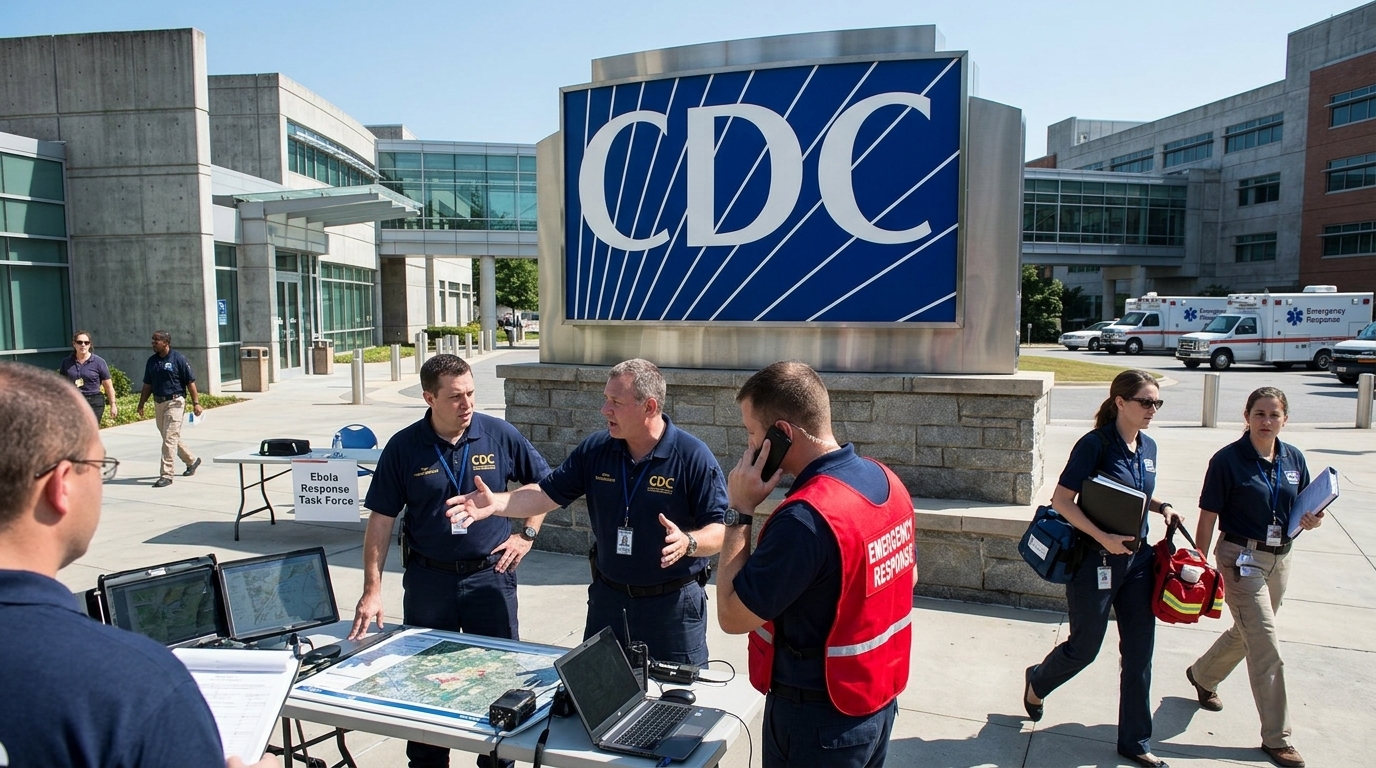
In a move highlighting the gravity of the health crisis in Central Africa, the U.S. Centers for Disease Control and Prevention (CDC) has announced an immediate escalation of its response to the Ebola virus. This decision follows the World Health Organization’s (WHO) declaration of a Public Health Emergency of International Concern (PHEIC), triggered by a surge in cases across the Democratic Republic of Congo (DRC) and Uganda.
The Strategy of 'Smart' Surveillance
The CDC’s current response is not limited to the traditional deployment of medical personnel. For the first time on such a scale, the agency is leveraging advanced Artificial Intelligence models to predict the virus's spread in real-time. These models analyze population mobility data, climate conditions, and social networks to identify potential 'hot zones' before symptoms even manifest. The use of AI allows the CDC to allocate its finite resources—vaccines, protective gear, and staff—with surgical precision.
- Deployment of an additional 150 specialist scientists to affected regions.
- Enhancement of local laboratories with rapid genomic sequencing capabilities.
- Implementation of digital contact tracing tools that operate offline in remote areas.
Geopolitical Challenges and Global Cooperation
The situation is complicated by political instability in the border regions between the DRC and Uganda. Mistrust of Western interventions among local communities remains a significant hurdle. The CDC, in collaboration with the African Union, is attempting to adopt a 'community-first' approach, utilizing local mediators. However, funding remains a thorny issue. Despite the urgency, international donations fall short of the $500 million required for full containment.
"We are not just fighting a virus, but a gap in global health infrastructure that technology alone cannot bridge," said a senior CDC official.
AI as a Shield in 2026
The integration of AI into epidemiological surveillance in 2026 represents a milestone. Systems developed in the wake of the COVID-19 pandemic have now matured. Today, the CDC utilizes algorithms capable of distinguishing Ebola symptoms from other endemic diseases, such as malaria, through voice sample analysis and thermal imaging from drones. This technological superiority is essential, as the virus appears to be exhibiting new mutations that increase its transmissibility in urban centers.
In conclusion, the CDC's escalation of response is a critical test of global preparedness. The success or failure of this operation will determine whether humanity has learned the lessons of the past or remains vulnerable to biological threats that know no borders. The international community watches with bated breath, as the coming weeks will be decisive for the trajectory of the outbreak.