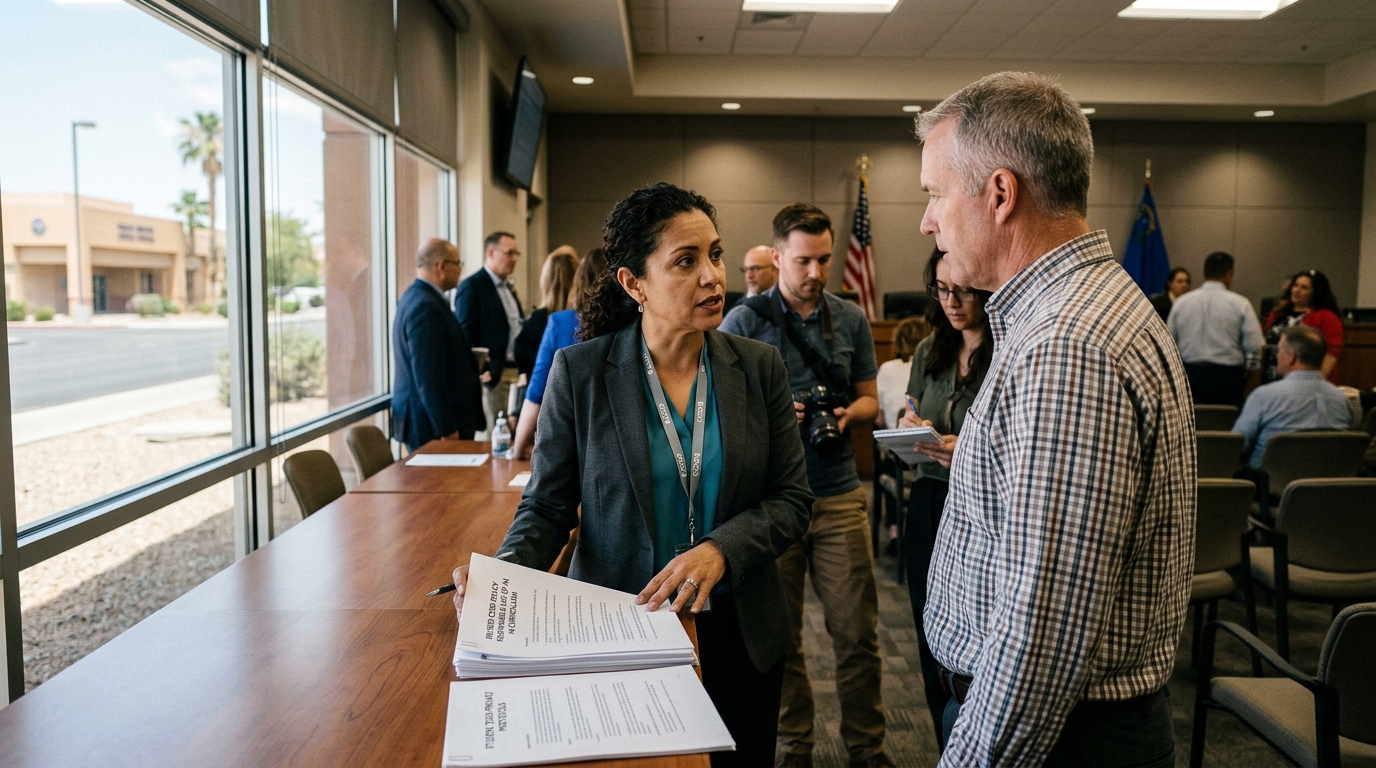
Education in the 21st century is at a critical crossroads, and the recent discussions within the Charleston County School District (CCSD) serve as a microcosm of a global challenge. As Artificial Intelligence (AI) reshapes every facet of our society, its entry into the classroom is no longer a futuristic possibility but a present reality requiring careful stewardship. The meeting held recently highlighted the chasm between technocratic enthusiasm and the legitimate concerns of the local community.
The Promise of Personalized Learning
Proponents of introducing AI into Charleston’s schools argue that these tools can function as "personal tutors" for every student. In a classroom of 30 children, it is impossible for a teacher to provide the same level of attention to everyone simultaneously. AI, through adaptive learning platforms, can identify a student's gaps in mathematics or language arts and offer exercises tailored to their specific pace. Furthermore, for educators, the automation of administrative tasks and AI-driven lesson planning promise to free up time for meaningful interaction with students.
However, this utopian vision hits practical and ethical roadblocks. Parents participating in the CCSD consultation expressed fears that an over-reliance on technology could lead to the atrophy of critical thinking skills. If an AI model can synthesize an essay or solve a complex equation in seconds, what is the incentive for a student to understand the underlying process?
Privacy and the Data Threat
Perhaps the most significant point of contention involves the protection of minors' personal data. Artificial Intelligence thrives on data. Every interaction a student has with an AI educational platform is recorded, analyzed, and stored. Parents in Charleston raised the crucial question: Who has access to this data, and how will it be used in the future? There is a risk that a child's digital "shadow" could follow them into adulthood, potentially affecting university admissions or even career prospects.
- Protecting student anonymity within Large Language Model (LLM) environments.
- Ensuring algorithms do not reproduce racial or socioeconomic biases.
- Defining clear boundaries between assistance and plagiarism.
Students, for their part, appear divided. While many already use AI to facilitate their studies, they recognize the pressure created by competing with "machines." The feeling that the authenticity of their work is constantly under scrutiny is a new source of stress in academic life.
The Policy Framework and State Responsibility
The CCSD case underscores the need for a robust legislative framework. School districts often find themselves improvising, as technology moves at speeds that bureaucracy cannot match. The integration of AI should not be a decision made behind closed doors in collaboration with EdTech (Educational Technology) giants, but a transparent process involving all stakeholders.
"We cannot allow our children to become the guinea pigs of a technological revolution that we have not yet fully understood," stated one parent during the meeting.
In conclusion, Artificial Intelligence in schools is a tool with immense potential but equally significant risks. The success of its integration will not be judged by the quality of the algorithms, but by our ability to maintain the human-centric nature of education. Knowledge must remain a process of discovery, not merely the consumption of ready-made answers from a screen.