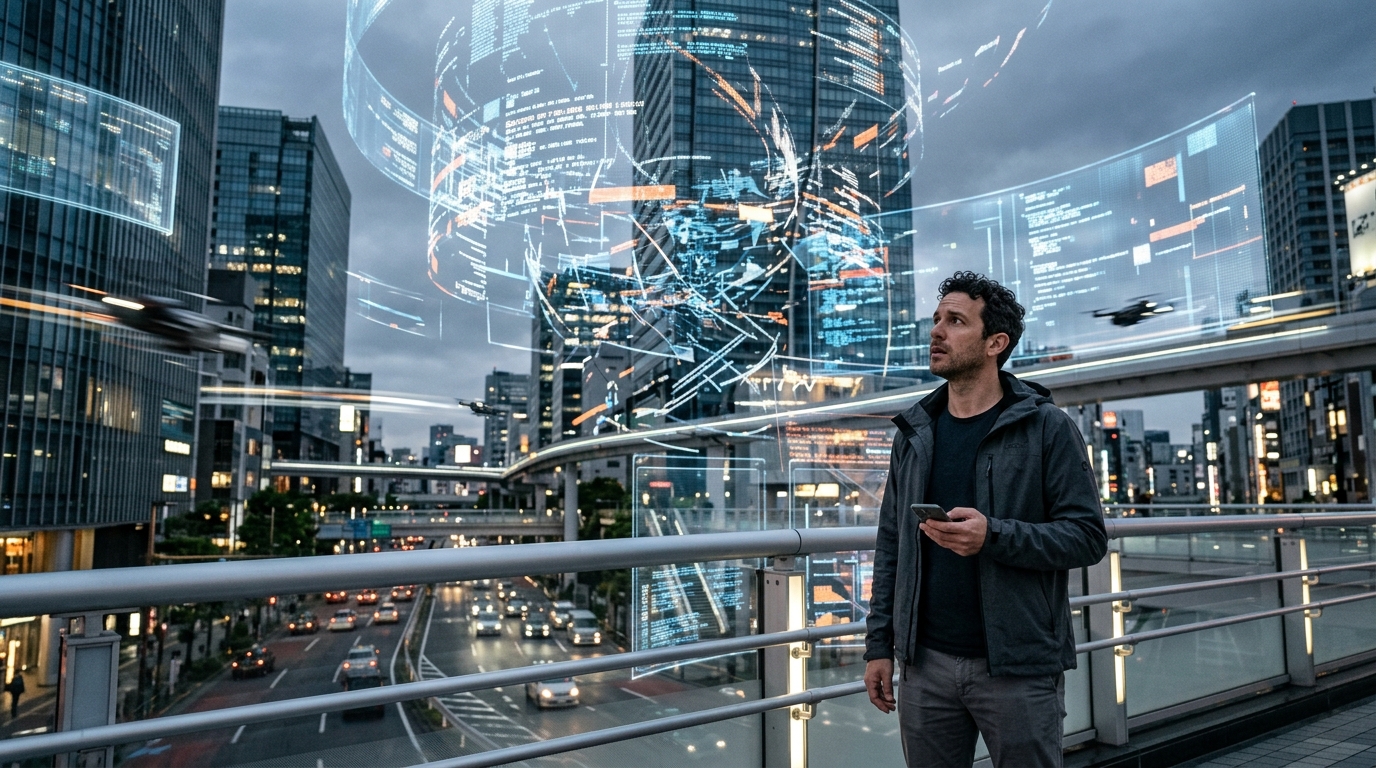
Today, May 12, 2026, Apple has made an announcement that fundamentally alters the mobile landscape. iOS 27 is not merely a software update; it is the official transition from the 'smartphone' to the 'personal intelligence station.' By integrating large language models (LLMs) that run entirely on-device, Apple promises an experience where privacy and performance are no longer a trade-off.
The Architecture of Autonomous Intelligence
The key to the success of iOS 27 lies in the new architecture of its Neural Engine. For the first time, the operating system can handle multimodal commands in real-time without requiring an internet connection for core reasoning tasks. This means the iPhone can now 'see' through the camera, 'hear' the environment, and suggest actions proactively, keeping all data encrypted within local storage.
Apple's strategy focuses on what analysts call 'Edge Intelligence.' While competitors rely on massive data centers, iOS 27 leverages the raw power of the new A-series silicon, allowing users to create complex automations—from drafting legal documents to live dialect translation—with zero latency.
Siri 3.0: From Command to Intent
Siri, which for years was considered the 'weak link' of the ecosystem, is being completely reborn. In iOS 27, Siri transforms into an 'Action Agent.' It doesn't just answer questions; it executes complex tasks across multiple apps. For instance, a user can say, 'Organize my trip to Paris based on my reservation emails and find a restaurant that fits my dietary preferences,' and the system will complete the process autonomously.
- Full integration with Apple Vision Pro for augmented intelligence in physical space.
- Dynamic AI video processing allowing for real-time lighting and scene changes.
- Advanced health tools that predict anxiety or fatigue crises by analyzing biometric data.
The Politics of Privacy as a Luxury
In a world where data is the new oil, Apple positions iOS 27 as the ultimate fortress. The introduction of 'Private Cloud Compute 2.0' ensures that even when Apple's servers are needed for extremely heavy tasks, data is never stored and remains inaccessible even to the company itself. This approach sets a new market standard, forcing EU and US regulators to rethink consumer protection frameworks.
"We are not just building a better phone; we are building a digital self that understands you better than anyone else, without ever betraying you," said an Apple executive during the keynote.
In conclusion, iOS 27 marks the end of the era of apps as we knew them. Now, the interface becomes fluid and adaptive, with AI serving as the connective tissue that binds every aspect of our digital lives. The question that remains is whether users are ready to trust such a powerful entity in their pockets.