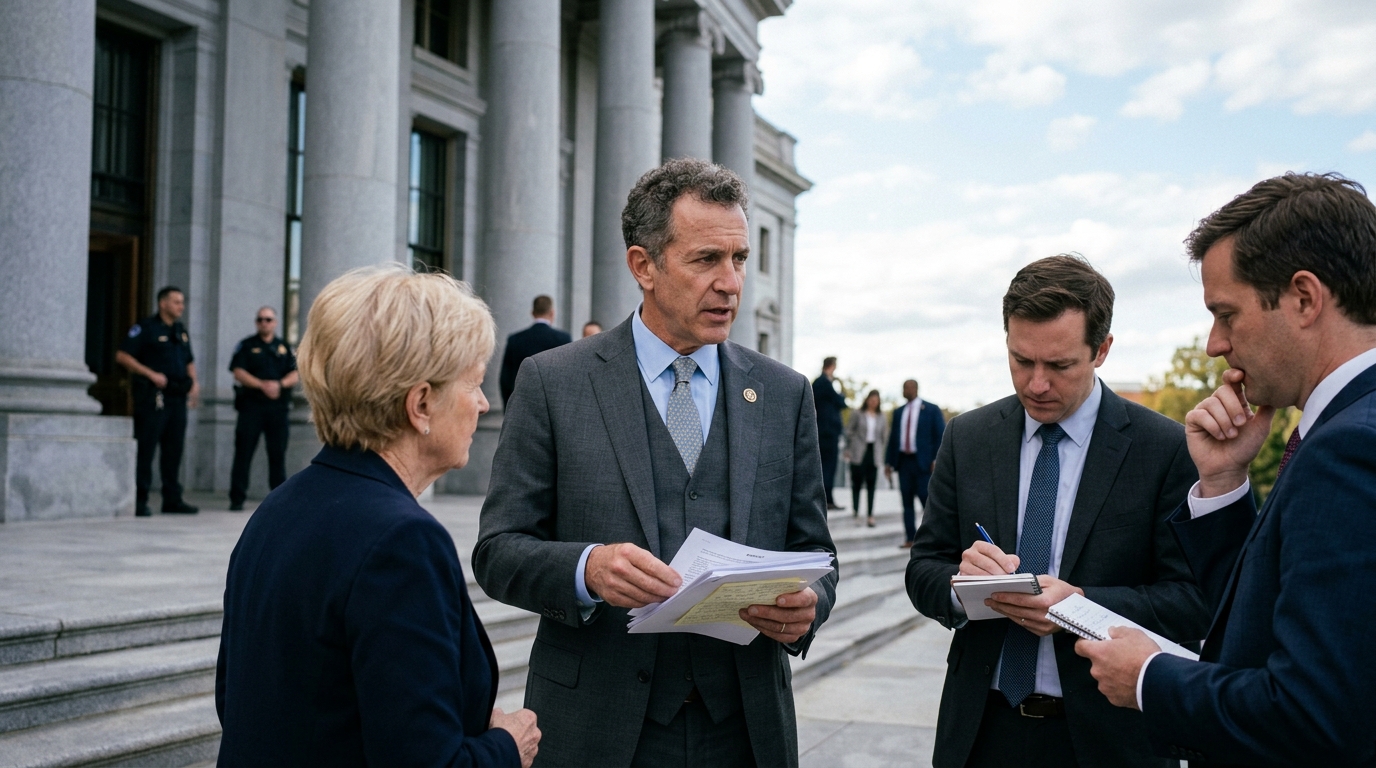
In a move that highlights the increasing weaponization of artificial intelligence in international diplomacy and national security, Anthropic, one of the world's leading AI labs, has announced the suspension of access to its most advanced models in certain jurisdictions. This decision comes as a direct response to new export control orders issued by the U.S. government, marking a critical shift: restrictions no longer apply only to hardware, such as Nvidia's GPUs, but also to the software and model weights themselves.
The New Architecture of Export Controls
The U.S. Department of Commerce's Bureau of Industry and Security (BIS) has intensified its efforts to prevent "dual-use technologies" from reaching states deemed a threat to national security. While previous focus was almost exclusively on high-compute semiconductors, the new directive recognizes that large language models (LLMs) exceeding certain computational thresholds during training (often cited as 10^26 flops) are strategic assets in their own right.
Anthropic, which positions itself as an AI safety-oriented company, found itself at the forefront of this compliance wave. The Claude 3.5 series and the forthcoming Claude 4 models are considered capable of assisting in activities ranging from cyber warfare to the design of biological weapons if they fall into the wrong hands. According to company sources, the suspension primarily affects API access and web interfaces in countries listed on the U.S. "Entity List," including China, Russia, and Iran.
Geopolitical Fallout and the Compute Cold War
Anthropic's move is not an isolated incident but part of a broader framework that many analysts are calling the "Silicon Curtain." Washington is attempting to build a technological rampart, ensuring the West maintains at least a two-generation lead in AI capabilities. However, this strategy carries significant risks.
- Acceleration of Domestic Development: Being cut off from American models forces China and other powers to invest heavily in their own infrastructure and open-source alternatives.
- Fragmentation of the Internet: We are heading toward a "Splinternet," where access to knowledge and productivity tools will depend on the user's passport.
- Industry Precedent: Anthropic's stance sets the standard for OpenAI and Google, who are expected to follow similar rigorous protocols.
"Artificial intelligence is no longer just a commercial product; it is the new frontier of national sovereignty," says a senior Department of Commerce official.
The Compliance Challenge for AI Firms
For Anthropic, which has received billions in investment from giants like Amazon and Google, geopolitical alignment is essential for maintaining its U.S. government contracts. The company must now deploy sophisticated geofencing and Know Your Customer (KYC) systems, similar to those used in the banking sector to prevent money laundering.
However, enforcing these rules in the digital realm is notoriously difficult. The use of VPNs, proxying compute through third-party countries, and the potential for model weight leaks are constant threats. Anthropic has stated it will work closely with authorities to monitor usage anomalies that might suggest sanction evasion.
Conclusion: The End of Globalized AI?
The suspension of Anthropic's top-tier models marks the end of innocence for the AI industry. The dream of global, open access to frontier intelligence is receding in the face of state security requirements. As models become more powerful, controlling their proliferation will be the central issue of international politics for the next decade. The remaining question is whether these restrictions will successfully hamper the progress of adversaries or simply drive them toward more aggressive and unregulated development of their own systems.