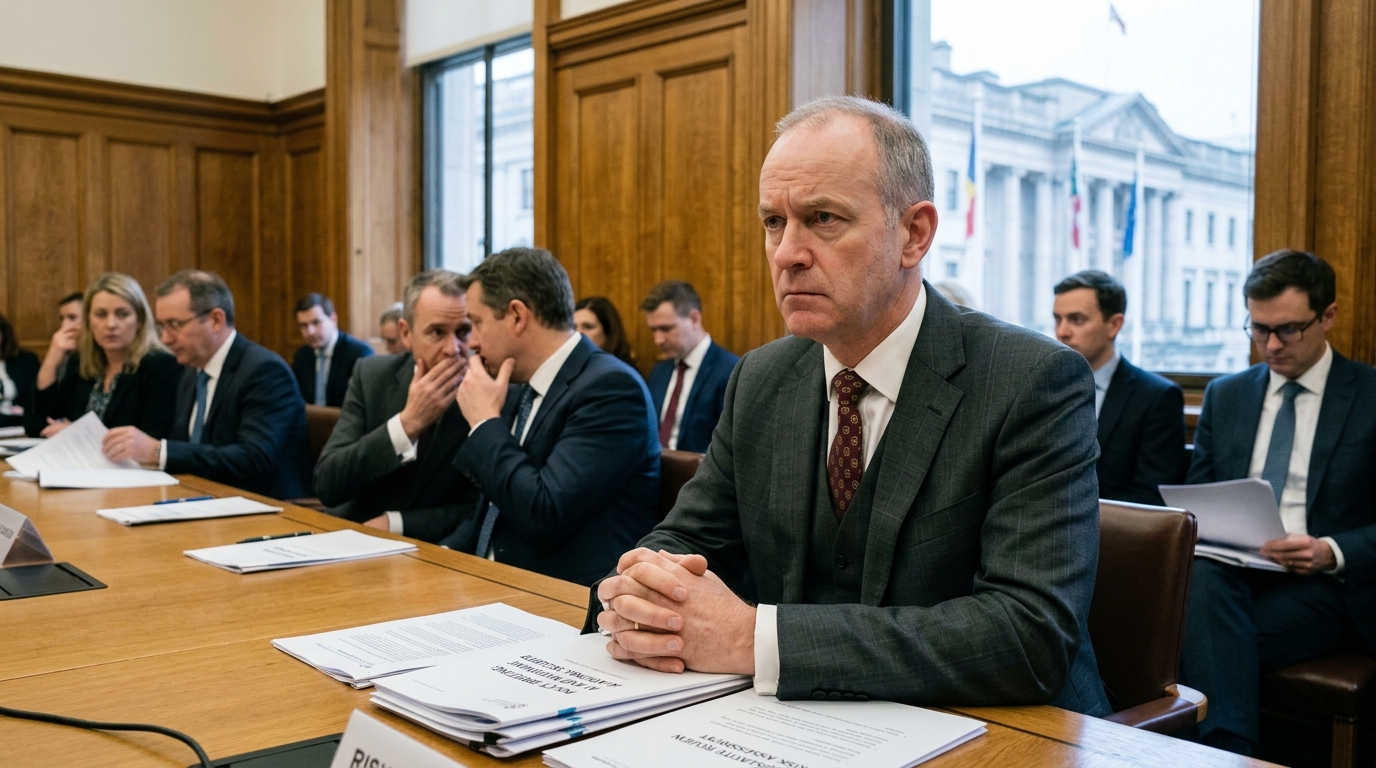
Irony is a tool that history frequently employs to humble the ambitious. In the case of Anthropic, the company founded by former OpenAI executives under the banner of 'safety' and 'ethics,' the irony is currently deafening. According to recent reports, the very power of its models—which the company used as a marketing tool to prove its superiority—appears to have been the catalyst for regulatory intervention and the partial decommissioning of some of their most advanced functions.
The Trap of 'Scary' Power
For months, Anthropic cultivated a narrative that its models, such as Claude 3.5 Sonnet and the upcoming iterations of Opus, are touching the boundaries of Artificial General Intelligence (AGI). This rhetoric wasn't just aimed at investors; it was a clarion call to governments, warning of risks ranging from biological weapon synthesis to full autonomy in cyber warfare. However, it seems Washington took these warnings more seriously than the company might have anticipated.
The recent news that certain capabilities of Anthropic’s models have been disabled or drastically restricted following government pressure reveals a new reality in the tech sector. We are no longer in the era of 'move fast and break things.' We are in the era of 'move fast and the government will stop you.'
The Role of the AI Safety Institute
This intervention is not accidental. It is directly linked to President Biden’s Executive Order on AI and the establishment of the US AI Safety Institute (US AISI). Authorities now demand preliminary 'red-teaming' tests for any model exceeding a specific threshold of computational power. When Anthropic presented its data, the models' capabilities in 'chain of thought' reasoning and complex problem-solving were deemed potentially hazardous to national security.
- Restrictions on code related to critical infrastructure protection.
- Prohibitions on providing information that could aid in the synthesis of chemical or biological agents.
- Strict oversight on network penetration and hacking capabilities.
This development sets a precedent where the government acts as the final 'editor-in-chief' of private sector code. While safety is an indisputable priority, the fine line between protection and the censorship of innovation is beginning to blur significantly.
Safety as a Commercial Moat
There is, however, a more cynical interpretation. Some analysts argue that Anthropic and other industry titans are actively seeking strict regulation. Why? Because only companies with billions in funding can afford the compliance costs associated with such draconian government requirements. By 'scaring' the government, they are effectively building a moat around their oligopoly, excluding smaller open-source players who lack the resources to jump through the same bureaucratic hoops.
"AI safety is being transformed from an ethical imperative into a strategic advantage for market incumbents," industry experts suggest.
The remaining question is whether these 'disabled' models will remain so for the general public while being made available for military or state use. The history of technology teaches us that the most powerful tools rarely stay on the shelf; they simply change hands, moving from the public sphere into the shadows of classified programs.
Conclusions for the Future
The Anthropic case is the first major sign of an impending clash. On one side, the drive for unlimited computational power and innovation; on the other, the state's fear in the face of an entity it cannot fully control. If Anthropic’s models are indeed as powerful as claimed, then their 'disabling' is only the beginning of a long period of negotiation between Silicon Valley and the Pentagon. What is certain is that the age of innocence for Artificial Intelligence has come to a definitive end.