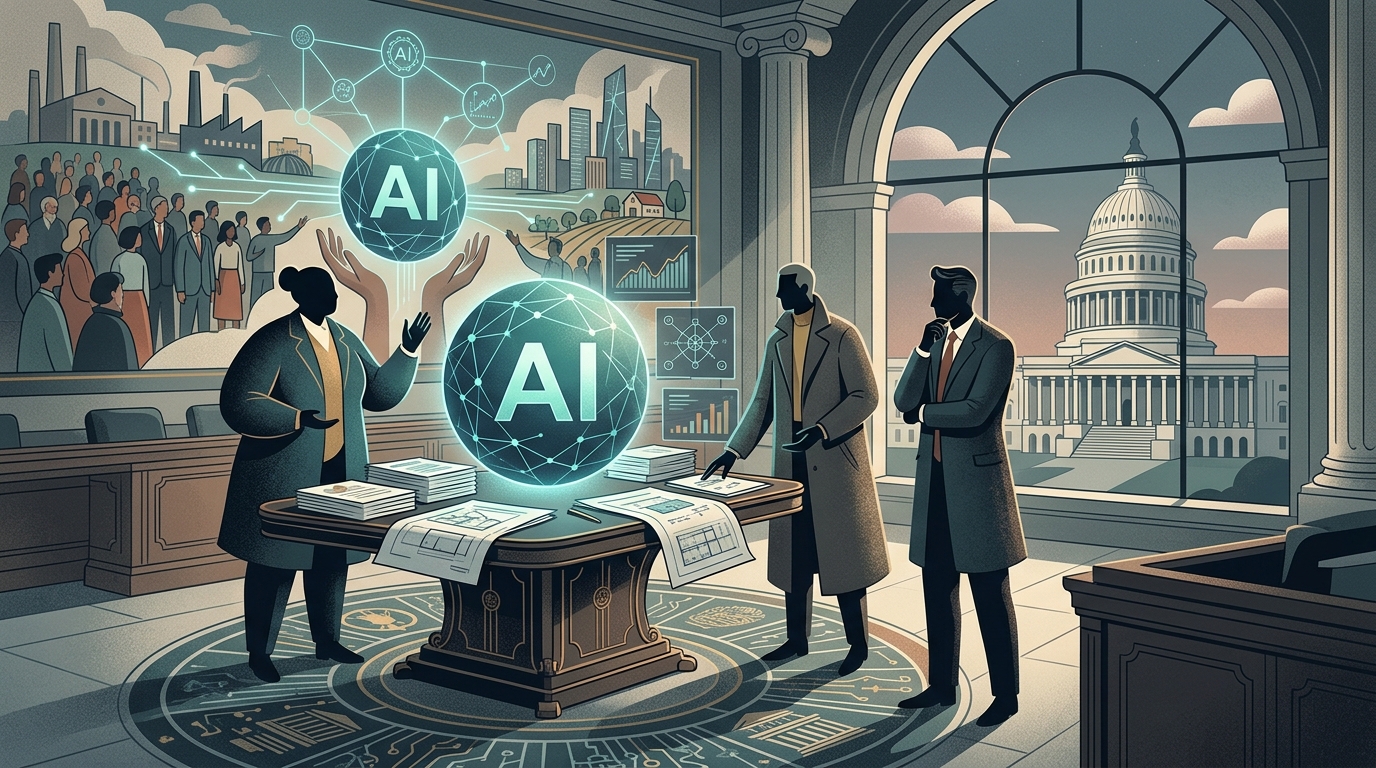
In the heart of Michigan, where heavy industry forged the American middle class, a new, invisible adversary is shaking the foundations of labor advocacy. The United Auto Workers (UAW), having recently concluded a historic strike against the "Big Three" (General Motors, Ford, and Stellantis), now faces a challenge many describe as a "life-threatening crisis": the onslaught of Artificial Intelligence (AI) on the production line and beyond.
The Shift from Automation to Cognitive Displacement
For decades, autoworkers lived with the fear of robots. However, traditional automation primarily involved replacing manual tasks with mechanical movements. Artificial Intelligence changes the rules of the game, as it replaces not just the hands, but the judgment of the worker. From supply chain optimization to predictive quality control, AI can perform tasks that previously required human experience and intuition.
The UAW leadership, under Shawn Fain, recognizes that the threat is twofold. On one hand, AI reduces the number of man-hours required to build a vehicle. On the other, it creates an environment of "digital surveillance," where algorithms monitor every move of the worker, evaluating efficiency with cold precision and pushing human limits to levels bordering on exhaustion.
The Strategy of "Just Transition" and the 32-Hour Work Week
The UAW is not merely a bystander. In recent negotiations, the union laid the groundwork for what it calls a "Just Transition." The central idea is that if technology increases productivity, the gains from this increase should not flow exclusively to shareholders and executives but should return to the workers in the form of reduced hours and increased pay.
- Demanding control over the implementation of algorithms in the workplace.
- Requiring continuous retraining of workers at the companies' expense.
- Promoting a 32-hour work week without a reduction in pay as an offset to automation.
The proposal for a 32-hour week, once considered radical, is gaining traction as AI proves it can generate the same wealth in less time. However, automakers counter that in a globalized environment, such concessions would make them uncompetitive against companies like Tesla or Chinese giants that lack strong union representation.
The Intersection with Electric Vehicles (EVs)
The AI crisis does not occur in a vacuum. It coincides with the transition to electric vehicles, which inherently require 30% less labor because internal combustion engines are far more complex than electric ones. AI acts as an accelerator of this trend. When part design is handled by generative AI and assembly by AI-driven robots, the role of the traditional worker shrinks dramatically.
"We don't fear technology; we fear the corporate greed that uses technology as a weapon against the working class," a UAW official recently stated.
The stakes are whether AI will lead to a new era of prosperity for all or whether it will be the final blow to the unions that built the 20th-century middle class. The UAW's struggle in Michigan is the precursor to what will follow in every sector of the global economy.