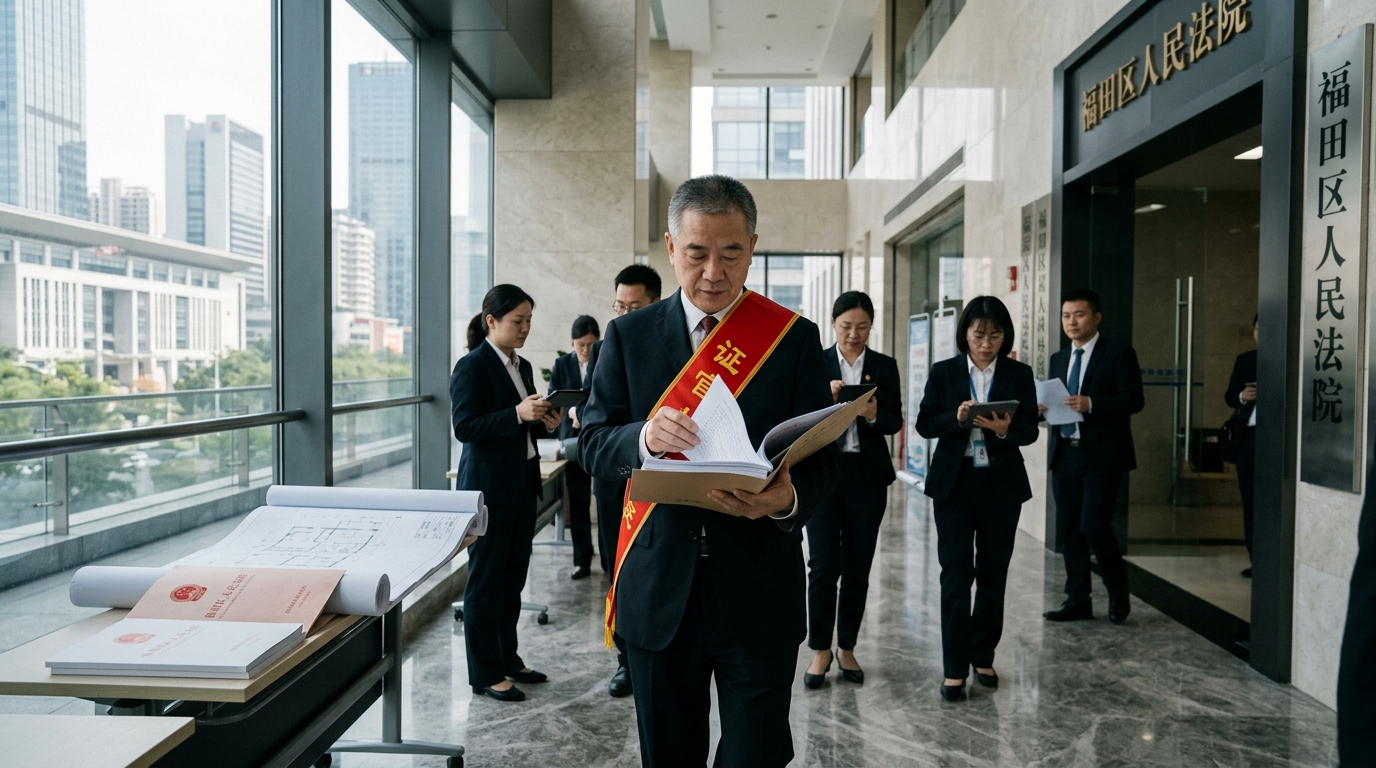
In the heart of Shenzhen, the city often dubbed "China's Silicon Valley," a quiet revolution is unfolding within the courtrooms. According to recent reports highlighted by the South China Morning Post, the integration of Artificial Intelligence (AI) into judicial processes has led to a staggering 50% reduction in case processing times. This development is not merely a technical upgrade; it represents a fundamental shift in how justice is administered in the world's most populous nation, sparking both global interest and intense skepticism.
The Mechanics of "Smart Justice"
The system deployed in Shenzhen, particularly within the Qianhai Court, goes far beyond simple document digitization. It is a sophisticated ecosystem encompassing automated case filing, evidence analysis, and, most crucially, the drafting of judicial opinions. The AI "scans" thousands of legal precedents and statutes to suggest the most appropriate interpretation of the law, leaving the human judge in the role of a final reviewer.
Judges in Shenzhen now utilize digital assistants capable of identifying contradictions in witness statements within seconds—a task that previously required days of intensive study. This speed is critical for China, where the volume of civil and commercial cases has skyrocketed in recent years, creating massive backlogs that threatened economic stability and public trust in the institution.
Efficiency vs. Ethics: The Great Dilemma
While the efficiency metrics are impressive, the application of AI in the judiciary raises profound questions regarding transparency and impartiality. Critics argue that these algorithms function as "black boxes," where the decision-making process remains opaque even to legal professionals. In China, the Supreme People's Court's guidelines are explicit: AI must "assist" rather than "replace" the judge. However, in practice, the pressure for rapid turnover may lead to an uncritical acceptance of algorithmic suggestions.
There is also the persistent risk of "algorithmic bias." If the data used to train the system contains historical social or political biases, the AI will reproduce them with mathematical precision, cloaking them in a mantle of scientific objectivity. Within a political framework where justice is closely tied to state stability, AI could potentially serve as a powerful tool for social control and automated governance.
The Global Stakes of the Chinese Experiment
Shenzhen is acting as a global laboratory for what is being called "LegTech." While the European Union, through its AI Act, categorizes the use of AI in the judiciary as "high-risk," China is opting for a path of rapid adoption. The success or failure of this model will likely dictate the stance of many developing nations looking for solutions to their own cumbersome judicial systems.
- Economic Impact: Faster resolution of commercial disputes bolsters entrepreneurship and foreign direct investment.
- Social Access: Lowering costs could make justice more accessible, but at what cost to the quality of the verdict?
- Technological Sovereignty: China aims to set the international standards for digital governance and algorithmic law.
In conclusion, the Shenzhen experience demonstrates that technology can indeed solve the problem of bureaucratic delay. The question that remains unanswered, however, is whether a justice system that is 50% faster remains equally human, or if it is transforming into a cold exercise in data optimization.