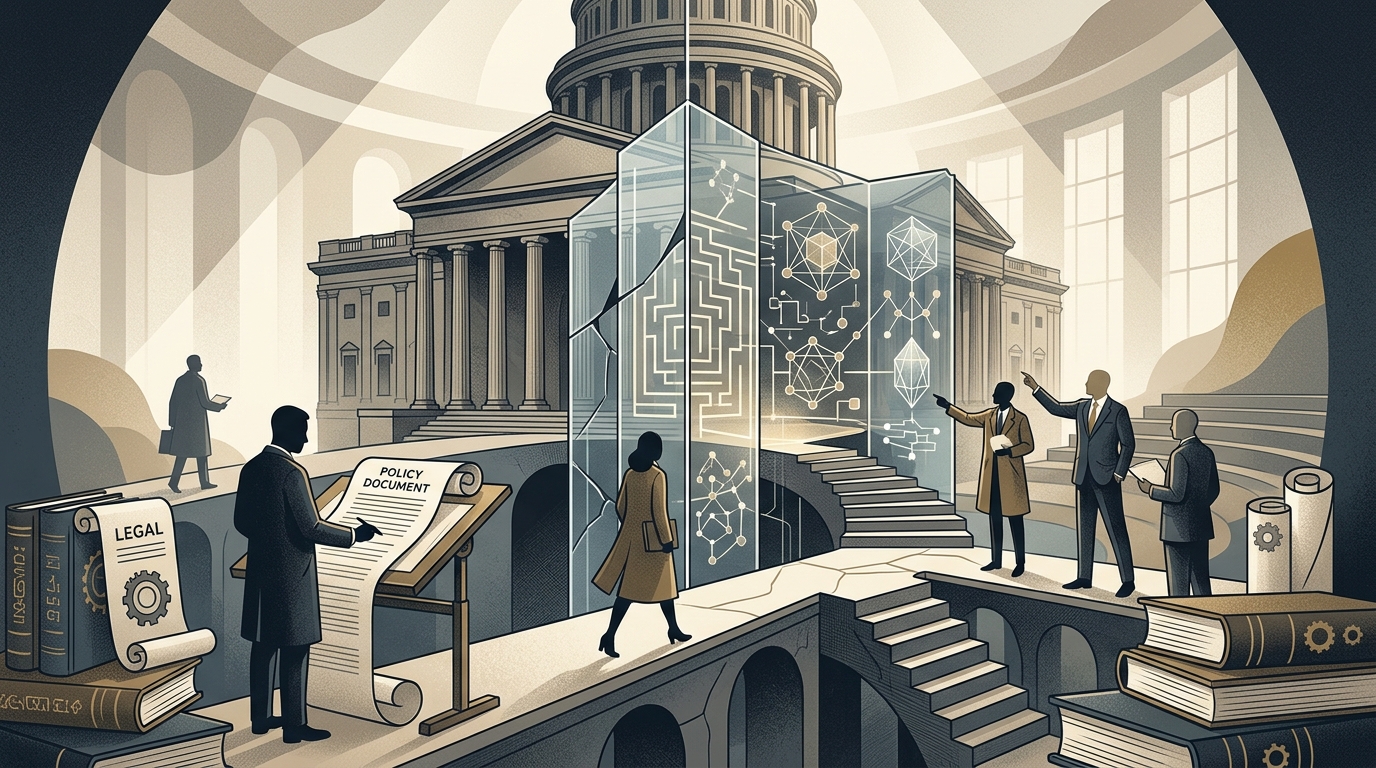
It is June 2026, and Artificial Intelligence (AI) is no longer a futuristic promise or a distant threat; it is the invisible architect of our daily lives. The recent discourse initiated by Philenews highlights a critical triad that will define social cohesion in the coming decades: the interaction of technology with labor and democratic governance. This is not merely a technological transition, but a structural redistribution of power that demands new social contracts.
Labor in the Age of AI Agents
The first major fissure is appearing in the labor market. If 2023 and 2024 were the years of "Large Language Models," 2026 is the year of "Autonomous Agents." These systems do not just suggest text or code; they execute complex tasks, from managing supply chains to making preliminary legal determinations. The traditional distinction between manual and intellectual labor has effectively collapsed.
According to expert analysis, "deskilling" is now a visible risk. When AI can perform 80% of the tasks of a junior analyst or a software developer, the value of human experience shifts dramatically. The question is not just how many jobs will be lost, but what kind of work will remain. Labor risks turning into a process of "algorithmic surveillance," where humans act as final checkers in a production process they do not fully comprehend. This alienation from the object of work has profound psychological and economic implications, affecting the sense of purpose and social contribution.
Democracy Under Algorithmic Pressure
Simultaneously, democracy faces its own existential crisis. The ability of generative AI to create hyper-personalized content at scale has turned public discourse into a minefield of misinformation. The election cycles of the past few years have proven that deepfakes are only the tip of the iceberg. The real danger is the erosion of shared truth.
When citizens cannot agree on basic facts because algorithms feed them different realities, democratic deliberation becomes impossible. Furthermore, the concentration of power in a few tech giants creates a new form of "digital feudalism." Decisions made in closed boardrooms in Silicon Valley or Shanghai affect the public sphere more than laws passed in national parliaments. Democracy requires accountability, but how do you hold a "black box" algorithm accountable?
The Regulatory Challenge and the European Model
The European Union, through the AI Act, has attempted to set rules, but the speed of evolution often outpaces bureaucracy. The challenge for countries like Greece and Cyprus is twofold: on one hand, they must adopt technology to remain competitive, and on the other, they must protect their workforce from sudden obsolescence.
- Education: A radical overhaul of curricula is required, focusing on critical thinking and collaboration with AI.
- Social Protection: The debate over Universal Basic Income (UBI) or a "technology dividend" is returning to the forefront as a necessity.
- Transparency: Enforcing watermarks on algorithmic content and ensuring "human-in-the-loop" intervention in critical decisions.
"Artificial intelligence is not a weather phenomenon to be endured; it is a tool we design. The question is whether we design it to augment humans or to replace them," state policy analysts.
In conclusion, the intersection of AI with labor and democracy is the field where the sustainability of Western civilization will be decided. If we allow technology to increase inequalities and blur the truth, democracy will wither. However, if we harness it to liberate humans from repetitive labor and enhance civic participation, we might lead to a new Renaissance. The choice remains political, not technical.