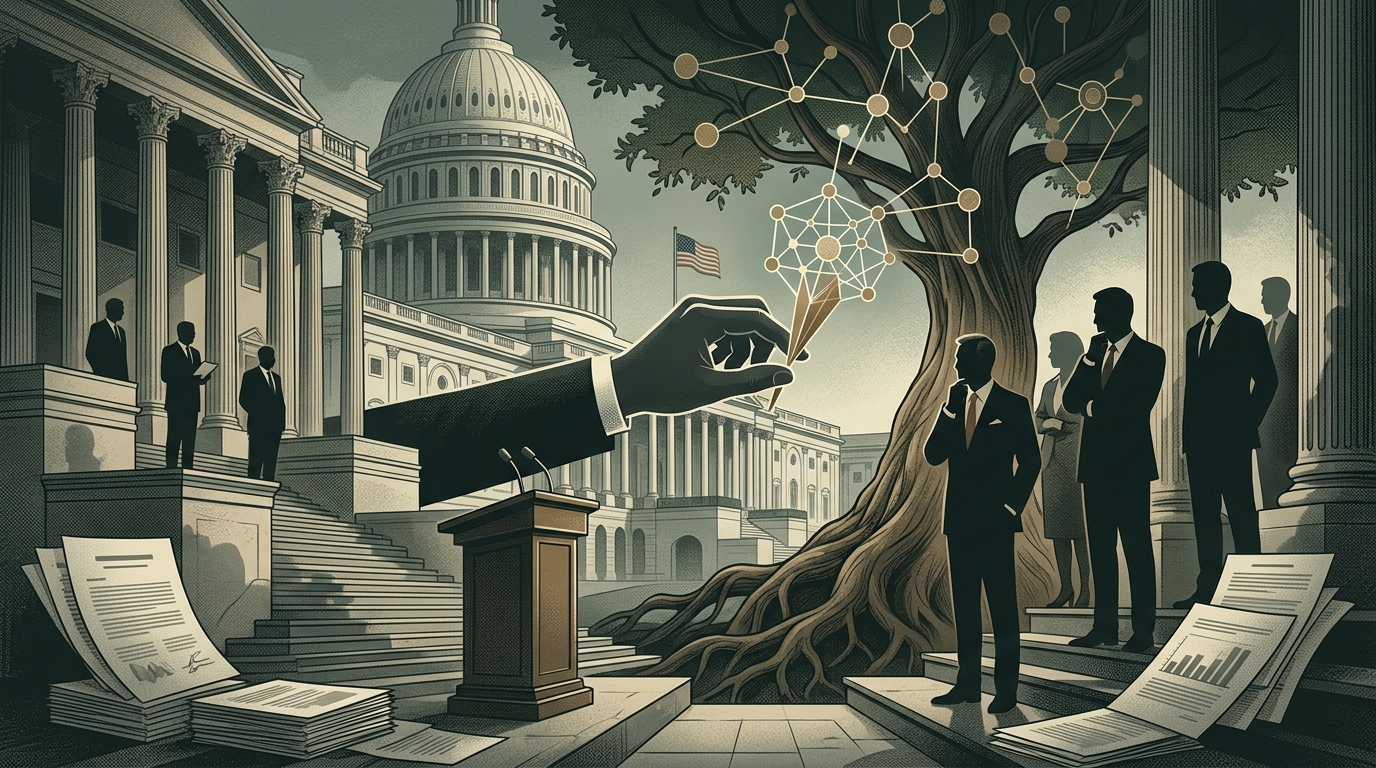
The arrival of generative Artificial Intelligence was not merely a technological add-on for global universities; it was a seismic event that shook the foundations of traditional learning. As we navigate 2026, the question is no longer whether AI will be integrated into higher education, but *how*. The debate is currently split between two fundamental schools of thought: the "top-down" approach, where administration dictates strict rules and centralized tools, and the "bottom-up" approach, where innovation springs from faculty and students themselves.
The Top-Down Model: Security and Uniformity
The top-down approach is often the preferred route for large state institutions and universities with rigid bureaucratic structures. In this model, the provost’s office and Information Technology (IT) departments make the calls on which AI tools are permitted, how student data is protected, and what the penalties for academic dishonesty will be. The advantage is clear: security and compliance. Through centralized management, the university can negotiate enterprise-level licenses with tech giants like Microsoft, Google, or OpenAI, ensuring that sensitive research and student data are not fed back into public training models.
However, this hierarchical approach often falters against the sheer speed of AI evolution. By the time a policy is vetted by a faculty senate, the technology has moved on. Furthermore, faculty members often feel these decisions are made in a vacuum, leading to passive resistance. "You cannot mandate creativity through memos," many academics argue, pointing out that AI in education requires pedagogical flexibility rather than just technical compliance.
The Bottom-Up Revolution: Innovation and "Shadow AI"
In contrast, the bottom-up model allows individual departments or researchers to experiment freely. This has birthed some of the most compelling applications: personalized teaching assistants for quantum physics, automated feedback loops for architecture students, and AI-driven linguistics labs. Innovation here is rapid, organic, and tailored to the specific nuances of each discipline.
The significant risk, however, is "Shadow AI." Students and faculty members often resort to free or unapproved tools that may violate intellectual property rights or data privacy laws. Moreover, a gap emerges between "tech-forward" departments and those left behind, undermining the principle of educational equity. Without central guidance, a university risks becoming a fragmented collection of "digital islands" with no shared standards of integrity or quality.
The Hybrid Path: Finding the Middle Ground
The most successful strategy emerging in 2026 is the hybrid model. Leading institutions have established "AI Centers of Excellence" that act as a bridge. The administration provides the infrastructure—secure API access to LLMs and ethical guidelines—but leaves the pedagogical application to the faculty.
"AI is not an IT tool; it is a new form of literacy,"a dean remarked at a recent global summit. This approach recognizes that AI will change *what* we teach, not just *how* we teach it.
For instance, rather than banning ChatGPT, some institutions have completely redesigned their assessment frameworks. Evaluation is shifting from the final written product to the process of thinking—focusing on oral exams, critical analysis of AI-generated outputs, and real-time problem-solving. This requires a massive investment in faculty development, which remains the single largest budgetary challenge for universities today.
Economic and Social Implications
Implementing AI in higher education is not a low-cost endeavor. The price of enterprise licenses, infrastructure upgrades, and continuous staff training requires resources that many institutions lack. There is a burgeoning risk of a new "digital divide," where elite, well-funded universities offer world-class AI-enhanced education, while underfunded public colleges struggle with outdated methodologies. Furthermore, the automation of administrative tasks—from enrollment to grading—threatens jobs, causing friction with labor unions and administrative staff.
In conclusion, the transition to an AI-driven era requires a delicate balance between centralized governance and academic freedom. The university of the future will not be defined by the number of algorithms it employs, but by its ability to keep human critical thinking at the heart of the technological storm. The goal is to use AI to augment human intelligence, not to replace the intellectual rigor that defines higher learning.