

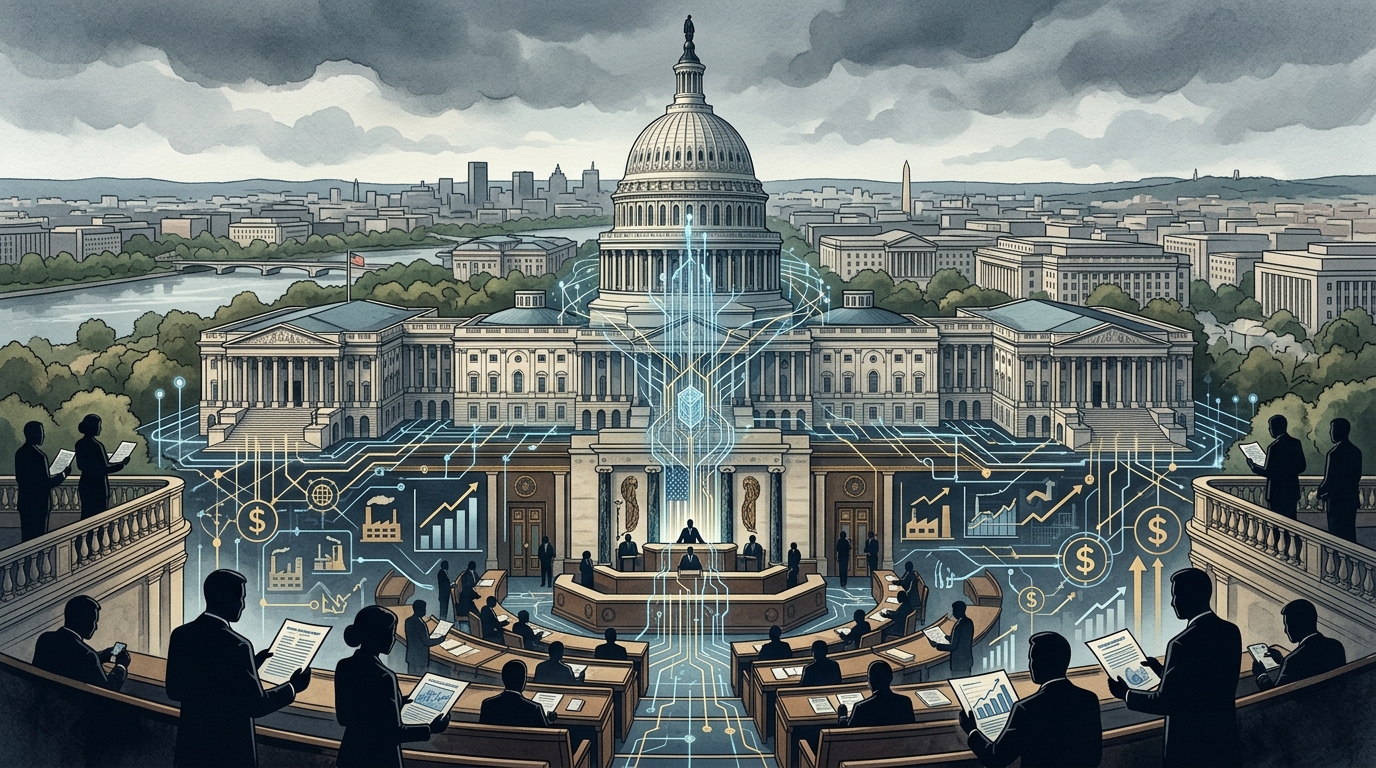
In a provocative intervention set to reverberate through the halls of Washington, David Sacks, the former AI policy chief under the Trump administration, has voiced what many analysts have been whispering for months: the U.S. economy is no longer merely enhanced by AI; it is fundamentally dependent on it. Speaking to Fortune AI on May 4, 2026, Sacks emphasized that any attempt to slow down or "pause" the development of large language models and autonomous systems would be tantamount to halting the GDP growth of the United States.
AI as the Growth Engine in a Stagnant Market
This statement comes at a critical juncture as U.S. employment data remains contradictory. While traditional sectors of the economy struggle to generate new jobs, investments in AI infrastructure—ranging from massive data centers to specialized semiconductors—have become the primary drivers of economic activity. According to Sacks, AI is no longer a "future promise" but the current engine preventing a recession.
Sacks' analysis highlights a paradox: although the widespread job creation expected from the "fourth industrial revolution" has yet to fully materialize for the average worker, the capital flow into the tech sector is so massive that it sustains entire secondary industries, such as construction and energy. "If you pull the plug on AI today, you will see an immediate contraction in GDP that would make the 2008 crisis look like a minor correction," he noted.
The Regulatory Dilemma: Safety or Survival?
The former official’s central argument is directed at those calling for stricter regulatory frameworks or even a moratorium on training new, more powerful models. For Sacks, the discussion around "AI Safety" often serves as a smokescreen for imposing bureaucratic hurdles that could hand the lead to China.
- U.S. geopolitical power is inextricably linked to technological supremacy.
- Economic stability depends on continuous productivity gains driven by algorithms.
- Every day of delay in AI deployment is seen by "accelerationists" as lost ground in the global competition.
However, critics of this approach point out that identifying the entire economy with AI progress creates a dangerous "monoculture." If the AI investment bubble bursts, or if models reach a point of diminishing returns, the U.S. economy will have no "Plan B" to fall back on.
The Social Dimension and Political Pressure
Beyond the numbers, Sacks' position highlights a harsh truth regarding social cohesion. If the economy is being "kept alive" by AI, but the fruits of this growth are concentrated in a handful of tech giants, public discontent will inevitably rise. The government is called to balance the need for economic expansion with the demand to protect workers who see their skills becoming obsolete.
"We cannot ask the economy to run at light speed and simultaneously pull the handbrake because we are afraid of the unknown," Sacks stated.
In conclusion, the assertion that AI is now the "oxygen" of the American economy marks a paradigm shift. Technology is no longer a tool; it is the system itself. The challenge for future leaders will be to ensure that this system is resilient enough to withstand the shocks that the very nature of artificial intelligence will inevitably provoke.





