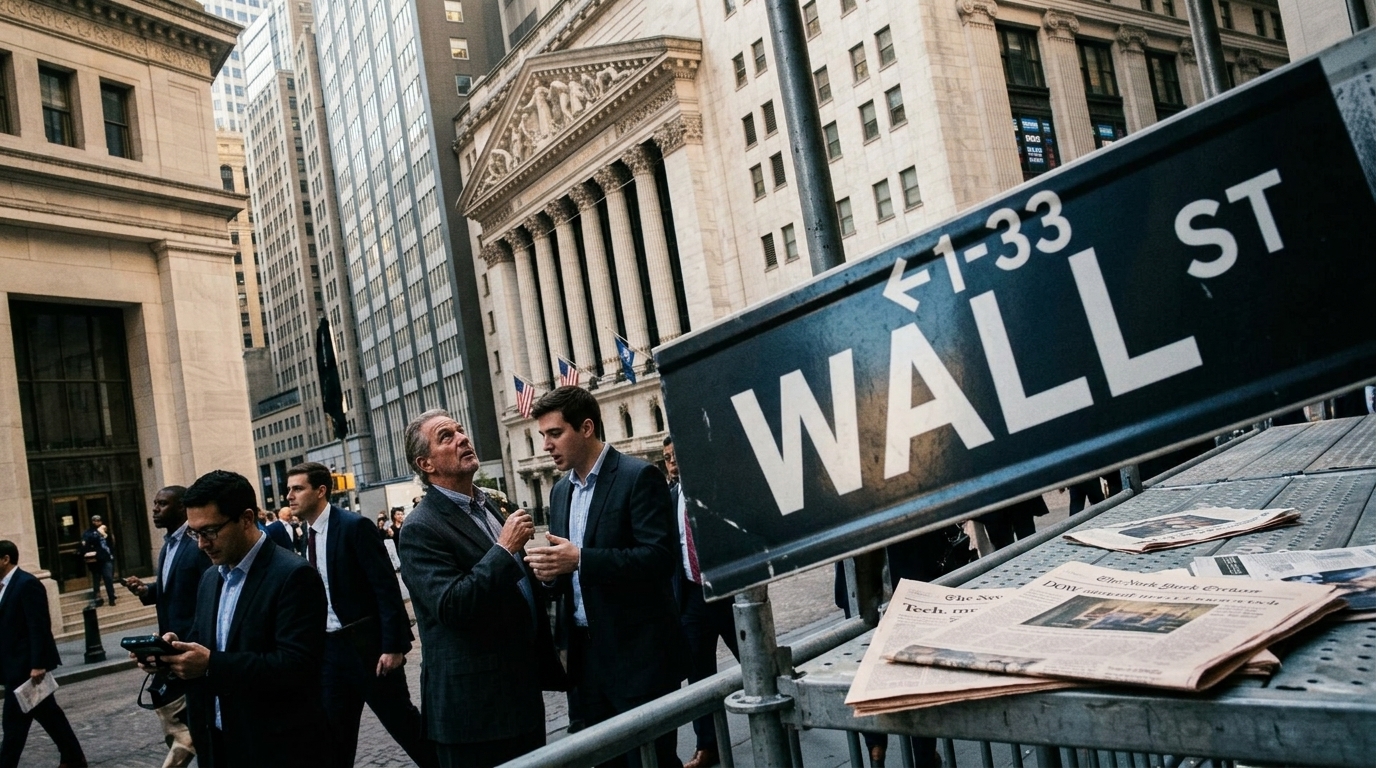
The market curtain for the second half of 2026 opened with a remarkable divergence in US markets, highlighting a profound structural shift in investor psychology. On Wednesday, July 1, 2026, the Dow Jones Industrial Average hit a new intraday historic record, reflecting investor confidence in the 'old economy' and industrial values. At the same time, however, the tech-heavy Nasdaq came under siege as a wave of profit-taking swept through semiconductor stocks, which had been the engine of growth over the past year.
The Great Rotation: From Artificial Intelligence to the Real Economy
What we are observing in recent sessions is not a generalized decline, but what analysts call the 'Great Rotation.' Investors, alarmed by the extremely high valuations of technology companies and the uncertainty surrounding the immediate profitability of AI investments, are moving capital toward more traditional sectors. The Dow Jones, which includes giants in industry, banking, and energy, is benefiting from this shift toward safety and dividend yields.
The rise of the Dow Jones was supported by positive macroeconomic data suggesting that the US economy is heading toward a 'soft landing.' With inflation showing signs of stabilizing near the 2% target, markets are pricing in a more predictable stance from the Federal Reserve regarding interest rates, which favors companies with strong cash flows and lower debt compared to growing tech startups.
The Semiconductor Crisis and the End of 'Chip Euphoria'
Conversely, the Nasdaq and the Philadelphia Semiconductor Index (SOX) experienced one of their most difficult sessions in months. Market leaders like Nvidia and AMD saw their shares decline significantly as investors rushed to lock in profits. The cause is not just excessive valuation, but also new geopolitical tensions affecting the chip supply chain.
- New restrictions on technology exports to Asia have cast a shadow over revenue forecasts for the third quarter.
- The market is beginning to wonder if the demand for AI infrastructure has reached a temporary saturation point as major cloud providers (Hyperscalers) revise their spending rates.
- Volatility is amplified by a reassessment of earnings-per-share expectations, as interest rates remain at levels that no longer allow for the reckless financing of growth.
"The market isn't crashing; it's simply maturing. After a period of AI hysteria, investors are returning to fundamentals and profitability," notes a leading Wall Street analyst.
The Federal Reserve Factor and the 2026 Outlook
Market dynamics are directly influenced by monetary policy expectations. As we move through the summer of 2026, the Federal Reserve is in a delicate balance. The strength of the Dow Jones suggests that economic activity remains resilient, which may give the central bank room not to rush with interest rate cuts. However, the weakness in the technology sector could be a harbinger of a broader slowdown if left unchecked.
Investors are closely monitoring employment data and consumer spending. If consumption remains strong, the Dow Jones could continue its rally, widening the gap from the Nasdaq. In conclusion, the current image of Wall Street reflects a market in search of a new identity, where innovation must now prove its value in terms of real revenue, while tradition regains its lost glory.