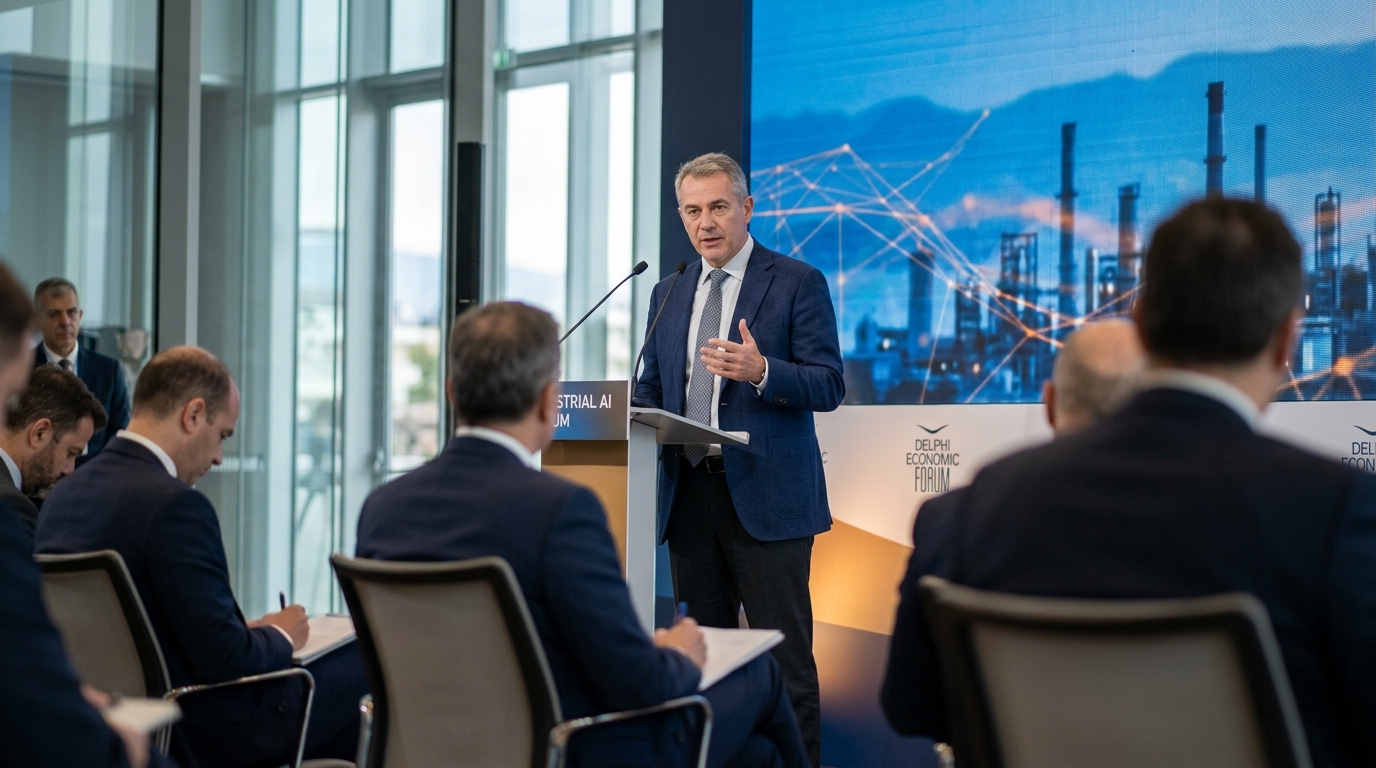
In the evocative landscape of Delphi, where ancient wisdom meets the challenges of the future, the 11th Delphi Economic Forum served as the backdrop for a critical discussion on the future of global and Greek industry. Siemens, a pioneer in digital transformation, presented a vision that goes beyond the mere adoption of AI tools: the transformation of Industrial Artificial Intelligence (Industrial AI) into the new "operating system" of modern business.
The central idea that emerged during the sessions is that AI is no longer an exotic addition to the production line, but the fundamental infrastructure upon which competitiveness, sustainability, and innovation will be built. According to Siemens executives, the transition from the "Digital Twin" to the "Autonomous Factory" is the natural evolution of a journey that began with digitalization and is now culminating in the full integration of intelligence at every level of corporate operations.
From Digitization to Autonomy: The New Paradigm
The concept of the "operating system" used by Siemens at the forum is not accidental. Just as Windows or Android manage the resources of a computer or a mobile phone, Industrial AI is called upon to manage the complex ecosystem of a factory: from the supply chain and energy consumption to machine maintenance and final product quality.
One of the most important points highlighted is the ability of Industrial AI to bridge the gap between IT (Information Technology) and OT (Operational Technology). Until now, these two fields often operated as isolated silos. The new architecture proposed by Siemens allows data from the factory floor to directly feed algorithms that make real-time decisions, optimizing production without the need for constant human intervention.
- Predictive Maintenance: Reducing downtime by predicting failures before they occur.
- Energy Efficiency: Dynamically adjusting energy consumption based on production needs and market prices.
- Production Flexibility: Rapid reconfiguration of production lines for mass customization.
Greece at the Heart of the Digital Leap
For the Greek economy, the discussion at Delphi held particular significance. Siemens emphasized that Greece has a unique window of opportunity to "leapfrog" development stages by immediately adopting cutting-edge technologies. Domestic industry, although smaller in scale than other European countries, can become extremely flexible and extroverted through Industrial AI.
"Artificial intelligence in industry is not just about large scale; it is about the survival and growth of every business that wants to remain relevant in a globalized world," was a key remark during the panel discussions.
Collaboration between the public and private sectors was deemed essential for creating an ecosystem that favors innovation. Siemens is actively involved in initiatives concerning workforce training, as the transition to the new "operating system" requires new skills. The "democratization" of technology, through low-code tools that allow non-experts to use AI, is key to its broad adoption by Greek Small and Medium Enterprises (SMEs).
Sustainability and the Ethics of Industrial AI
Concluding its presence at the Delphi Forum, Siemens raised the issue of sustainability. Industrial AI is not only a tool for profit but also our most powerful weapon against climate change. Through resource optimization and waste reduction, technology enables the creation of a "circular industry."
However, the discussion did not avoid ethical challenges. Algorithmic transparency, data security (Cybersecurity), and ensuring that AI functions as a partner to humans rather than a replacement were topics that intensely occupied the delegates. Siemens committed to "responsible AI," emphasizing that trust is the essential ingredient for the success of any digital transformation.