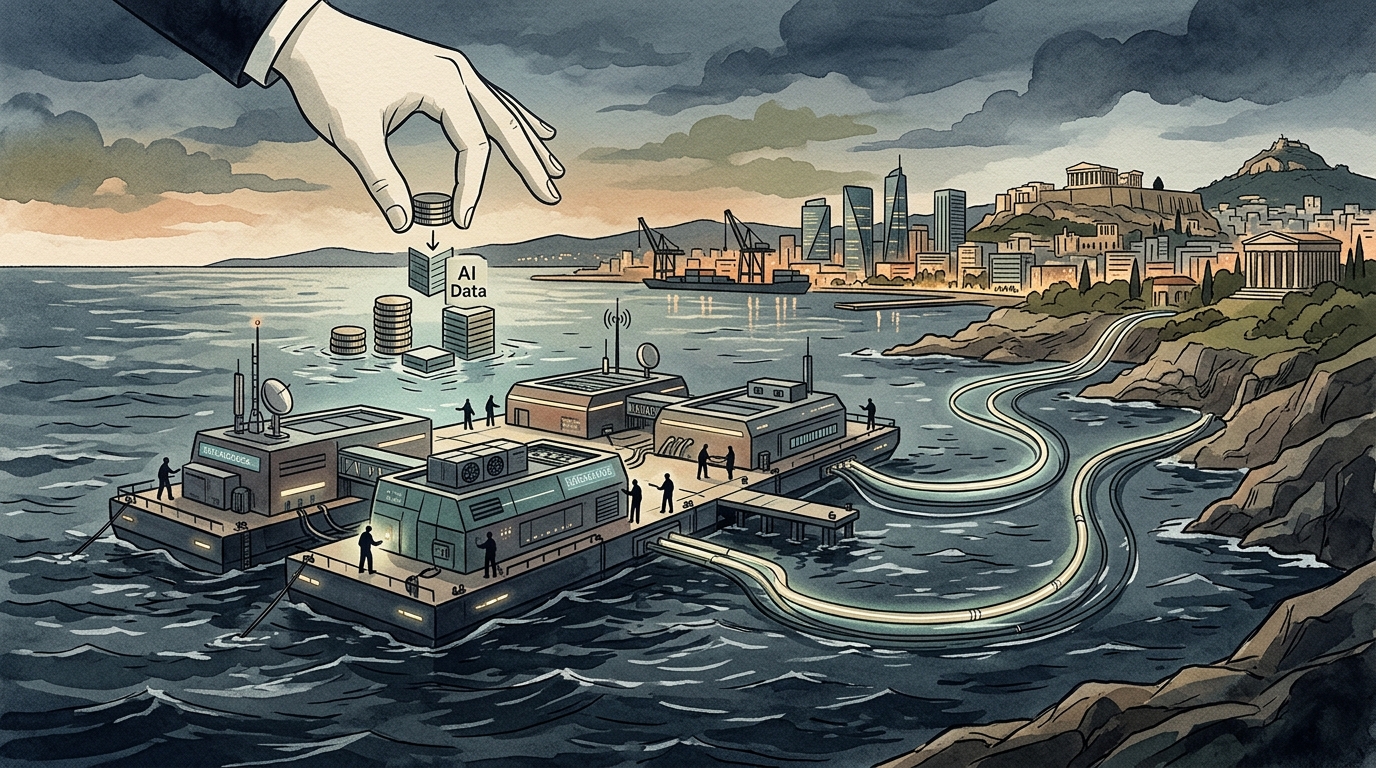
The explosive rise of Artificial Intelligence (AI) is not only transforming the digital landscape but also violently reshaping the planet's physical infrastructure. As tech giants exhaust electricity supplies and land availability on continents, investors are turning their gaze to 70% of the Earth's surface: the oceans. Peter Thiel, the controversial billionaire co-founder of PayPal and Palantir, is leading this new trend, investing $140 million in a startup that promises to move the computing power of the future to floating platforms in the Pacific Ocean.
The Need for 'Liquid' Computing Power
Traditional data centers are facing an existential crisis. Training models like GPT-5 or new versions of Claude requires thousands of GPUs (graphics processing units) that consume as much energy as small cities. The biggest problem, however, is not just power supply, but heat. Cooling these systems consumes billions of liters of fresh water annually, sparking backlash in drought-stricken regions. The solution of floating data centers is based on utilizing seawater as a natural coolant, theoretically offering unlimited heat dissipation capacity at a much lower cost.
Environmental Risks and Thermal Pollution
Despite promises of 'green' technology, scientists are sounding the alarm. The primary concern is not water consumption, but 'thermal pollution.' Floating data centers intake cold water from the depths and discharge warm water back to the surface. This temperature differential can be fatal for local marine ecosystems, causing the death of microorganisms, altering fish migration routes, and destroying coral reefs. Furthermore, the concentration of such infrastructure in international waters raises questions about the management of toxic waste from machinery maintenance and the risk of leaks in the event of accidents or extreme weather events.
The Regulatory Void of International Waters
Beyond the environment, Thiel's move is interpreted by many analysts as an attempt at 'regulatory arbitrage.' By placing data centers in international waters or regions with lax legislation, AI companies can bypass the European Union's strict rules (AI Act) or US environmental commitments. This is a revival of the 'seasteading' ideology—the creation of autonomous communities at sea that fall under no state jurisdiction. In the case of AI, this means data processing without GDPR restrictions and infrastructure operation without the oversight of environmental organizations.
The Geopolitical Dimension
The investment in the Pacific is no coincidence. The region is the epicenter of the technological competition between the US and China. Floating data centers could serve as strategic hubs providing computing power to remote areas or even military operations, far from terrestrial surveillance. The mobility of these infrastructures offers a flexibility that land-based centers will never have, making them 'unsinkable' assets in the global AI chessboard. However, the lack of an international framework for governing oceanic digital space leaves the door open for a new form of 'digital colonialism' of the oceans.