A historic milestone in Greek public administration has begun to take shape with the integration of the Personal Number (PN) into the services of e-EFKA (the National Social Security Fund). This move, announced by Minister of Labor and Social Security Niki Kerameos and Minister of Digital Governance Dimitris Papastergiou, marks the beginning of the end for the "labyrinth" of multiple identification numbers that have plagued Greek citizens for decades.
The Anatomy of the Personal Number
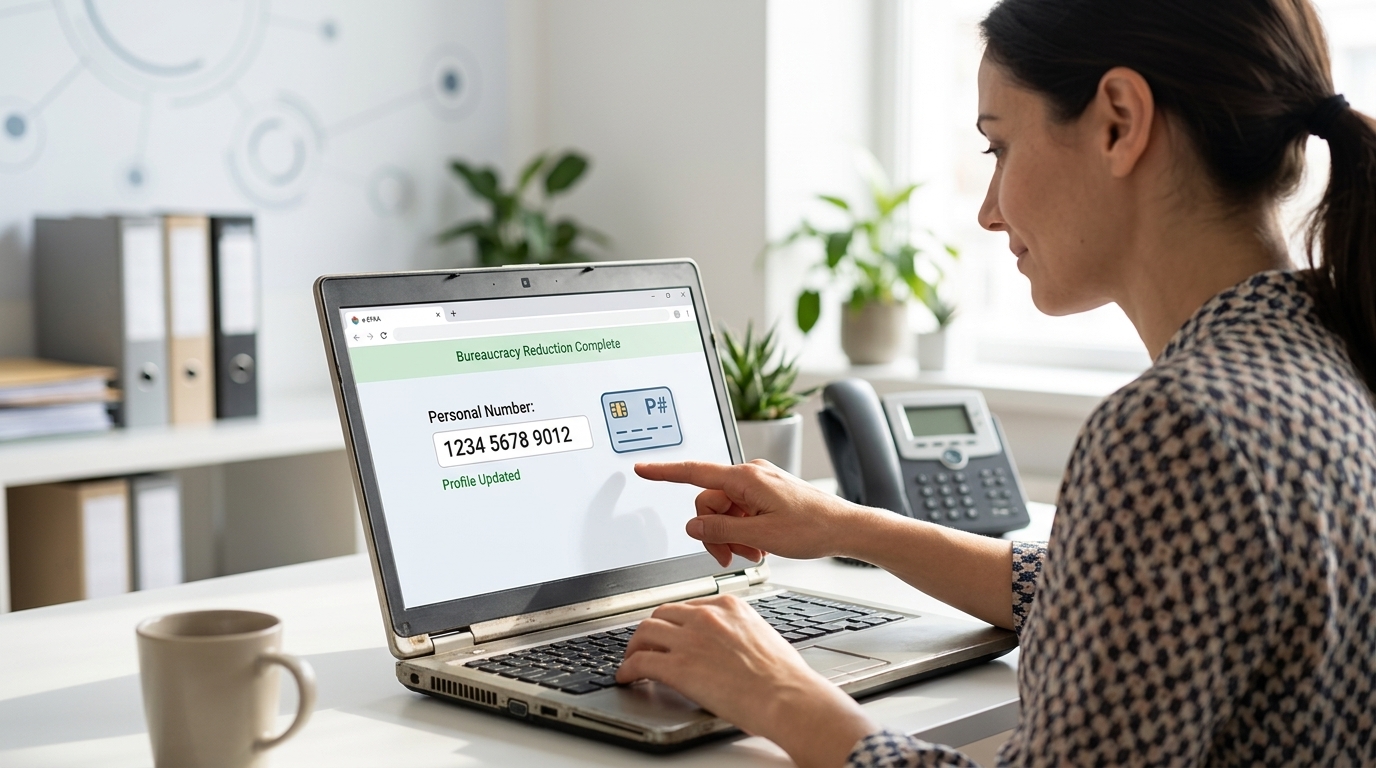
The Personal Number is not just another code; it is the "connective tissue" that will unify all public sector databases. It consists of 12 characters: the 9 digits of an individual's Tax Identification Number (AFM), plus three additional characters (two numbers and one letter) that can be chosen by the citizen or automatically assigned by the system. Its phased implementation starts with e-EFKA, as it is the organization with the highest daily public interaction, managing pensions, benefits, and insurance eligibility.
- Elimination of the need to memorize SSN (AMKA), Tax ID (AFM), and ID card numbers for different services.
- Automatic data retrieval through the Interoperability Center.
- Reduction of errors resulting from manual data entry.
- Faster processing of pensions and welfare benefits.
Why e-EFKA is the "Spearhead" of Reform
The choice of e-EFKA as the initial implementation site is no coincidence. The social security fund has traditionally been the bastion of Greek bureaucracy. With the implementation of the PN, citizens will no longer need to provide certificates from the tax office to prove their status to EFKA, or vice versa. The interconnection of systems means the state finally "talks" to itself, relieving the citizen of the role of a document courier between government agencies.
"The Personal Number is the key to a state that respects the citizen's time. We are starting with EFKA because it is where the heart of social protection beats," stated Niki Kerameos during the initiative's presentation.
Challenges and the Digital Divide
Despite the enthusiasm, the transition is not without challenges. The greatest of these is the adaptation of the elderly, who constitute the primary user base of e-EFKA. The government assures that the transition will be smooth and that counter staff will be trained to guide citizens. Furthermore, cyber-security concerns have been raised. Centralizing so much information under a single number requires robust system defenses against malicious attacks—something the Ministry of Digital Governance claims has been addressed through the strictest EU protocols.
The Future: A Unified Digital Gateway
Following e-EFKA, the Personal Number will expand into Healthcare (fully replacing AMKA), Transportation, and every other facet of public administration. The goal is that by the end of 2026, the PN will be the only number a resident of Greece needs to interact with the state—from issuing a passport to paying fines or receiving social dividends. This represents a paradigm shift: the state ceases to be a punitive auditor and becomes a digital service provider.