When ChatGPT burst onto the public scene in late 2022, the promises were near-messianic: a new era of human creativity, the dismantling of intellectual barriers, and a total revolution in productivity. However, a new, extensive study conducted jointly by OpenAI and the Digital Data Design Institute at Harvard University brings these expectations back to earth. The data, derived from the analysis of millions of anonymized conversations, shows that the majority of users are utilizing artificial intelligence not to solve humanity's grand challenges, but to handle the most mundane tasks of daily life.
The Dominance of the 'Digital Clerk'
The study reveals that 80% of interactions with ChatGPT involve basic functions that could be characterized as "low complexity." Writing and editing texts—emails, social media posts, grammar checks—account for the lion's share. This is followed by information retrieval—a function directly competing with Google—and programming (coding), which, while a more specialized use, tends to focus on simple scripts and debugging.
According to researchers, this phenomenon suggests a "skills gap." While models like GPT-4 and its successors have the capacity for complex reasoning, strategic planning, and deep data analysis, the average user has not yet learned how to unlock these capabilities. AI is treated more as a sophisticated "autocorrect" than a thinking partner.
The Productivity Paradox and Education
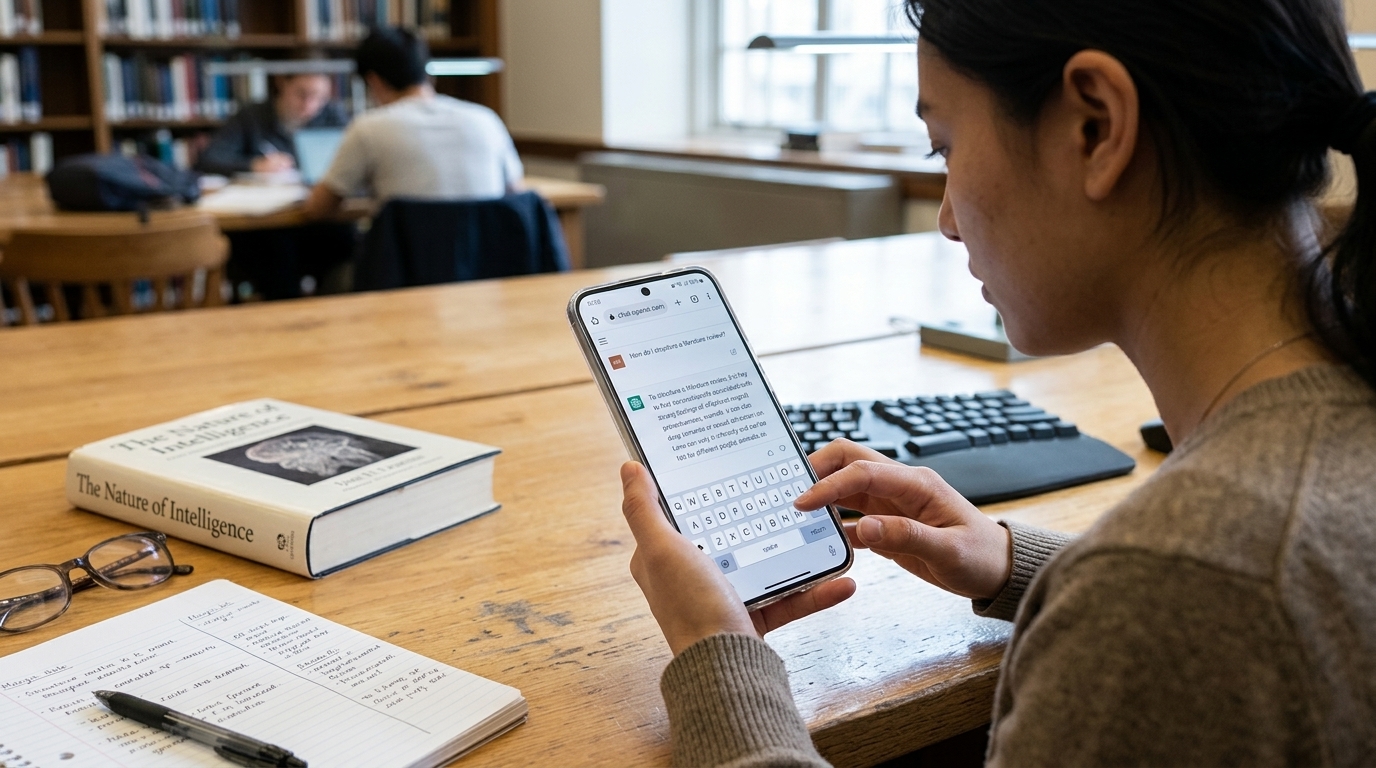
One of the most interesting findings concerns the fields of education and work. Despite fears of widespread cheating in exams, the data shows that a large percentage of users utilize the tool to understand difficult concepts. ChatGPT acts as a personal tutor available 24/7, explaining physics or mathematics in simple terms.
"We are not seeing a replacement of human thought, but rather an outsourcing of the most time-consuming and least creative aspects of it," the study notes.
However, the research sounds an alarm regarding "intellectual inertia." If users limit themselves to asking the AI to summarize texts without ever reading them, the gain in time could translate into a loss in depth of understanding. In markets like Greece, where the digital transformation of businesses is still evolving, the challenge is twofold: adopting the tool and ensuring proper training for its use.
From Chatbot to Autonomous Agent
OpenAI, commenting on the findings, points out that current usage is just the beginning. The transition from "chat" to "agentic AI"—agents that perform tasks—is the next big step. Users will soon not just ask for an email draft but will delegate the AI to book appointments, organize travel, or manage entire projects.
For the business world, this means that companies investing in employee training for "prompt engineering" and strategic AI use will gain a massive competitive advantage. The Harvard study concludes that artificial intelligence is not a magic wand but a tool that requires a skilled operator to yield maximum results.
Conclusions for the Future
The OpenAI and Harvard study serves as a mirror of our current relationship with technology. We are still in the "experimentation" phase. The real revolution won't come when AI can write poetry, but when the average person can use it to solve complex problems that currently require days of labor. Until then, ChatGPT will remain the smartest clerk we've ever had, waiting for us to give it more difficult missions.