Greece is at a pivotal turning point regarding its educational model. For decades, higher education in the country remained trapped in ideological entrenchments and a peculiar introversion that often hindered the utilization of its vast academic potential. Today, the government of Kyriakos Mitsotakis is attempting a radical shift, setting a national goal to transform Greece into a global educational destination. This is not merely a legislative change, but a structural reconstruction of the "heavy industry" of knowledge.
The New Institutional Framework and Breaking Taboos
The passage of Law 5094/2024 marked the milestone of this new era. By providing for the establishment of non-state, non-profit branches of foreign universities, Greece is finally aligning itself with European reality. The Prime Minister, in recent interventions, emphasized that this move does not aim to weaken the public university but to strengthen the overall educational ecosystem through healthy competition and synergies.
According to government planning, the presence of international university institutions on Greek soil will act as a magnet for students from Southeast Europe, the Middle East, and beyond.
"Our goal is for Greece to become what Cyprus is for the region, but on a much larger scale and with higher prestige,"government sources state. This strategy is based on a triad: quality of studies, a safe environment, and cultural depth.
The Extroversion of Public Universities: From Theory to Practice
Alongside non-state universities, the focus is on strengthening the extroversion of public Higher Education Institutions (HEIs). Already, programs like "Study in Greece" promote English-taught undergraduate and postgraduate programs aimed exclusively at foreign students. The success of programs such as the Medical School of NKUA or classical studies in Athens and Thessaloniki shows that there is immense demand.
- Collaborations with top institutions such as Columbia, Harvard, and Yale.
- Joint degree programs offering dual recognition.
- Researcher exchanges and boosting "Brain Gain" by bringing back Greek academics from abroad.
The internationalization of public universities is not just a matter of prestige but also of survival. In a world where knowledge moves rapidly, isolation equals stagnation. Greek universities are called upon to leverage the country's cultural heritage, combining it with modern technologies and innovative teaching methods.
Economic and Geopolitical Implications
Transforming Greece into an educational hub has direct economic consequences. Education is internationally recognized as a high-value-added export activity. Foreign students do not just pay tuition fees (in English-taught programs); they boost the local economy through housing, catering, and tourism. It is estimated that the full development of this sector could add over 1.5 billion euros annually to the Greek GDP.
Geopolitically, attracting students from neighboring countries serves as a tool of "soft power." Future leaders and professionals from neighboring states who have studied in Greece will become the country's best ambassadors in the future, strengthening ties of friendship and cooperation in the wider Eastern Mediterranean region.
Challenges and the Future
Of course, the road is not without obstacles. Bureaucracy, infrastructure shortages (such as student dormitories), and the need for continuous evaluation remain challenges. The opposition and parts of the academic community express concerns about the commercialization of education and the potential devaluation of public university degrees. However, the government insists that quality will be ensured by the National Authority for Higher Education (ETHAAE) with strict criteria.
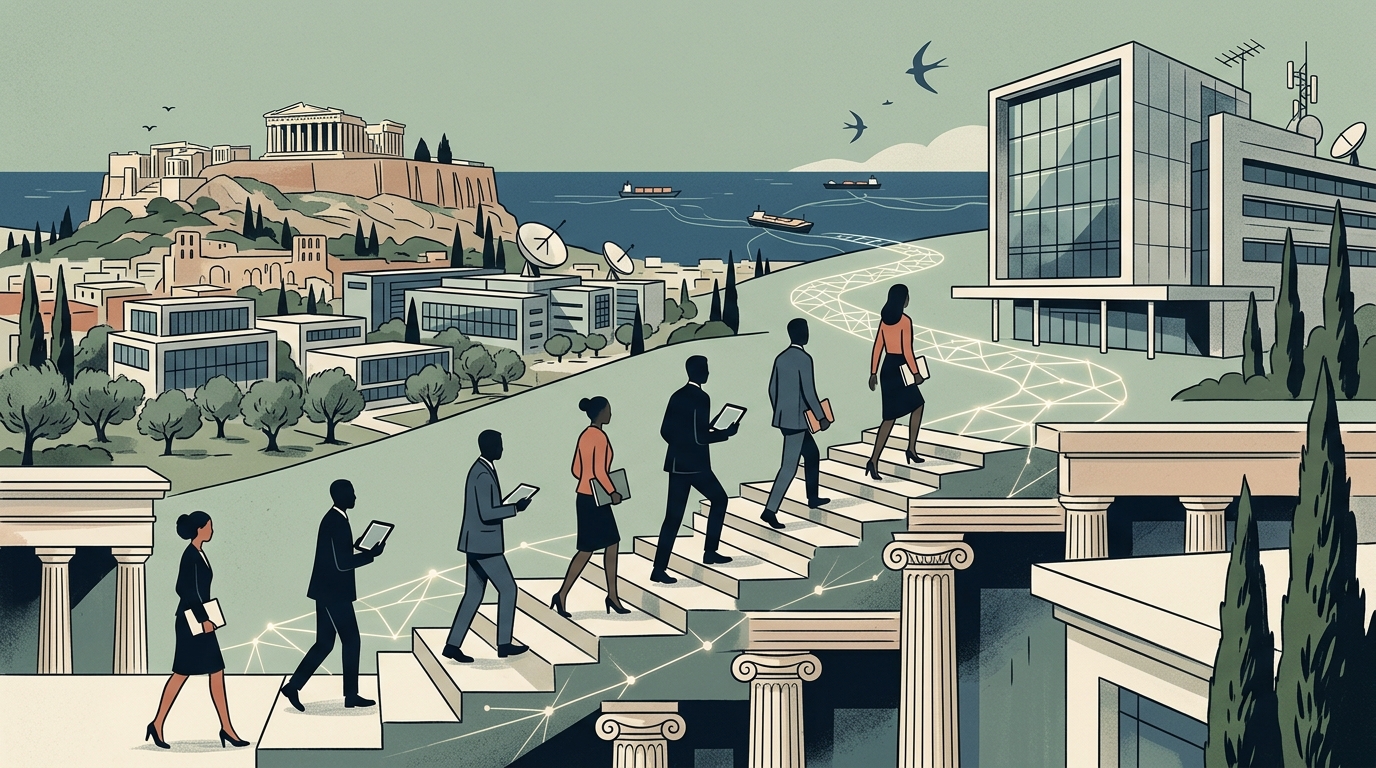
In conclusion, the vision for Greece as an educational hub is ambitious but achievable. It requires national consensus, stability, and continuous investment in human capital. If the country manages to combine the "renowned city" of antiquity with the cutting edge of modern science, then education can become the new pillar of the Greek economy for the 21st century.