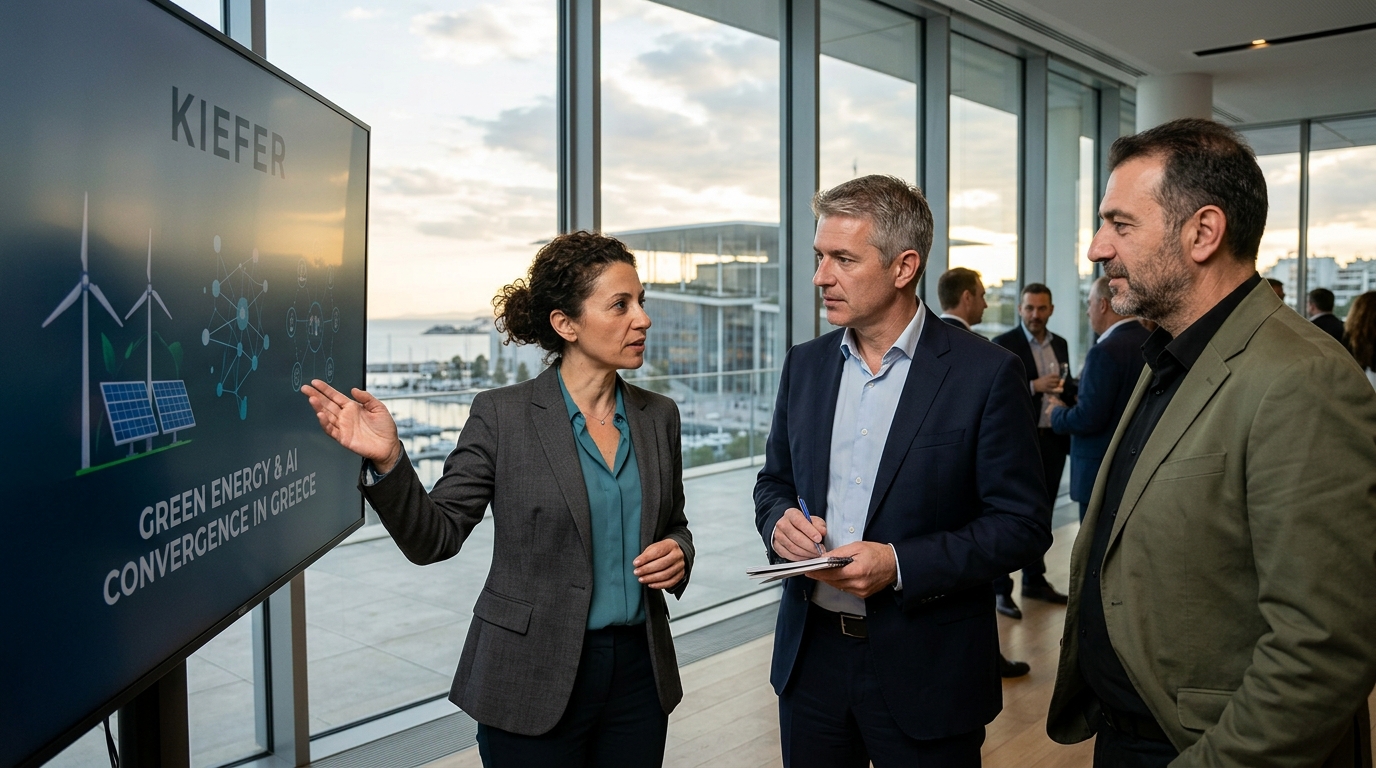
In an era where the energy transition and digital transformation represent two sides of the same coin for the European economy, the Greek company KIEFER is emerging as a pivotal player attempting more than the mere installation of renewable energy sources (RES). Its strategic approach, which blends Green Energy with Artificial Intelligence (AI) and Robotics while ensuring that generated data remains within Greek borders, serves as a blueprint for how domestic enterprises can lead in the Fourth Industrial Revolution.
KIEFER no longer views solar parks or wind turbines as simple infrastructure projects but as 'intelligent' assets requiring constant monitoring and optimization. The integration of AI allows for production forecasting with a degree of precision previously thought impossible, reducing losses and enhancing the stability of the electrical grid. This evolution is critical for Greece, a country with vast RES potential but also significant challenges in managing the intermittency of these sources.
Robotics at the Service of Efficiency
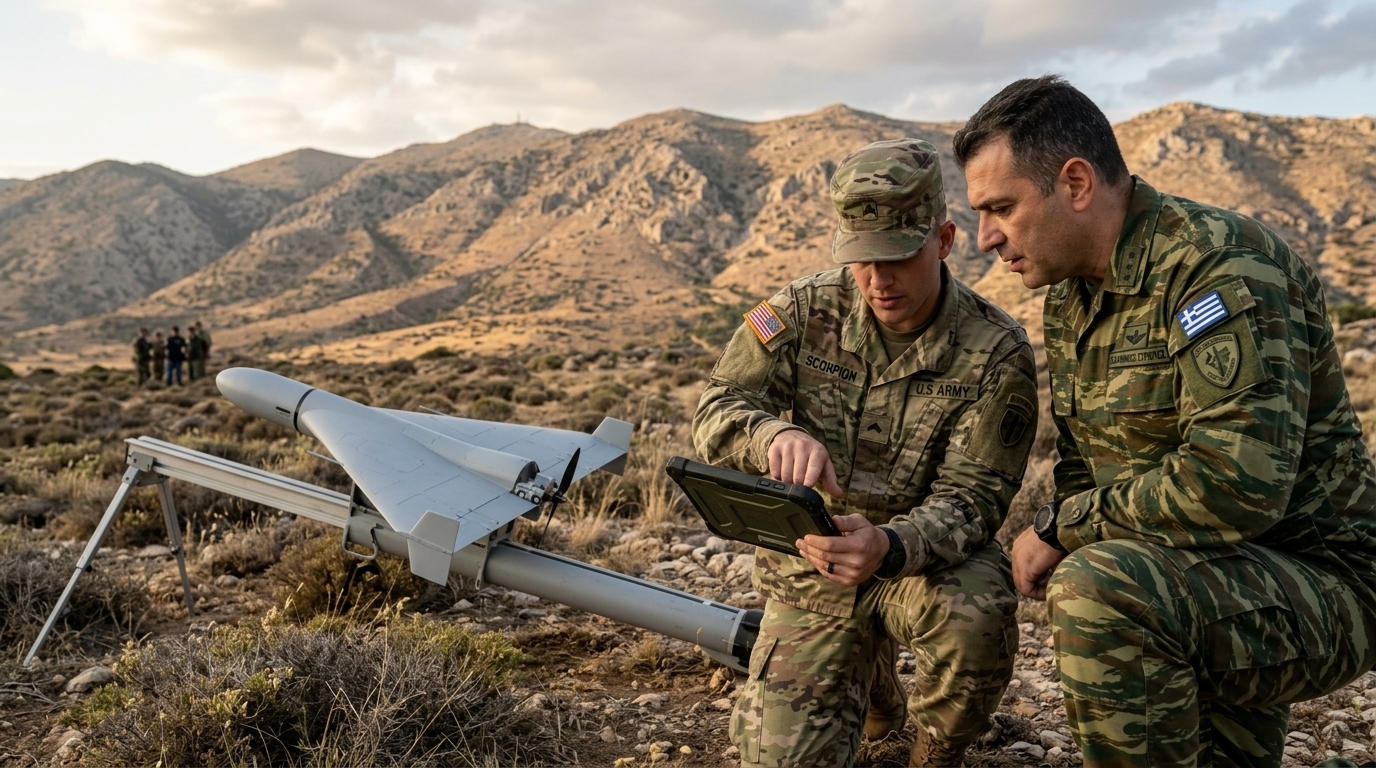
One of KIEFER's most innovative pillars is the deployment of Robotics for the maintenance and operation of energy units. The use of autonomous drones and robotic cleaning systems for photovoltaic panels is not merely a display of technological prowess; it is a strategic choice to maximize yield. Dust and environmental pollutants can reduce a panel's efficiency by up to 20%, and robotic solutions offer speed, safety, and lower costs compared to traditional methods.
Furthermore, robotic inspections enable the detection of micro-cracks or hotspots before they lead to serious failure or fire hazards. In this way, KIEFER transforms maintenance from 'reactive' to 'proactive' and 'predictive,' ensuring the longevity of investments. Implementing such technologies in the Greek countryside, often in rugged terrain, proves that cutting-edge tech can find applications far beyond urban centers.
Data in Greece: The Importance of Digital Sovereignty
Perhaps the most radical element of KIEFER's strategy is its commitment to data residency within Greece. In a world where major cloud providers are primarily based in the US or Asia, the decision by a Greek company to build its own data infrastructure or utilize local data centers has profound implications. It is a matter of national security as well as economic autonomy.
"Information is the new oil, and if its management happens outside our borders, we lose control of our strategic infrastructure," industry analysts note.
Keeping data in Greece ensures lower latency in AI system communications, full compliance with GDPR under the lens of Greek legislation, and, most importantly, the protection of the know-how generated from the operation of national energy resources. KIEFER understands that the energy of the future consists not only of electrons but also of bits of information.
Economic and Geopolitical Implications
This move by KIEFER comes at a time when Greece seeks to become an energy hub for Southeast Europe. The ability of a domestic firm to offer packages including construction, smart management, and data sovereignty makes it exceptionally competitive in international markets. It is no longer just a company that 'installs panels' but a provider of high-value technological solutions.
Investing in homegrown technology reduces dependence on foreign software houses and creates jobs for highly skilled Greek scientists—from robotics engineers to data analysts. This 'brain gain' is essential for the country's sustainable development. In conclusion, KIEFER points the way toward a Greece that does not merely consume technology but produces and applies it in a manner that safeguards its future.