Greece, a country that for decades relied on domestic lignite for its power generation, is currently undergoing one of the fastest and most impressive energy transitions in the world. According to the recent report by the international think tank Ember, Greece now ranks among the top ten countries globally in terms of the share of Renewable Energy Sources (RES) in its electricity mix. This achievement is not merely a statistical fluke but the result of a decade-long shift accelerated by the urgent need for energy independence and international climate pressure.
Leading in Solar and the European Context
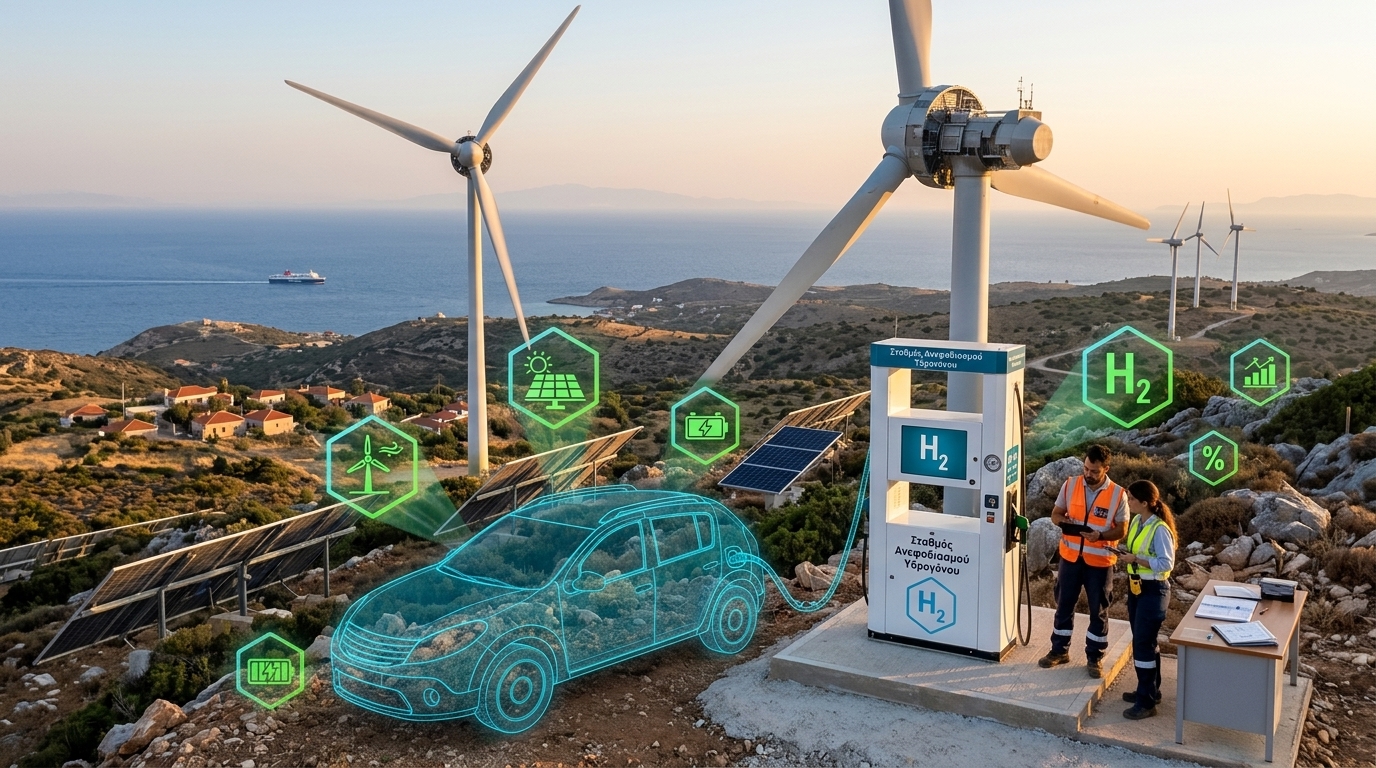
The Ember report highlights Greece as a solar energy champion, with the share of photovoltaics in the energy mix reaching 19%, nearly double the global average and significantly higher than the European average. Combined, wind and solar energy covered over 50% of the annual electricity demand, placing the country among the greenest economies on the planet. Greece's geographical location, characterized by high solar irradiation and the strong wind potential of the Aegean Sea, is a comparative advantage that is now being exploited on an industrial scale.
However, this success brings new complexities. The rapid penetration of RES has, in some cases, outpaced the capacity of the national grid. As analysts point out, Greece often produces more energy than it can consume during midday hours, leading to forced curtailments of production due to a lack of necessary storage infrastructure.
The Storage Challenge and Grid Upgrades
To maintain its position among the global RES elite, Greece's focus must shift from simply installing new parks to developing energy storage systems. Large-scale batteries and pumped-hydro storage projects are now the absolute priority for the Ministry of Environment and Energy. Without storage, the green energy produced at noon is "lost," while at night, the country is forced to resort to expensive natural gas or imports.
- Battery Investments: Subsidy programs for industrial-scale storage are currently underway.
- Interconnections: Upgrading electrical highways with neighboring countries (Bulgaria, Italy, Albania) and the major GREGY interconnection project with Egypt are critical for exporting surplus energy.
- Modernizing HEDNO/IPTO: Digitizing the grid is essential for managing thousands of small producers (Net Metering).
Economic Impact and Social Acceptance
Despite the top ranking in RES, Greek consumers have yet to see the drastic reduction in prices that might be expected. This is due to the marginal pricing model in the European energy market, where natural gas still largely dictates the final price. The transition requires time to reflect in utility bills, a fact that creates skepticism among segments of society.
Furthermore, the siting of wind farms remains a sensitive issue. Local opposition in islands and mountainous regions highlights the need for a more participatory development model. "Energy Communities," where citizens become co-owners of production, are a solution being promoted to mitigate reactions and distribute the economic benefits directly to the public.
Conclusion: From Dependence to Leadership
Greece's entry into the RES Top 10 is a historic victory but also a responsibility. The country is no longer a mere energy importer but a potential exporter of "green" stability for all of Southeast Europe. The challenge for the next two years is to transform the natural superiority of the sun and wind into a permanent economic advantage, reducing costs for industry and households while simultaneously protecting the unique Greek landscape.