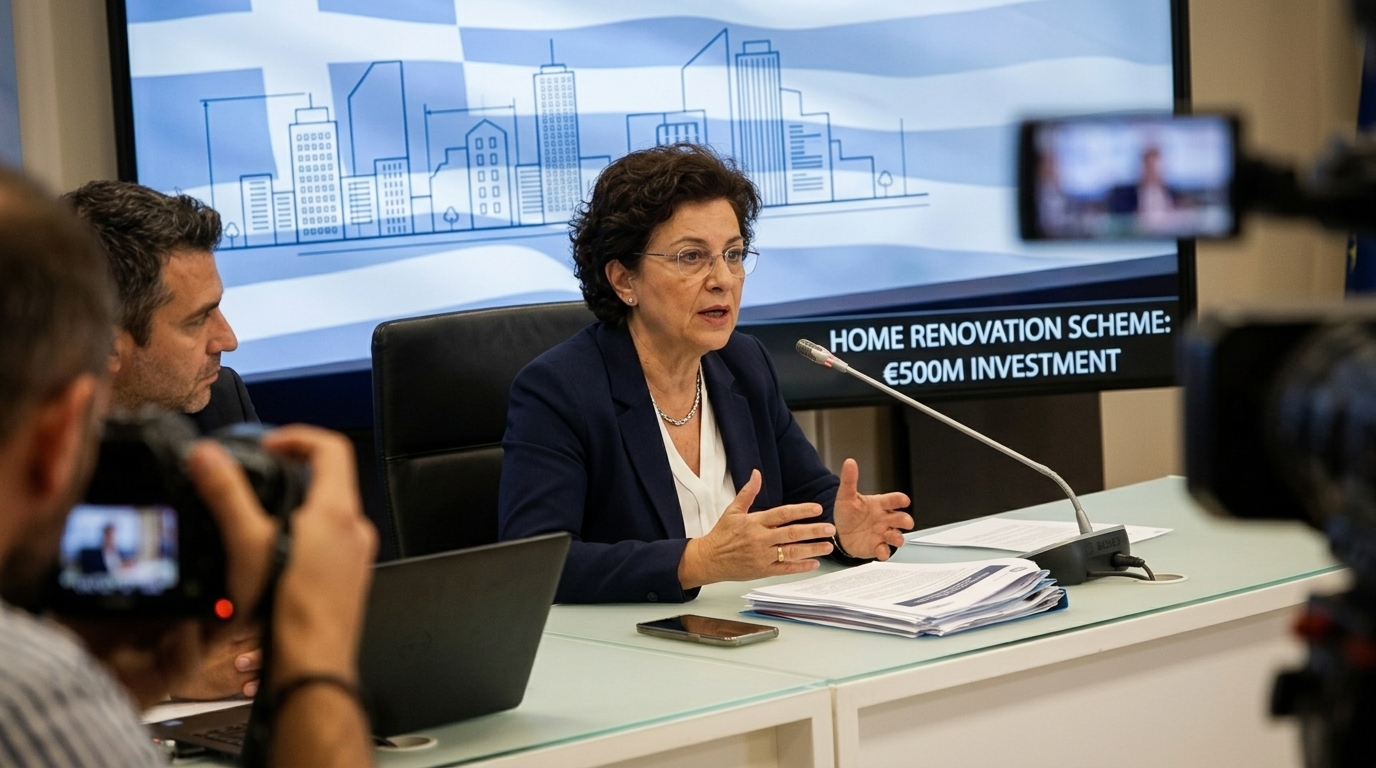
June 15, 2026, marks a pivotal moment for Greek housing policy. With the launch of the digital platform on gov.gr for the “Home Renovation” program, the government is attempting a decisive response to two intertwined issues: the country’s aging building stock and the dramatic shortage of available rental properties. This €500 million program is not merely a financial injection into the construction sector; it is a strategic intervention into the social fabric of Greek urban life.
According to statements by Alternate Minister of National Economy and Finance, Nikos Papathanasis, the program aims to upgrade up to 25,000 homes built before 1990. This cutoff date is strategic. Buildings from this era often lack basic energy efficiency standards and modern infrastructure, making them either uninhabitable or extremely costly to maintain. By expanding income criteria, the state seeks to include the middle class, which has frequently been excluded from previous subsidy frameworks.
The Pillars of Intervention and Economic Significance
The “Home Renovation” scheme differs from the traditional “Exoikonomo” (Save Energy) programs by placing a heavier emphasis on functional upgrades and aesthetic renovation, moving beyond pure energy efficiency. Beneficiaries will be able to receive subsidies for works ranging from floor and sanitary ware replacement to the upgrading of electrical and plumbing installations. This is expected to mobilize a massive chain of professionals, from architects and engineers to craftsmen and material suppliers.
Funding for the program is largely sourced from the Recovery and Resilience Facility (RRF), highlighting the European Union’s commitment to urban revitalization. However, the challenge remains the speed of fund absorption. Past bureaucracy has often acted as a bottleneck, and the success of the gov.gr platform will be judged by its user-friendliness and the swiftness of application approvals.
Social Housing Policy and the Rental Market
Beyond the numbers, the program carries a strong social message. Greece is facing a “housing crisis” that has pushed rental prices to exorbitant levels, particularly in Athens and Thessaloniki. Many of the homes targeted for renovation are currently closed or dilapidated. The government hopes that through the subsidy, owners will be incentivized to place these properties back into the long-term rental market.
- Supply Boost: Over 25,000 properties could return to the market.
- Energy Poverty Reduction: Renovated homes will feature lower operational costs.
- Aesthetic Upgrade: Improving neighborhood character and quality of life.
However, there is a counter-argument. Some analysts express concerns that renovations might lead to further increases in property prices, as their market value will surge. It is essential to implement safeguards so that state subsidies do not simply translate into higher rents for citizens who are already financially strained.
Challenges and Outlook for 2026
As we approach mid-2026, the program's success will depend on the balance between private initiative and state oversight. Nikos Papathanasis emphasized that the program is “dynamic,” implying that if demand exceeds expectations, further funding increases may be considered. The bet is twofold: to make Greece a country with modern housing while ensuring that housing remains an affordable right for all.
“We are not just renovating walls; we are investing in the future of the Greek family and the resilience of our cities,” a government source stated.
In an era where climate change demands radical shifts in our lifestyle, upgrading the old building stock is the only way forward. The “Home Renovation” program is the first major step in a long journey toward the modernization of the Greek territory.