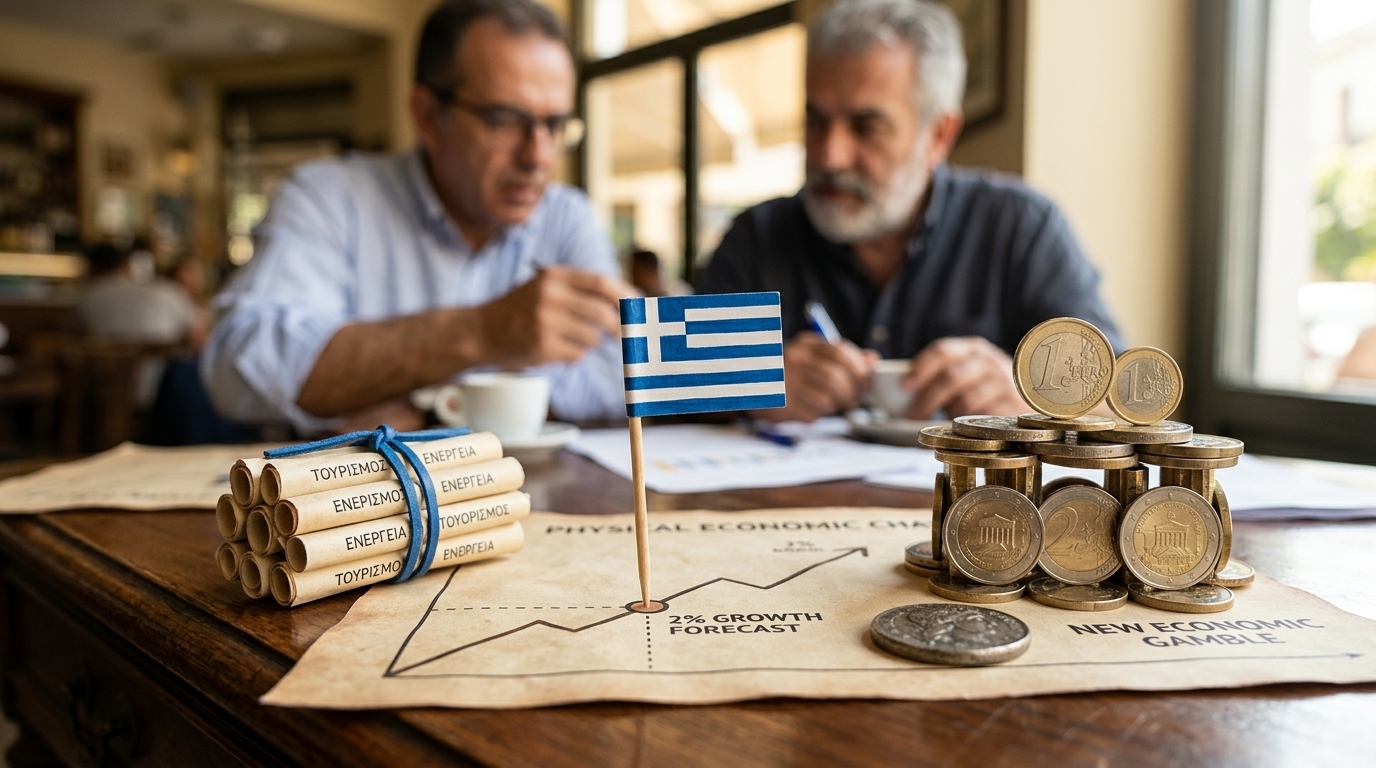
At a critical juncture for the European economy, Athens has dispatched its Medium-Term Fiscal-Structural Plan to Brussels, outlining the country's roadmap for the 2025-2028 period. The forecast for 2% growth in 2026 is not merely a figure on a spreadsheet; it is the embodiment of an effort to transform the Greek economy from a case of "crisis management" into a model of sustainable and outward-looking growth.
The 2% Strategy and the New European Framework
2026 is considered a milestone year. With the implementation of the European Union's new fiscal rules, Greece is called upon to balance the need for investment with strict adherence to spending limits. The 2% growth forecast is based on three main pillars: the full absorption of Recovery and Resilience Facility (RRF) funds, the strengthening of foreign direct investment, and the continued momentum of the tourism sector, which is now seeking qualitative upgrades over quantitative expansion.
According to the document submitted to the Commission, the Greek government commits to primary surpluses of around 2.1% of GDP, which will allow for a further rapid reduction of public debt. This reduction is not just symbolic; it is essential for maintaining the investment grade status, which has opened the liquidity taps from international capital markets. However, the challenge remains: how can this growth trickle down to the whole of society and not be limited to macroeconomic indicators?
Reforms and the Recovery Fund: The Economy's Engine
The Medium-Term Plan places significant emphasis on structural reforms. The digitalization of the state, the acceleration of justice administration, and the overhaul of the healthcare system are no longer "wish lists" but prerequisites for the disbursement of RRF tranches. The government is betting heavily on the energy transition, with Greece aspiring to become a green energy exporter to Central Europe through new interconnections.
- Boosting innovation through tax incentives for R&D.
- Upskilling the workforce to fill gaps in industry and technology.
- Combating tax evasion through the full interconnection of POS terminals with cash registers and the use of AI in audits.
At the same time, private consumption is expected to remain strong, aided by the gradual de-escalation of inflation and the increase in the minimum wage, which aims to restore the purchasing power of households affected by the high cost of living in previous years.
Risks and Geopolitical Uncertainty
Despite the optimistic scenario, the Medium-Term Plan recognizes significant risks. Geopolitical instability in the Eastern Mediterranean and the Middle East, combined with the slowdown of major Eurozone economies (such as Germany), could affect exports and tourism flows. Furthermore, the demographic problem is emerging as the greatest long-term threat to the sustainability of the social security system and the country's productivity.
"2% growth is achievable, but it requires total commitment to fiscal discipline and speed in project implementation. There is no room for complacency," says a senior official from the Ministry of National Economy.
In conclusion, the 2026 progress report shows a Greece that has learned from past mistakes but is now called upon to prove it can generate wealth on future terms. The bet is not just on growth, but on resilience in a global environment that is changing at a breakneck pace.