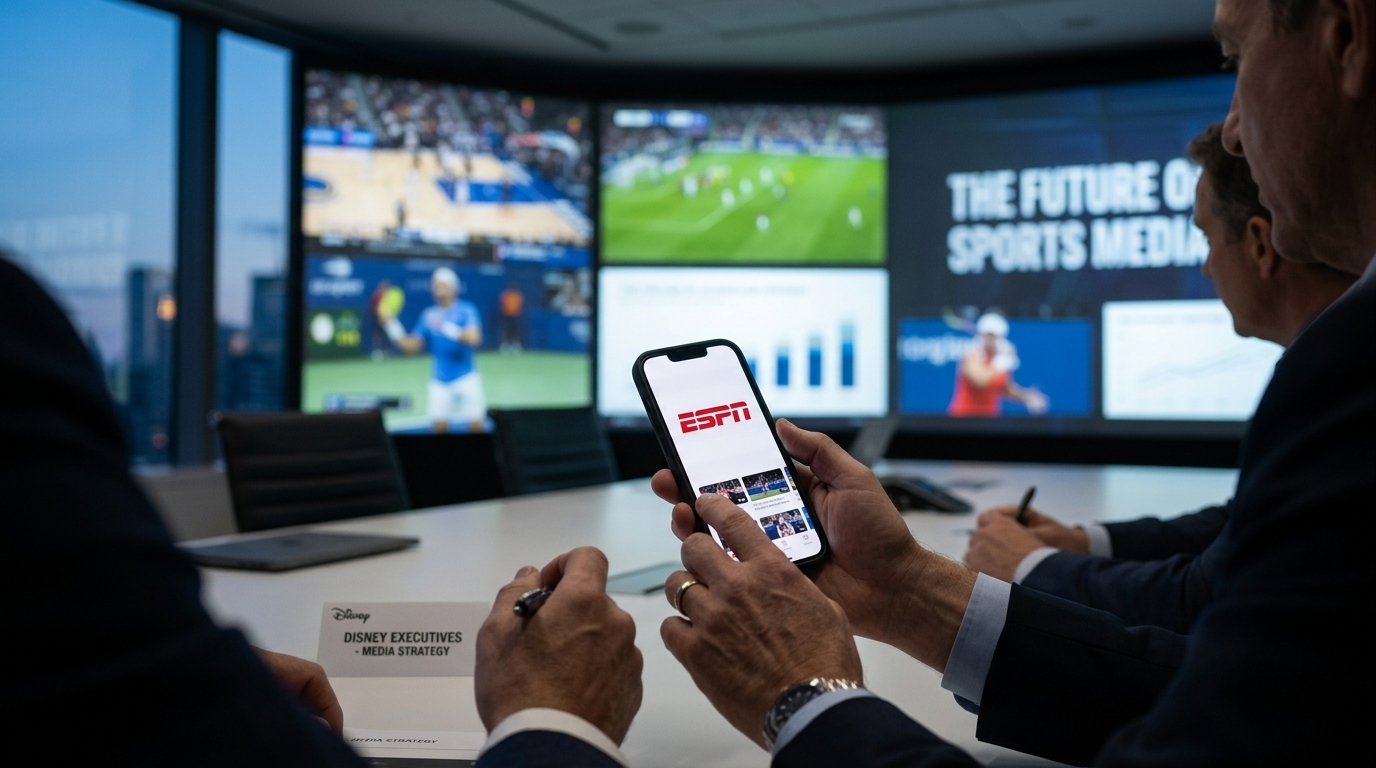
When Bob Iger returned to lead Disney in late 2022, the media landscape was in a state of flux. One of his first and most controversial statements was the admission that ESPN, the undisputed king of sports broadcasting, might no longer be a core asset for the company's future. For months, rumors of a sale or spin-off swirled through Wall Street. However, Disney’s recent strategic pivot shows the exact opposite: ESPN is not only staying, but it is becoming the centerpiece of the entertainment giant’s digital transformation.
Live Sports: The Last Bastion of Linear TV
Disney's decision to retain ESPN is rooted in a fundamental truth of modern television: live sports are the only thing keeping the traditional cable model alive. In a world dominated by on-demand content, sports remain the sole category that demands simultaneous viewing by millions, making it 'pure gold' for advertisers.
ESPN holds some of the most valuable rights in the world, including the NFL, NBA, and college football. Losing these rights would significantly weaken Disney against competitors like Amazon and Apple, who are aggressively entering the sports arena. Disney realized that without ESPN, it would lose its most potent tool for maintaining a subscriber base and attracting premium advertising dollars.
Project 'Flagship' and the Streaming Future
The heart of this new strategy is known as Project 'Flagship.' This involves moving ESPN’s primary linear channel into a standalone direct-to-consumer (DTC) streaming service, a move expected to redefine the market. Until now, ESPN+ has served as a supplementary service, offering content that didn't fit on the main channel.
With 'Flagship,' consumers will be able to watch the full ESPN suite without needing a cable subscription. This is a high-stakes gamble, as it risks accelerating the collapse of cable TV, which still generates significant profits for Disney. However, Iger appears to believe that the transition is inevitable and prefers Disney to lead the disruption rather than be a casualty of it.
Alliances and the ESPN BET Venture
Keeping ESPN has also prompted a new approach to partnerships. Disney has already entered a joint venture with Fox and Warner Bros. Discovery to create Venu Sports, a platform targeting younger viewers who have never had traditional cable. Despite legal hurdles, this move demonstrates a willingness to collaborate in a fragmented market.
Furthermore, the entry into sports betting via ESPN BET, in partnership with Penn Entertainment, represents an effort to monetize ESPN’s massive database and brand recognition. For years, Disney avoided gambling to protect its family-friendly image. The policy shift underscores the desperate need for new revenue streams at a time when the cost of sports rights is skyrocketing.
The Threat of Big Tech
Perhaps the most critical reason Disney kept ESPN is the fear of a vacuum. If ESPN were put up for sale, the most likely buyers would be Amazon, Google, or Apple. Such a move would give these tech giants absolute control over sports content, leaving Disney marginalized. By retaining ESPN, Disney remains a gatekeeper of the sports ecosystem, maintaining its leverage against leagues and distributors alike.
The future of ESPN will be judged by its ability to balance the declining linear TV business with the emerging streaming reality. Iger is betting that the ESPN brand is strong enough to survive this transition, evolving from a traditional broadcaster into a modern digital engagement platform.